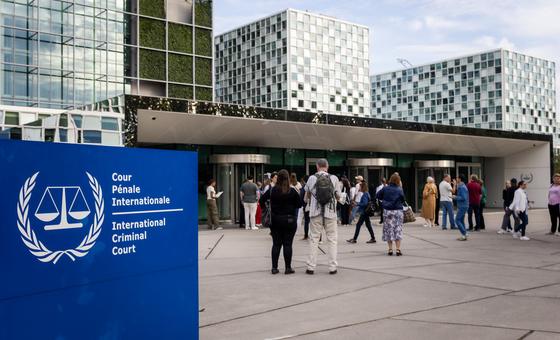
UN Chief Calls US Sanctions on ICC a Major Setback for International Justice
Provpnmatrix.com – New United States sanctions targeting the International Criminal Court as an institution have drawn sharp condemnation from UN Secretary-General António Guterres, who warned that the move could severely undermine the global pursuit of accountability for the world’s most serious crimes.
The measures deepen Washington’s confrontation with the Hague-based court. Secretary of State Marco Rubio said the United States would cut off transactions with the ICC and seek to restrict its resources unless the court stopped what the administration considers a threat to US citizens.
“Either the ICC will end its threats, or we will end the ICC,” Rubio said.
Rubio also stated that the United States had never joined the court and did not need or want it. While saying diplomacy remained possible, he urged US allies to act against the institution.
“America never joined the court. We don’t need it. And we don’t want it,” he said.
ICC Rejects Pressure Campaign
The ICC answered the announcement with unusually forceful language, characterizing the sanctions as an unprecedented attack on international legality. The court said the designation followed earlier US measures aimed at 13 judges and prosecutors.
In its response, the court said the new action was designed to interrupt its day-to-day work and frighten people who serve the institution or assist its investigations and proceedings. It insisted, however, that it would continue operating independently.
“The court will continue to fully discharge its mandate, with independence and impartiality, acting only on the basis of the law and the evidence for the sake of the countless victims of grave crimes,” said ICC President Tomoko Akane.
The court was created through the Rome Statute to prosecute individuals for genocide, crimes against humanity, war crimes and, in specified circumstances, aggression. It is not a UN body, although the United Nations has a formal relationship agreement with it. Its authority and practical effectiveness depend heavily on the cooperation of States that have accepted the treaty framework.
The ICC stressed that its future now also depends on the governments that established it. The promise represented by the Rome Statute, it said, can endure only if those States remain committed to defending it.
“No one should be punished for serving the cause of justice. History will judge this moment,” the court said.
Guterres Backs Court Independence
Guterres strongly criticized the decision to sanction the court itself. His spokesperson, Stéphane Dujarric, said the Secretary-General was deeply concerned that the measures could impede the institution’s ability to fulfill its important responsibilities.
The UN chief described the step as a serious blow to collective efforts to secure international criminal justice, identifying the ICC as a central part of that wider system. He reaffirmed his full support for the court’s autonomy and for its officials, while urging all countries to honor their obligations under international law.
The United Nations continues to cooperate with the ICC under the relationship agreement endorsed by the General Assembly on 13 September 2004. That arrangement reflects the distinct but connected roles of the two institutions: the UN works across peace, security, humanitarian affairs and human rights, while the ICC focuses on individual criminal responsibility in cases within its jurisdiction.
The dispute therefore carries consequences beyond the court’s own offices. Financial and transactional restrictions can affect institutional operations, legal teams, witnesses, victims’ representatives and others whose work depends on a functioning judicial process. The ICC said the sanctions were intended to intimidate those involved with the court, an allegation it firmly rejected.
Human Rights Experts Raise Alarm
Independent experts appointed by the UN Human Rights Council also condemned the sanctions, describing them as an attempt to dismantle a shared legal system intended to hold perpetrators of the gravest crimes responsible.
The experts are independent specialists, not UN employees, and they receive no salary for this work. They called on governments committed to the rule of law to unite in support of the court and its independence.
“Sanctioning the institution entrusted with delivering justice for the gravest international crimes is an assault on the foundations of international accountability and rule of law,” the experts said.
They cautioned that no country should be able to shield itself from legal scrutiny by pressuring the court created to enforce international criminal law.
“No State should place itself beyond the reach of the law by intimidating the court established to enforce it and attempting to dismantle it.”
The experts also emphasized the human impact of the confrontation. For survivors of atrocities and their advocates, the ICC can represent a path toward justice, recognition, accountability and reparations when domestic proceedings are unavailable or unable to address alleged crimes.
They said efforts to weaken the court directly harm those victims and the people supporting them. The growing dispute now places renewed attention on whether States that support the Rome Statute will take practical steps to preserve the court’s capacity to act.
For Guterres, the principle at stake is clear: international criminal justice requires institutions capable of working without political intimidation. His condemnation signals that the UN sees the sanctions not simply as a bilateral disagreement with the court, but as a challenge to a broader international system built to address the most severe violations of human dignity.
Related Reading
Frequently Asked Questions
What is Serious blow?
Serious blow is the main topic of this guide. The article explains the context, practical details, and next steps readers should understand.
Why does Serious blow matter?
Serious blow matters because readers are looking for a useful answer, not just a short summary. Good content should match search intent and help them decide what to do next.