Armenia Conference Presses Governments to Deliver on Biodiversity Pledges
Provpnmatrix.com – Governments gathering in Yerevan are being urged to convert international promises on nature into practical results, as biodiversity decline continues to threaten communities, economies and ecosystems around the world.
The UN Biodiversity Conference, known as COP17, has brought countries to Armenia’s capital to review progress under the Kunming-Montreal Global Biodiversity Framework. Adopted in 2022, the framework set a shared direction for protecting and restoring nature, but the meeting’s central challenge is whether commitments are now being matched by action.
Astrid Schomaker, Executive Secretary of the UN Convention on Biological Diversity, said the stakes extend far beyond environmental policy. Billions of people are affected when ecosystems lose their ability to provide food, water, livelihoods and resilience.
“In 2022, 196 countries made commitments. But we are all accountable to each other and to future generations. What happens here in Yerevan matters. Billions of people whose lives are being upended by the impacts of biodiversity loss depend on progress being made here in the next two weeks,” said Executive Secretary of the UN Convention on Biodiversity, Astrid Schomaker.
A framework built around 2030 targets
The Kunming-Montreal framework is intended to address the forces driving nature loss: altered use of land and oceans, unsustainable use of species, climate change, pollution and invasive alien species.
Its most widely recognized target is often called “30 by 30.” Countries have agreed to conserve 30 per cent of the world’s land and sea areas by 2030. That date also marks the deadline for the UN Sustainable Development Goals, linking biodiversity protection to wider priorities such as poverty reduction, food security and sustainable development.
Reaching the target will require more than announcing protected areas. National biodiversity plans need to reflect global goals, financing must be available at the scale required, and patterns of production and consumption must operate within the planet’s limited resources.
Schomaker emphasized that protecting nature can produce real results, while calling for stronger participation by Indigenous Peoples, local communities, women and young people. She also highlighted the importance of cities, companies and financial institutions, noting that biodiversity loss reaches every country and sector.
“We need even greater engagement from cities, businesses and financial institutions…the science is clear. No nation, no economy, no society is immune from the impacts of biodiversity loss,” she insisted.
What governments will tackle in Yerevan
COP17 is expected to carry out the first global assessment of collective implementation since the 2022 agreement. Countries are presenting national reports as well as revised biodiversity strategies and action plans, giving negotiators a clearer picture of where progress has been made and where delivery remains too slow.
A key concern is the implementation gap: the difference between national objectives on paper and measurable improvements in ecosystems, species protection and sustainable resource management. Delegates are considering how governments can translate plans into outcomes that can be observed and evaluated.
Funding is another major issue. The framework calls for at least $200 billion a year from all sources by 2030. That total includes a goal of at least $30 billion annually in international biodiversity finance.
Negotiators are also working on operational arrangements for the Cali Fund, a global mechanism agreed during COP16 in Cali, Colombia. The fund is designed to receive contributions from companies using digital genetic information and channel resources toward biodiversity protection and Indigenous Peoples.
Reliable measurement will shape whether the framework succeeds. Countries need stronger monitoring systems, better data, sufficient capacity and international cooperation to determine whether their stated commitments are producing results. The conference is also examining economic policies beyond environment ministries, including business practices, finance, consumption and incentives that can encourage environmental harm.
A call for coordinated action
Armenia’s Permanent Representative to the UN, Paruyr Hovhannisyan, said COP17 should demonstrate that halting biodiversity loss cannot be achieved by governments acting in isolation.
“We want COP17 to send a clear political signal that addressing biodiversity loss requires coordinated action by governments, international organizations, the private sector and civil society,” he told UN News. “This means strengthening implementation, mobilizing adequate resources, and improving monitoring and accountability.”
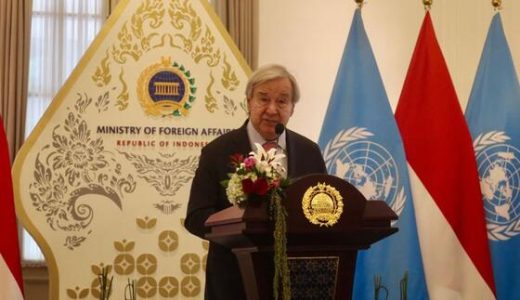
The discussions follow a warning delivered in Yerevan by UN Secretary-General António Guterres that more than one million species are at risk of extinction. He called for an end to humanity’s “war on nature” and urged governments, businesses and communities to speed up protection efforts for future generations.
Climate disruption, invasive species, overgrazing, overfishing, excessive fertilizer and pesticide use, plastics and heavy metals all contribute to the pressures placed on the natural world. These threats often overlap, making coordinated decisions on land, water, agriculture, industry and finance especially important.
For the delegates in Yerevan, the immediate task is to show that the biodiversity framework can become more than a shared ambition. The effectiveness of national plans, the availability of finance and the quality of accountability systems will help determine whether the 2030 targets lead to a meaningful recovery for nature.
Related Reading
Frequently Asked Questions
What is Protecting Earth s fragile biodiversity takes?
Protecting Earth s fragile biodiversity takes is the main topic of this guide. The article explains the context, practical details, and next steps readers should understand.
Why does Protecting Earth s fragile biodiversity takes matter?
Protecting Earth s fragile biodiversity takes matters because readers are looking for a useful answer, not just a short summary. Good content should match search intent and help them decide what to do next.