Coordinated skies could reduce delays, fuel use and passenger frustration
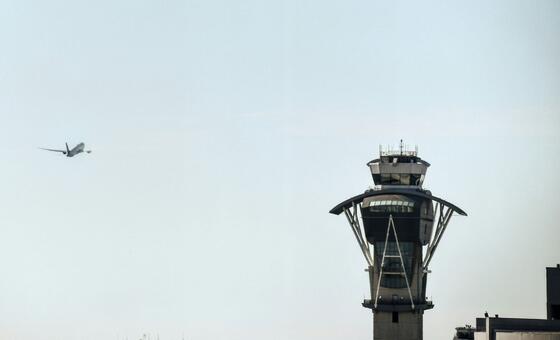
Provpnmatrix.com – For many passengers, the most puzzling moment of a delayed flight comes near the end of the journey. The aircraft has started descending, the destination is close, and then the pilot announces another turn. Instead of landing, the plane circles above the airport.
These loops are often part of a holding pattern, used when an airport or its surrounding airspace cannot accept another arrival immediately. Bad weather can be a factor, but it is not the only reason. Congested routes, runway constraints, emergencies and disruptions elsewhere in the network can all force aircraft to wait in the air.
That apparently small delay has wider consequences. Air traffic networks are tightly connected, so a disruption at one airport can affect flights far beyond the original problem. The International Civil Aviation Organization, the United Nations body responsible for worldwide aviation standards, is urging countries to coordinate more closely before congestion develops into a larger chain of delays.
Managing demand before aircraft leave the ground
The central principle is straightforward: when an airport knows it will be unable to receive more flights for a period, airlines and departure airports can adjust plans before aircraft take off. That avoids wasting time and fuel while aircraft wait in holding patterns near their destination.
This model is called air traffic flow management. It brings together airlines, airports, air traffic controllers and weather services so they can exchange information and make shared decisions about when flights should depart, which routes they should use and how capacity should be managed.
Juan Carlos Salazar, ICAO’s Secretary General, compares the issue to traffic control in a busy city.
“If the traffic lights work independently, traffic becomes chaos and there are jams on every corner.”
His point is that a green light at one intersection does little good if vehicles are immediately stopped at the next. Aviation faces a similar problem when one part of the system increases flight activity without accounting for limits in the next section of airspace or at the arrival airport.
“If you get a green light on one street and are stopped at the next, the backlog builds immediately. The same happens with air traffic across the world’s airspace.”
For travellers, better coordination could mean receiving notice of a disruption earlier. A flight may still be delayed or cancelled when conditions require it, but passengers and airlines can benefit when the impact is identified before people have spent hours waiting at the airport or planes have burned additional fuel in the sky.
The financial and environmental stakes
Delays carry a significant economic cost. In Europe, air traffic management delays were estimated to cost at least $2.3 billion in 2025, EUROCONTROL’s figures show. The costs extend beyond airline schedules: missed connections, crew disruptions, airport crowding and unreliable arrival times can all magnify the effect of a single delay.
There is also a climate dimension. Aircraft flying extra miles or remaining aloft in a holding pattern consume fuel that would otherwise not be needed. ICAO-supported collaborative trials in the Americas produced tangible results in 2026, saving more than 265,000 minutes of flying time. That is roughly 4,400 hours, alongside savings of more than $38.9 million.
The trials also reduced fuel consumption by about 13,330 tonnes and prevented 42,160 tonnes of carbon dioxide emissions. Those results support the international aviation sector’s objective of reaching net-zero carbon emissions from international flights by 2050.
Europe has also seen evidence that anticipating constraints can make a difference. Between May and August 2026, a EUROCONTROL programme designed to prepare for weather disruption and congestion prevented approximately 3.1 million minutes of delay. It generated estimated savings of $448 million and made the air traffic network 14 per cent more stable on its most difficult days.
National systems are not enough
Countries including Brazil and Colombia have operated flow-management systems for years. Their experience demonstrates that coordinated planning can work within national boundaries. The challenge becomes greater when a flight passes through several national airspaces and multiple regions during one trip.
An aircraft travelling from Europe to Australia or New Zealand may cross four or five regions on different continents. Each region can have separate procedures, capabilities and priorities. A system that works well inside one country can lose effectiveness if information is not shared quickly with the next authority responsible for the flight.
“Technology alone is not the answer.”
Salazar has stressed that operational information must be exchanged in real time. In some cases, this does not happen because institutions are unwilling to share it. In others, the necessary systems and transmission capacity are not available.
“No country or region acting alone can manage that.”
Following five days of ICAO-led discussions in Montreal, governments and industry participants supported a quicker worldwide adoption of air traffic flow management. ICAO has 193 member States and is positioned to develop common rules while helping countries with differing levels of technical resources put them into practice.
New international flow-management provisions are expected in November 2030. Regional workshops are planned for 2027, giving aviation authorities an earlier opportunity to exchange experience and prepare for broader implementation.
A growing challenge for global aviation
The need for stronger coordination is likely to become more urgent as demand rises. ICAO projects that annual air travel could reach 12.4 billion passengers by 2050. More flights will place greater pressure on airports, routes and the air traffic services that link them.
At the same time, traditional airline operations are sharing airspace with new and evolving activities. Armed conflicts can close or restrict routes, pushing traffic onto alternative corridors and creating new bottlenecks. Drones, air taxis, rocket launches and unexpected re-entries from orbit also require authorities to maintain a clearer, faster picture of what is happening above them.
Passengers may not see the coordination work taking place behind the scenes. They experience the outcome in practical terms: whether a flight leaves on time, whether a connection remains possible, whether an airport can explain a delay and whether an aircraft spends unnecessary time circling before landing.
ICAO’s broader ambition is to make air transport more dependable as well as more connected. Salazar describes the objective as building “an air transport system that reaches every person in the world, so that everyone sees the benefits of being connected.”
Related Reading
Frequently Asked Questions
What is Why do planes keep circling before?
Why do planes keep circling before is the main topic of this guide. The article explains the context, practical details, and next steps readers should understand.
Why does Why do planes keep circling before matter?
Why do planes keep circling before matters because readers are looking for a useful answer, not just a short summary. Good content should match search intent and help them decide what to do next.