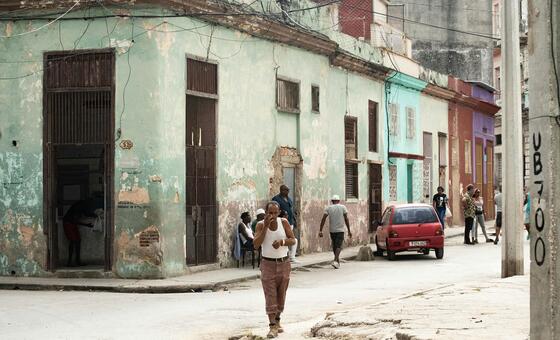
General Assembly Prepares for 34th Vote on Ending US Embargo of Cuba
Provpnmatrix.com – United Nations Member States have begun their annual debate over the United States economic, commercial and financial embargo on Cuba, with a vote scheduled for Wednesday, 28 October. The resolution before the General Assembly calls for the embargo to be lifted, continuing a debate that has returned to the chamber for more than three decades.
All 193 UN Member States are entitled to vote in the Assembly, making the result a prominent measure of international opinion even though General Assembly resolutions do not themselves remove national sanctions. The discussion commonly extends across two days, as governments and regional groups set out their views on sovereignty, trade, humanitarian consequences and Cuba’s domestic situation.
A long-running diplomatic dispute
The embargo was first imposed in 1960. Since 1992, the General Assembly has adopted a resolution urging its end on 33 occasions. Support for that position has grown substantially over time.
At the first vote in 1992, 59 countries supported the resolution, three opposed it, 71 abstained and 46 did not participate. The strongest backing came in 2015, 2016 and 2017, when 191 countries voted in favour. During that period of improved relations under then-President Barack Obama, the United States and Israel voted against the resolution in 2015 and 2017, while both countries abstained in 2016.
Voting patterns have shifted for some governments following political changes at home, but several major countries have remained consistent. Canada, China and Russia have repeatedly supported the resolution. The United States, usually joined by Israel, has opposed it in every year except the 2016 abstention.
Energy and health pressures
This year’s debate is taking place amid tighter US restrictions under the Trump administration. Francisco Pichon, the UN Resident Coordinator in Cuba, has warned that the situation has contributed to an energy crisis and could lead to humanitarian collapse.
Electricity shortages have broad implications because hospitals, transport, food storage and other essential services depend on reliable power. The World Health Organization has warned that the lack of energy is affecting health care. In May, senior UN officials said that more than 100,000 surgical operations had been delayed.
Cuban authorities have also described disruption to vaccination efforts and difficulties for people living with chronic illnesses who need a dependable supply of medicines. The General Assembly debate therefore reaches beyond the legal and diplomatic arguments surrounding sanctions: delegates are also weighing the practical effects of economic restrictions on daily life in Cuba.
President Donald Trump has additionally raised the prospect of military intervention in Cuba this year, adding further strain to relations. Successive UN High Commissioners for Human Rights and independent UN experts have criticized the embargo and other unilateral US sanctions, arguing that they put rights connected to health, life, food and development at risk.
A sharp exchange in the chamber
The tensions surrounding the issue were evident during Tuesday’s proceedings. Cuban Foreign Minister Bruno Rodríguez Parrilla interrupted US Ambassador Mike Waltz on a point of order while the ambassador was speaking. Their disagreement developed into a heated exchange, and the President of the General Assembly briefly suspended the meeting before the debate continued.
Mr. Waltz challenged the central argument behind the resolution, maintaining that Cuba’s hardships stem from decisions by its own government rather than from the embargo.
“There is no blockade,” he said.
He pointed to US exports to Cuba exceeding $876 million during the first eight months of 2026. He also cited shipments reaching Cuba from Canada, Spain, Mexico, China, Russia, the European Union and UN agencies as evidence that the island remains connected to international trade and assistance.
In Mr. Waltz’s view, Cuba’s resources have not disappeared but have been diverted from the population to the country’s ruling elite.
The country’s wealth had “simply” passed from ordinary Cubans into the hands of the ruling elite.
What the resolution seeks
The Cuban-sponsored text restates foundational international principles, including the sovereign equality of states, non-intervention in domestic affairs, non-interference and the freedom of international trade and navigation. Those principles are reflected in a range of international legal instruments and form the basis of Cuba’s argument that the embargo should end.
The draft also addresses laws with effects beyond US territory, particularly the Helms-Burton Act. Enacted on 12 March 1996, the law is criticized in the resolution for what Cuba describes as extraterritorial consequences that affect the sovereignty of other states, the lawful interests of individuals and entities under their jurisdiction, and freedom of trade and navigation.
Member States are asked to avoid adopting measures of that nature. The text further urges countries still applying them to repeal them.
Wednesday’s vote will mark the 34th time the Assembly has considered this call. While its outcome will not by itself alter US policy, the result will again show how governments assess the balance between sanctions, national sovereignty, international commerce and the humanitarian conditions facing Cuba.
Related Reading
Frequently Asked Questions
What is General Assembly weighs US embargo against?
General Assembly weighs US embargo against is the main topic of this guide. The article explains the context, practical details, and next steps readers should understand.
Why does General Assembly weighs US embargo against matter?
General Assembly weighs US embargo against matters because readers are looking for a useful answer, not just a short summary. Good content should match search intent and help them decide what to do next.