Building Trust on Patrol: A Peacekeeper’s Journey in South Sudan
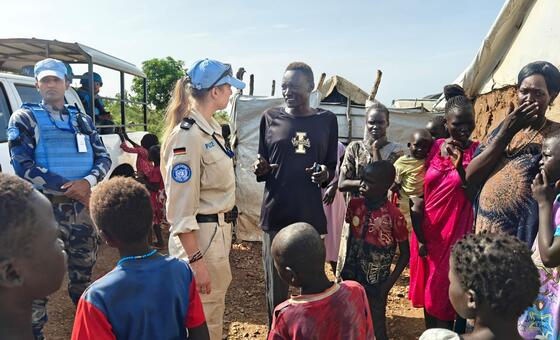
Building trust on patrol – Stephanie Königs, a German police officer, has transitioned from her home country to serving as a peacekeeper in South Sudan with the United Nations Mission. Her experiences, shared with UN News, highlight the critical role of trust and empathy in maintaining peace in conflict zones. Over the course of her year-and-a-half deployment, she reflected on how her work with the UNMISS has shaped her understanding of the unique challenges and rewards of peacekeeping.
The Mission’s Purpose and Global Reach
Established in 2011, the United Nations Mission in South Sudan (UNMISS) was created to protect civilians, facilitate humanitarian aid, monitor human rights, and support the implementation of peace agreements vital to the nation’s stability. As the world’s youngest country, South Sudan has endured significant violence, making the mission’s work all the more urgent. The team includes personnel from more than 70 nations, reflecting a global commitment to peace and collaboration.
Königs emphasized that the mission’s success depends not only on military and logistical efforts but also on the human connections forged in the field. “Every day is different, and you never know what challenges will arise,” she said. “There’s no typical day, and that’s what makes the work dynamic. Whether it’s navigating security threats or engaging with local communities, adaptability is key.”
A Career Rooted in Service
For Königs, the path to peacekeeping began with a childhood steeped in service. Her parents, both police officers, instilled in her a sense of duty and the belief that helping others is a fundamental part of life. “Growing up with role models like them, I always thought of police work as a way to make a difference,” she explained. “It’s not just about enforcing rules—it’s about understanding people and standing by them.”
Her motivation to become a police officer was deeply personal. “The reason I chose this path is to do the right thing, to try to do the right thing,” she said. “I want to help those who are vulnerable, especially in times of crisis. That’s why I feel so driven to be part of UNMISS.”
Empathy as a Tool for Connection
During her deployment, Königs discovered that small, everyday interactions often hold the most power in building trust. “It’s the little things that aren’t always visible,” she noted. “For example, when I met young women who were hesitant to speak with us at first, their fear slowly turned into openness. They shared their stories, and that meant a lot.”
Königs described how her gender allowed her to connect with community members in ways she hadn’t anticipated. “Being a female officer made a difference,” she said. “I could reach out to women and children, but also to men who might not have been as open to male counterparts. It’s about being seen as approachable and willing to listen.”
“We were not too sure if we should talk to you, but you gave us this good feeling.”
These words from a local woman underscore the impact of patience and understanding. Königs stressed that trust is built through consistent effort, not just authority. “You have to be patient and truly interested in the stories people tell you,” she said. “Without that, you can’t understand their perspective, and without understanding, you can’t earn their trust.”
She also highlighted the importance of listening as a core skill. “It’s not just about responding—it’s about trying to see the world through their eyes. Even if you can’t fully grasp their experiences, being open to their views is essential.”
Challenges and Opportunities for Women in Peacekeeping
While women are integral to the UN’s peacekeeping efforts, Königs noted that their presence is often limited in decision-making spaces. “I was many times the only woman at the table during meetings,” she said. “That’s a reality, even with the policies in place to promote gender equality.”
Despite this, she remains optimistic about the progress being made. “Having more women in the field isn’t just about representation—it’s about bringing diverse perspectives to problem-solving. Women often approach situations with a unique blend of empathy and resilience, which is vital in conflict zones.”
Königs also praised the camaraderie among international colleagues. “Working with people from all over the world is inspiring,” she said. “It reminds me that, while our backgrounds differ, we share common goals and values. That unity is what helps us overcome the challenges of the mission.”
Lessons from the Field
Reflecting on her time in South Sudan, Königs described how the mission has reshaped her view of the world. “It’s shown me that people are more similar than they might think,” she said. “Even in a place where conflict has divided communities, there’s a deep desire for safety, fairness, and connection.”
She believes that peacekeeping requires more than just force—it demands a commitment to understanding the local context. “Our presence in the field isn’t just about protecting people; it’s about being a part of their daily lives. Every interaction, whether it’s a conversation with a child or a discussion with a community leader, contributes to that goal.”
Königs, who recently won the Woman Police Officer of the Year Award, stressed the importance of empowering women in peacekeeping roles. “If we want to build lasting trust, we need more women involved in every aspect of the mission,” she said. “Their insights add depth to our work, and their presence inspires others to see the value of inclusivity.”
As she prepares to return home, Königs remains committed to her mission. “The work is challenging, but it’s also incredibly rewarding,” she said. “Every day, I’m reminded of why I chose this path. It’s about making a difference, one interaction at a time.”
Her journey underscores the transformative power of empathy, patience, and collaboration in peacekeeping. By bridging cultural and gender gaps, she has become a testament to how individual efforts can contribute to collective progress in some of the world’s most fragile regions.