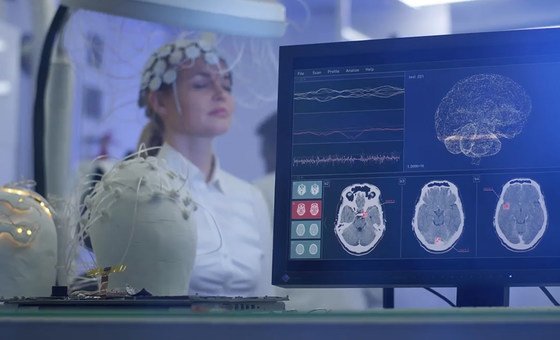
Could your brain data be used in court? UN urges safeguards for neurotechnology
Provpnmatrix.com – Could your brain data be used against you? The United Nations is warning that devices designed for gaming, wellness and productivity could generate highly sensitive information that may later be sought by governments or introduced in court. A new report from the UN Secretary-General says neurotechnology is advancing more quickly than the legal and ethical protections needed to defend human rights.
The issue extends beyond specialist medical equipment. Wearable devices that record electrical brain activity are becoming more available to consumers, raising questions about privacy, dignity and the limits of state power when neural information is collected or reused.
Speaking to the General Assembly’s Third Committee on Thursday, UN Assistant Secretary-General for Human Rights Claudia Fuentes Julio said neurotechnology could affect privacy, freedom of thought, liberty and fair-trial rights. She also highlighted risks for marginalised communities, which may face disproportionate exposure to intrusive technologies and their consequences.
“Neurotechnology accesses, measures and analyses brain signals,” the UN chief wrote in the report. “If these signals are treated as direct indicators of thoughts, intentions or truthfulness, the use of neural data points could undermine how we understand and value each of us as human beings.”
Technology moving beyond healthcare
Neurotechnology has long been associated with medical diagnosis, treatment and scientific research. It can measure, monitor, analyse, predict or alter aspects of the nervous system. The report describes neural data as qualitative and quantitative information about the structure, activity and function of the nervous system.
Its potential benefits are substantial. Medical and assistive uses may help people communicate, obtain care or manage health conditions. However, the meaning of this information can change sharply when it is used outside clinical settings for surveillance, employment decisions, law enforcement or legal proceedings.
The UN report notes that neurotechnology is already entering, or may soon enter, consumer markets, workplaces, schools, public services, policing and justice systems. Someone using a headset for relaxation, gaming or concentration may not expect the resulting data to be assessed as evidence of their intentions, mental state or credibility.
As wearable electroencephalography devices become more common, companies may collect and process increasing volumes of neural information. That creates practical concerns over who controls the data, how long it is retained, whether it can be shared and who may gain access to it in the future.
Why neural data needs special protection
The report examines the growing intersection of neurotechnology, artificial intelligence and justice systems. It warns that brain-derived information could be treated as a direct window into thoughts, intent or truthfulness, even though those conclusions may be scientifically uncertain and legally unsafe.
Could your brain data be used to influence whether you are believed, charged, detained or punished? The UN says that possibility threatens fair-trial rights if safeguards are weak. Data gathered for treatment, research or personal use should not be repurposed without clear rules, independent evaluation and meaningful opportunities to challenge its reliability.
Freedom of thought is also at stake. Private mental life has traditionally received exceptional protection. Treating brain activity as a shortcut to a person’s beliefs, intentions or honesty could weaken that protection, even when sophisticated technology or AI-based analysis is involved.
Artificial intelligence adds further risks because automated systems can detect patterns and make predictions from large datasets. If those predictions are treated as final judgments about an individual, mistakes and bias could have serious consequences. The report stresses that neural information should retain special protection when it is turned into a score, inference or automated assessment.
FAQ: protecting your neural information
What is neural data? Neural data is information about the nervous system’s structure, activity or function. It may be generated by devices that measure brain signals, including certain wearable headsets.
What should users consider before using a brain-sensing device? Users should review what information a device collects, why it is collected, how long it may be kept and whether it can be shared with third parties. It is also important to understand whether data gathered for recreation or wellness could later be used for other purposes.
Why does the UN want limits on neurotechnology? The UN is calling for firm restrictions on harmful practices and stronger protections for people whose neural information is collected or used. The goal is to preserve privacy, freedom of thought, equality and fair-trial rights as these technologies become more widespread.