Ebola Response Stretched as Infections Reach New Areas in Central and East Africa
Provpnmatrix.com – The Ebola outbreak in the Democratic Republic of the Congo has expanded into an eighth province, intensifying pressure on health workers as officials also investigate a newly confirmed case in Nigeria. The growing geographic reach of the virus has reinforced concerns that movement across borders could complicate containment efforts in a region already facing insecurity, strained health services and population displacement.
Nord Ubangi is the latest Congolese province to register infections. Its border with the Central African Republic is particularly challenging because armed violence in the area has forced thousands of people from their homes. Such displacement can make it harder for medical teams to identify contacts, trace possible exposure routes and ensure that people with symptoms can access safe treatment quickly.
The outbreak in DRC was declared in mid-May. Since then, it has caused more than 4,600 deaths among 9,552 confirmed cases. Roughly 60 per cent of the deaths have taken place outside health facilities, a stark sign that community transmission remains difficult to interrupt. When patients are unable or unwilling to seek care early, families and communities may face greater exposure while responders lose crucial time for tracing and monitoring contacts.
Nigeria investigates first confirmed case
Authorities in Abuja have confirmed Nigeria’s first Ebola infection of the year. The patient arrived from Uganda, a country bordering some of the provinces most affected by the Congolese outbreak. Investigators are still reconstructing her travel route and trying to establish precisely where exposure occurred.
“The source of exposure is still not known and the travel history of the patient is being pieced together now in terms of her movement from Uganda up to Nigeria,” said Dr Patrick Otim of the World Health Organization’s Emergency Response programme.
Dr Otim said the situation is changing rapidly and that determining the location of exposure will be essential before health authorities can judge whether any onward transmission has taken place in Nigeria.
“As we get more information, we’ll try to determine where she was exposed. And then it’s at that point where we can say whether there is any transmission happening.”
The Nigerian patient developed symptoms on 7 October, visited a clinic and was hospitalised two days later. More than 40 close contacts have been identified so far. Genetic sequencing is under way to establish whether the infection matches the Bundibugyo Ebola virus circulating in DRC.
Nigeria is the fifth country this year to confirm Ebola disease linked to Bundibugyo virus, after DRC, France, Uganda and Kenya. The emergence of cases in several countries highlights why surveillance, rapid isolation and clear communication with communities remain central to controlling the disease.
“All the Infection Prevention and Control measures have been put in place to try to ensure that the risk of amplification of transmission within the health facilities is limited,” Dr Otim said.
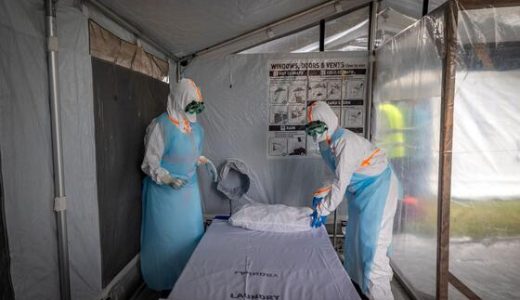
Health facilities in Abuja and elsewhere in Nigeria are being urged to strengthen preparedness. Early recognition of possible Ebola symptoms, protective procedures for staff and prompt referral systems can reduce the risk that a single patient exposes others in a clinical setting.
Regional vigilance after cases in Kenya and Uganda
Kenya has recorded nine infections, including one death earlier this month. The person who died was a Kenyan national who had worked in DRC before returning to Nairobi through Entebbe, Uganda. Kenyan officials launched contact tracing immediately after the death and identified 135 contacts.
“Immediately after [the death of the Kenyan patient], we commenced on contact tracing,” said Dr Patrick Amoth, Director General of Kenya’s Ministry of Health.
He said all 135 people identified as contacts had been accounted for. Uganda had previously confirmed 20 cases and two deaths before declaring the Ebola threat over at the end of August. The new developments in neighbouring countries nevertheless show how quickly regional preparedness can again become necessary when people travel across busy transport routes.
The Bundibugyo virus is distinct from the Zaire strain that has caused several previous Ebola outbreaks. In DRC, research is continuing to assess whether the Ervebo vaccine, developed for Ebola disease caused by Zaire virus, might provide protection against Bundibugyo virus.
“We still do not have preliminary data yet as to whether there is…sufficient cross-protection between the Ervebo vaccine – which is for the Zaire species – and the Bundibugyo species,” Dr Otim said.
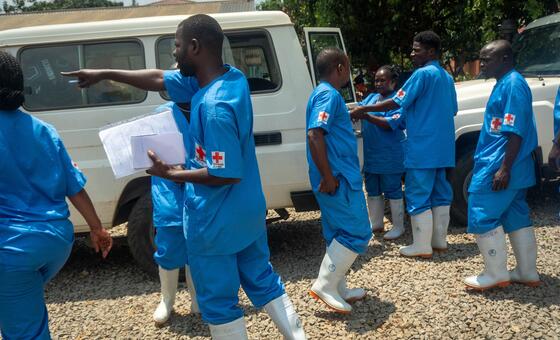
Until researchers have clearer findings, outbreak control depends heavily on established public-health measures: detecting cases quickly, tracing people who may have been exposed, supporting communities to seek care safely and preventing infection within treatment settings.
Security and trust challenge the response in eastern DRC
In North Kivu province, concern remains acute in the rural commune of Mangina in Beni territory. Fifteen deaths a day were reported there last week as infection continued to spread. A World Health Organization emergency team arrived two weeks ago after negotiating access and has begun working with affected communities.
Security conditions have complicated that effort. Communities initially showed concern and resistance to receiving outside assistance, while the area itself remains highly insecure. Building trust is especially important in an Ebola response, since successful contact tracing and safe care rely on people feeling able to share information, report symptoms and work with response teams.
“There was a lot of community preoccupation and community resistance in the beginning to receive help, it’s a very highly insecure area,” said Dr Anne Ancia, WHO Country Representative in DRC.
Dr Mohamed Janabi, WHO Regional Director for Africa, warned that the outbreak should now be viewed as a regional challenge rather than a crisis contained within one location.
“Ebola does not wait. It follows movement, exploits gaps and tests the strength of our health systems,” he said.
He stressed that reaching people earlier, making safe care available closer to communities and strengthening trust are critical before fear becomes another obstacle to survival. Strong surveillance and careful follow-up of contacts, he added, remain the practical foundations for stopping further spread.
Related Reading
Frequently Asked Questions
What is DR Congo?
DR Congo is the main topic of this guide. The article explains the context, practical details, and next steps readers should understand.
Why does DR Congo matter?
DR Congo matters because readers are looking for a useful answer, not just a short summary. Good content should match search intent and help them decide what to do next.