UN Warns of Heightened Civilian Risks as Israeli Control Expands in Gaza
Expanding areas under Israeli control in Gaza – The United Nations and humanitarian organizations have issued a stark warning that the growing Israeli control over Gaza’s territories since the October ceasefire agreement has significantly increased civilian exposure to danger while restricting essential aid operations. This alert was released on Wednesday, emphasizing the escalating challenges faced by the population in the Occupied Palestinian Territory (OPT).
Escalating Displacement and Humanitarian Pressures in the OPT
As displacement rates remain high and humanitarian needs intensify across the OPT, the situation in Gaza has worsened. The combined Humanitarian Country Team in the region stated that the expansion of Israeli-controlled zones, paired with movement restrictions, has created severe limitations for aid workers and reduced the living space available to displaced civilians. These conditions threaten the already fragile stability of communities.
Impact of Lethal Force and Restricted Access
According to the UN statement, Israeli forces have resorted to lethal measures to maintain control over designated areas since the ceasefire agreement began. This approach has disrupted the flow of aid and intensified the risks for civilians. The report noted that between October 10, 2025, and early April, the UN confirmed 196 Palestinian deaths in attacks near Israeli deployment zones. These casualties included 18 women and 43 children, with many incidents occurring in regions where ground markers were unclear.
“The expansion of controlled areas, combined with movement restrictions, continues to limit access for aid workers and reduce the space available to displaced civilians,” said the Humanitarian Country Team.
Humanitarian Operations Under Threat: Delays and Activity Cuts
The statement further highlighted the disruption of life-saving aid due to persistent movement barriers. These restrictions have caused significant delays and interruptions in humanitarian efforts, forcing some organizations to scale back or temporarily halt critical activities. Thousands of families have been affected, particularly after the loss of service providers operating in restricted zones.
Access Restrictions: 65% of Gaza’s Land Under Control
Recent assessments reveal that approximately 65% of Gaza’s land is now under Israeli control, with most areas inaccessible to residents. Humanitarian groups must coordinate carefully to gain entry, and access by sea remains completely barred. This situation has left many communities isolated, compounding the difficulties of delivering food, medical supplies, and other necessities.
Call for Immediate Protection: Cease Targeting Civilians Near Israeli Forces
The UN reiterated its demand for an immediate halt to the targeting of Palestinians who come into proximity with Israeli forces. Civilian protection must be upheld in accordance with international humanitarian and human rights law, the organization urged. This includes safeguarding those who are displaced and vulnerable to further harm.
Incident in Beit Lahia: Families Displaced by Israeli Advances
Amid the ongoing crisis, a specific incident in Beit Lahia underscored the urgency of the situation. After Israeli forces moved into the area, residents fled, reportedly due to the burning of three tents by incendiary munitions dropped from the air. Cement blocks marked the expansion of the so-called “Yellow Line,” further constricting the space available for civilians.
Health Crises Intensify: Spread of Diseases in Overcrowded Conditions
Humanitarian agencies have also raised concerns about the proliferation of health issues, such as skin diseases and acute watery diarrhoea, fueled by overcrowding and inadequate water and sanitation systems. These conditions worsen the suffering of those already displaced and highlight the interconnectedness of access restrictions and public health.
Progress and Challenges: Firas Market Cleanup
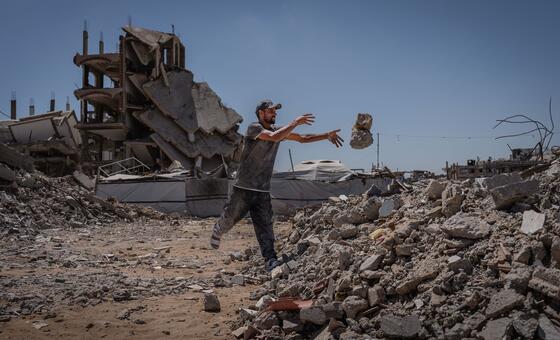
Despite the dire circumstances, some progress has been made. The UN Development Programme (UNDP) recently announced that it had cleared half of the massive solid waste accumulation at Firas Market in Gaza, describing it as a meaningful step toward reviving the historic commercial hub. Over 250,000 cubic metres of debris were removed, clearing 75% of the market area.
However, the aid response remains constrained by both access limitations and insufficient funding. Only a quarter of the year’s humanitarian appeal has been met so far, leaving many critical needs unaddressed. This financial shortfall, combined with the logistical hurdles of restricted zones, continues to challenge the effectiveness of relief efforts.
Long-Term Consequences of Shrinking Safe Zones
With control measures expanding, the living conditions for Palestinians in Gaza have become increasingly dire. Many have been displaced multiple times, now confined to smaller and smaller areas. The UN warned that this trend could lead to long-term consequences, including heightened vulnerability to conflict and limited opportunities for recovery.
The situation demands urgent action to prevent further civilian casualties and ensure uninterrupted aid delivery. As the conflict persists, the international community faces the challenge of balancing military objectives with the protection of civilian populations. Without immediate intervention, the humanitarian crisis in Gaza is expected to deepen, affecting millions of lives.