Haiti: Harrowing Needs Must Be Met with Long-Term Engagement
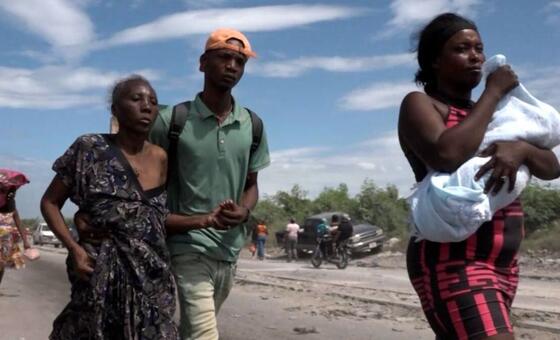
Haiti – Record-breaking displacement levels in Haiti have surged due to escalating gang violence, intensifying an existing humanitarian emergency and leaving nearly 1.5 million individuals without secure housing, as revealed by recent data from the UN Migration Agency, IOM. This crisis has not only destabilized urban hubs but also permeated rural regions, forcing families to flee attacks repeatedly with shrinking prospects of safety.
Gregoire Goodstein, IOM’s Chief of Mission in Haiti, highlighted the gravity of the situation, stating that “Haiti’s displacement crisis is entering an even more alarming phase.” The situation has deteriorated so swiftly that displacement in May alone exceeded 18,000 people within days, primarily in the densely populated Cité Soleil district, the capital’s largest slum. This influx has pushed the number of internally displaced in Port-au-Prince past 300,000, a first-time record on the books.
“To reach safety, her family waded through the sea up to their necks, then crawled through farm fields covered in mud and waste to avoid being seen by the gangs,” Mr. Goodstein recounted, describing the harrowing journey of a woman who fled her community after it fell victim to gang violence.
As the crisis expands, the boundaries between conflict zones and safe havens are blurring. Previously stable areas are now grappling with new waves of displacement, as seen in the South-East Department, where armed attacks displaced over 5,000 people just weeks before Cité Soleil’s violence. These regions, once considered refuge, now face their own security challenges, marking a shift in the pattern of displacement.
Humanitarian organizations emphasize that this trend underscores a growing threat: areas that once provided sanctuary are now becoming epicenters of displacement. Many displaced families have sought shelter in makeshift settlements or with host communities already strained by their own needs. The result is overcrowded living conditions and stretched resources, exacerbating the hardships faced by those in need.
Compounding the situation are the increased forced returns of Haitians to their homeland. Since the start of 2026, more than 110,000 individuals have been sent back, including women, children, and vulnerable groups. These returnees often arrive with minimal resources, finding themselves in regions already besieged by insecurity or facing the added strain of accommodating new arrivals.
Among the most at-risk are unaccompanied children, pregnant women, and postpartum mothers, who encounter unsafe conditions upon return. Displaced families report acute shortages of essential resources, such as shelter, food, clean water, and medical care, while access to psychosocial support remains limited despite the trauma of repeated displacement and exposure to violence.
Overcrowding in shelters and degraded access to services have also heightened protection risks, with reports of exploitation and abuse rising. As the Atlantic hurricane season approaches, aid agencies caution that conditions could worsen, particularly for those in temporary accommodations with inadequate storm resistance. Flooding and severe weather threaten to compound the challenges of survival for thousands already in precarious situations.
Despite these obstacles, IOM and its partners continue delivering emergency aid to the most affected areas. Current initiatives include shelter provision, healthcare services, water and sanitation infrastructure, relief supplies, and logistical support for displacement sites. However, aid agencies stress that long-term engagement is crucial to address the root causes of the crisis.
They argue that emergency relief alone cannot suffice. Sustainable solutions require investments in improved security, expanded access to basic services, legal identity documentation, and employment opportunities. These measures would not only stabilize displaced populations but also empower communities to rebuild and recover from the ongoing turmoil.
The scale of the displacement crisis reflects a broader breakdown in safety and stability across Haiti. With over a million people now on the move, the country faces an unprecedented challenge in meeting the needs of its most vulnerable citizens. As the conflict persists, the urgency for coordinated, sustained efforts grows. Without addressing the underlying factors driving displacement, the situation risks spiraling further, leaving lasting scars on the nation’s social fabric and economic resilience.