Lebanon crisis: Needs soar as UN launches new funding appeal
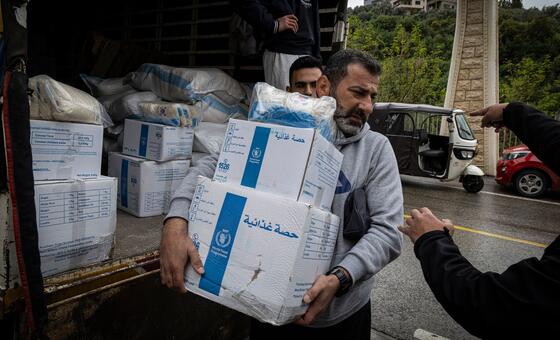
Lebanon crisis – Amid escalating turmoil in Lebanon, the United Nations has issued a fresh call for aid, seeking an additional $331.5 million to support 1.4 million individuals struggling with growing humanitarian challenges. This appeal comes three months after the outbreak of deadly violence between Hezbollah fighters and Israeli forces, which has since intensified the already dire conditions for civilians across the country.
Humanitarian challenges persist despite ceasefire claims
Imran Riza, the UN Humanitarian Coordinator in Lebanon, emphasized the urgent need for financial assistance during a press briefing in Beirut. “Humanitarian needs are soaring with each day of the conflict; our work is unfortunately far from over…we need the funding,” he stated. Despite a ceasefire announced on Wednesday, Riza noted that violence continues to disrupt daily life, leaving communities in a state of constant uncertainty.
“Humanitarian needs are soaring with each day of the conflict; our work is unfortunately far from over…we need the funding,” said Imran Riza, UN Humanitarian Coordinator in Lebanon.
Riza described the devastation wrought by airstrikes, drone attacks, and shelling, highlighting the destruction of critical infrastructure. “Hospitals and clinics hit by airstrikes, government buildings destroyed, agricultural land scorched, water stations demolished and schools turned to displacement sites,” he outlined. The toll of the conflict is evident in the physical and emotional toll on civilians, with essential services struggling to keep pace with the demand.
Displacement and trauma fuel worsening crisis
Since the latest escalation of hostilities, over 3,500 lives have been lost and more than 10,000 people injured. Nearly a million individuals have been forced from their homes, with many now living in overcrowded shelters or temporary accommodations. Riza warned that the displacement crisis shows no signs of slowing, as families continue to flee their communities in search of safety.
“Health workers and first responders are facing death and injury on a horrific scale,” Riza added. Entire neighborhoods have been reduced to rubble, making it increasingly difficult to provide timely aid. The repeated displacement of families has also left them grappling with deep trauma, compounded by the lack of stable shelter and the anxiety of not knowing when they can return to their homes.
“Affected people are rapidly exhausting their coping capacities and essential services are under increasing strain,” the UN aid coordination office, OCHA, said in an update accompanying the appeal.
According to the UN, displacement orders are issued frequently, with people moving from one location to another in response to ongoing threats. “There are a lot of displacement orders happening all the time. And in fact, this morning there have been a number that have been issued, that people keep moving. So, it’s very difficult to know where people are at certain times,” Riza explained. This constant displacement has created a complex web of challenges for humanitarian efforts, requiring a significant increase in resources.
Risks for women and girls escalate in crisis zones
Andrew Saberton, Deputy Executive Director for the UN population fund, UNFPA, raised concerns about the heightened vulnerability of women and girls in Lebanon. “Overcrowded shelters lack privacy, adequate sanitation and basic protection measures,” he warned during a video address to journalists in Geneva. Saberton highlighted that more than 600,000 women and girls are at risk of gender-based violence, a figure that has risen due to the displacement caused by the conflict.
“Overcrowded shelters lack privacy, adequate sanitation and basic protection measures,” warned Andrew Saberton, Deputy Executive Director for UN population fund, UNFPA.
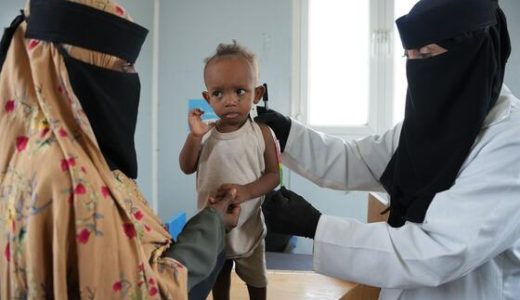
Saberton noted that the situation for maternal health services has deteriorated sharply. “In addition, approximately 1,800 women are expected to give birth every month across Lebanon. And yet healthcare facilities continue to come under attack, hospitals and primary healthcare centres have been forced to close and women are finding it increasingly difficult to access essential maternal health services,” he explained. This has led to a critical shortage of resources for pregnant women, with many unable to receive the care they need.
Fragmented healthcare and repeated damage to infrastructure
Riza’s visit to a UNFPA-supported primary healthcare centre in south Lebanon underscored the fragility of the country’s medical system. He recounted how the facility, which had been rebuilt in 2025, was once again severely damaged by airstrikes. “These were amongst the few, very few facilities that continue to operate in the area,” he noted. The repeated destruction of infrastructure has left many communities without access to basic medical care, further compounding the humanitarian emergency.
The UN has also called attention to the long-term consequences of the displacement crisis. Beyond Israel’s self-declared military line, an estimated 28,000 people remain displaced. Riza estimated that the number of those unable to return home could rise dramatically, potentially reaching 200,000 or more. “In 2024, after conflict between Hezbollah fighters and Israel, some 68,000 people could not go back to their villages after the cessation of hostilities,” he said. “Either because it was not safe or mainly that their villages had been destroyed. I think our estimation now is that number is going to be much, much larger.”
Global efforts and urgent funding requirements
The UN’s emergency appeal marks a significant step in addressing the escalating needs of Lebanon’s population. With the total funding request through August this year now standing at $639.9 million, the organization is urging international partners to contribute more rapidly. “The scale of the crisis demands immediate action, as the situation continues to worsen for millions of people,” said OCHA in its latest update.
As the conflict enters its third month, the combination of violence, displacement, and infrastructure damage has created a multifaceted humanitarian disaster. The UN’s focus on emergency aid is critical to mitigating the suffering of those affected, particularly as the risk of gender-based violence and the strain on healthcare systems grow. Without timely and sustained support, the crisis is likely to deepen, with lasting repercussions for Lebanon’s population.
Lebanon’s crisis is not only a local issue but one that has drawn global attention. The UN’s appeal highlights the interconnected nature of the challenges, as the destruction of schools, hospitals, and agricultural land has disrupted livelihoods and left communities struggling to rebuild. The situation underscores the importance of coordinated international efforts to ensure that aid reaches those in need before the situation becomes even more dire.
As the conflict continues, the UN remains committed to providing critical assistance to those affected. However, the scale of the task is immense, requiring a surge in funding to meet the expanding demands of the crisis. With each passing day, the needs of the displaced and vulnerable populations grow, underscoring the urgency of the appeal and the importance of a rapid response to prevent further human suffering.