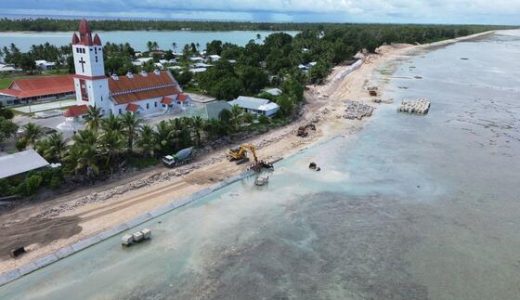
Climate Crisis Deepens Across Southwest Pacific Waters
Southwest Pacific s last tropical glacier – The World Meteorological Organization has released a comprehensive assessment revealing that the Southwest Pacific region is confronting escalating environmental challenges. According to the report published on Tuesday, the vast ocean territory is experiencing heightened temperatures, increased acidity levels, and growing threats to coastal populations. These compounding factors are reshaping the region’s ecological and economic landscape.
Record-Breaking Warmth and Ocean Heating
The latest State of the Climate in the South-West Pacific assessment indicates that 2025 secured its position as the second warmest year documented for the region, trailing only 2024. Average surface air temperatures registered approximately 0.37 degrees Celsius above the baseline established between 1991 and 2020. This warming trend extends beneath the surface as well, with scientists observing unprecedented ocean heat content in the upper 700 meters of water during 2025.
Record-breaking temperatures appeared in multiple locations, including waters south of Australia, the southern Tasman Sea, portions of the tropical North Pacific spanning from the Philippines to Hawaii, and areas south of Sumatra in Indonesia. Despite the temporary cooling effects brought by the La Niña climate pattern in certain zones, average sea-surface temperatures remained elevated throughout the entire region. Exceptional levels were recorded around Papua New Guinea, across the Australian maritime zone, and within a wide expanse of the tropical western North Pacific stretching eastward from the Philippines toward Hawaii.
Vanishing Tropical Glacier
One of the most alarming findings concerns Indonesia’s last remaining tropical glacier, which scientists project could disappear entirely by the conclusion of this year or within the first months of 2027. The remaining tropical ice coverage has shrunk dramatically, now representing merely two percent of the extent documented in 1988. This rapid decline underscores the accelerating pace of climate change in tropical regions previously thought to be more resilient.
For many countries and territories in the Southwest Pacific, the ocean is central to livelihoods, economies and resilience.
— Celeste Saulo, WMO Secretary-General
Rising Seas and Acidifying Waters
Sea levels have continued their upward trajectory in direct response to ocean warming. Between 1999 and 2025, the Southwest Pacific experienced an average sea level increase of 3.7 ± 0.03 millimeters annually. The report identified an elongated zone of particularly pronounced sea-level rise extending from Australia’s eastern coastline to approximately 120 degrees west longitude. This area encompasses the Coral and Tasman Seas along with substantial portions of ocean west of New Zealand.
Simultaneously, nearly the entire Southwest Pacific recorded historically low surface ocean pH values during 2025. As seawater absorbed progressively greater quantities of carbon dioxide, the water became increasingly acidic, threatening marine ecosystems that support food security, tourism, fisheries, and local economies worldwide.
Cyclone Senyar and Extreme Weather
The year’s most lethal single weather event was Cyclone Senyar, which made history as the first documented system to achieve tropical cyclone intensity within the Strait of Malacca. The storm impacted more than 10 million residents across Indonesia and Malaysia, resulting in over 1,200 fatalities. The heaviest precipitation occurred in far northern Sumatra, where rainfall exceeded 400 millimeters within a single day. Additional extreme rainfall was recorded in northern Peninsular Malaysia and southern Thailand.
Marine Heatwaves and Ecosystem Disruption
Long-term ocean warming has transformed marine heatwaves into more frequent, prolonged, and intense phenomena. These events trigger coral bleaching, mass fish mortality, significant aquaculture disruptions, kelp forest degradation, alterations in species distribution patterns, and harmful algal blooms. Although marine heatwave coverage in 2025 was somewhat reduced compared to the previous year, it still represented the most extensive occurrence ever recorded during a year without an El Niño event.
The agency characterized this pattern as a concerning indicator for 2026, noting that a potentially strong El Niño event is currently developing. During the summer of 2024-2025, marine heatwave conditions surrounding Australia caused coral bleaching in both eastern and western reef systems simultaneously for the first time in recorded history, emphasizing the critical importance of effective early warning services.
In 2025, the region experienced warming oceans, rising sea levels, marine heatwaves and ocean acidification, alongside tropical cyclones and the continued loss of tropical glacier ice.
— Celeste Saulo, WMO Secretary-General
Regional Collaboration and Future Outlook
The comprehensive report was developed through WMO’s collaboration with national meteorological and hydrological services, international data centers, premier climate research and marine services institutions, and United Nations partners, including the regional Economic and Social Commission, ESCAP.
Across Asia and the Pacific, heat is intensifying multi-hazard risks, intersecting with food systems, public health, infrastructure and oceans, and placing new pressures on health and livelihoods.
— Armida Salsiah Alisjahbana, ESCAP Executive Secretary
Early warning and early action save lives when alerts are timely, messages are trusted and last-mile delivery reaches the vulnerable.
— Armida Salsiah Alisjahbana, ESCAP Executive Secretary
As the region faces these interconnected challenges, the emphasis on timely communication and community resilience grows ever more critical for safeguarding both human populations and marine ecosystems in the Southwest Pacific.