Survivors of Terror Seek Digital Protection as UN Unveils Victim-Led Campaign
Provpnmatrix.com – From a packed stadium in Kampala to a music festival in Israel, the scars of terrorism extend far beyond the physical wounds inflicted on the day of an attack. In an era where a single distorted clip can circulate to hundreds of millions within hours, survivors face a second, quieter violence: the erosion of their truth online. On Friday, the United Nations moved to confront that threat by unveiling a victim-led initiative designed to shield those who have endured terrorist violence from digital re-traumatisation and misinformation.
The announcement came during a commemorative gathering marking the International Day of Remembrance of and Tribute to the Victims of Terrorism, a date observed annually to honour those killed or wounded by acts of terror worldwide. The new programme was put forward by the Victims of Terrorism Associations Network, a body established last year by the UN Counter-Terrorism Office to coordinate collective action around the rights and practical needs of survivors and their families.
A Day That Carries Weight
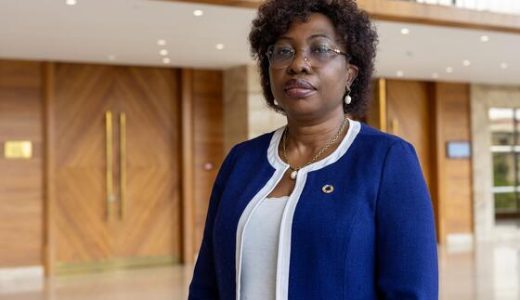
For those who have lived through an attack, the anniversary is never merely administrative. Saynab Warsame, who survived a terrorist strike in Somalia, addressed the commemoration with words that reframed the occasion from a calendar entry into something deeply personal.
“It’s not just another date on the calendar. It’s a day that reminds me of who I lost, who I am and who I am still becoming.”
Ms. Warsame also drew attention to the fragility of memory in a landscape saturated with synthetic media. Fake footage, fabricated narratives, and algorithmically amplified falsehoods, she warned, can quietly rewrite what happened to a survivor and their community.
“In today’s digital world, memories are fragile. With fake videos and information, the truth can easily be lost or changed.”
That observation is not abstract. Survivors across every inhabited region have documented instances of online harassment, doxxing, and narrative distortion following attacks, turning the recovery process into an ongoing negotiation with hostile digital spaces. The initiative launched Friday is structured to give survivors themselves a seat at the table in shaping responses to that harm, rather than leaving them as passive subjects of well-meaning but externally designed programmes.
Three Hundred and Twenty-Eight Days
Among those who spoke at the event was Rachel Goldberg-Polin, a dual national of the United States and Israel. Her son, Hersh, was 23 years old when, in October 2023, Hamas fighters stormed the Nova Music Festival in Israel and seized more than 250 attendees as hostages. Hersh was among them. He spent 328 days held captive in Gaza before being killed.
Ms. Goldberg-Polin framed her grief within a broader human pattern, noting that millions of parents around the globe have been forced to bury children. She invoked a prescient exchange between physicist Albert Einstein and psychoanalyst Sigmund Freud, conducted roughly 94 years ago, in which the two men grappled with whether civilisation could restrain its innate pull toward destruction.
“Civilisation has to decide whether to rise to the challenge to continually contain our natural tendencies towards war or to give into that slavery of selfish interest even though…it only serves the powerful few.”
She closed her remarks with an appeal directed at the assembled audience and, by extension, at the wider public watching the commemoration.
“May we use our wisdom, strength and light to do what is right. The choice is hard, but the choice is ours.”
From the 78th Minute to a Movement
The 2010 FIFA World Cup final was being watched by thousands gathered at a public viewing venue in Uganda when, in the 78th minute, two suicide bombers detonated their charges. More than 70 people were killed and many others wounded. Hassan Ndugwa was among the injured.
That night became, for him, a turning point. He set about recovering physically and then turned his attention to preventing the spread of violent extremism in his own community. Frustrated by what he saw as a systematic misrepresentation of Islam in the aftermath of the bombings, Ndugwa and another survivor established the Uganda Muslim Youth Development Forum. The organisation has since reached thousands of young people through job-skills training, mentorship, and other forms of practical support.
“The most fulfilling work that we have done since then is the work to provide alternatives to youth. They are seeing a bright future. They now have renewed hope. So, it’s difficult for you to come and tell them to join an extremist group because they are…seeing a brighter future.”
The forum continues to engage religious leaders and community structures to promote peace and counter extremist recruitment, Ndugwa noted. He also stressed that survivor testimony and the act of remembrance themselves play a therapeutic role, helping individuals and communities process trauma rather than suppress it.
Remembrance as a Pathway, Not a Weapon
UN Secretary-General António Guterres addressed the commemoration, tying the year’s theme — “Healing through memory” — to the practical question of how societies choose to remember.
“This year’s theme, Healing through memory, reminds us that remembrance is a pathway to recovery and renewal. But, how we remember matters.”
He cautioned that victims’ stories must never be instrumentalised to deepen divisions or to fuel further hatred, particularly on digital platforms where a survivor’s account can be stripped of context, cropped for outrage, or buried under competing narratives within minutes of being shared.
“Instead of letting terror divide us, we can and must stay united. Today and every day, let us stand in solidarity with victims and survivors and build a future free from violence and fear.”
The initiative launched Friday represents an attempt to translate that solidarity into operational reality: giving survivors structured access to digital-protection resources, ensuring their narratives are represented accurately in online spaces, and embedding their perspectives into the design of counter-terror communication strategies. Whether it succeeds will depend on sustained funding, cross-border cooperation among victim associations, and the willingness of platform operators to treat survivor testimony with the same care afforded to other categories of public speech. For now, the framework exists, and the survivors who built it intend to use it.
Related Reading
Frequently Asked Questions
What is New initiative launched to shield terrorism?
New initiative launched to shield terrorism is the main topic of this guide. The article explains the context, practical details, and next steps readers should understand.
Why does New initiative launched to shield terrorism matter?
New initiative launched to shield terrorism matters because readers are looking for a useful answer, not just a short summary. Good content should match search intent and help them decide what to do next.