After a Decade of War, Syrians Pick Up the Pieces — Literally
Provpnmatrix.com – More than ten years of armed conflict and cascading humanitarian crisis have left Syria’s cities and towns buried under mountains of shattered concrete, corroded steel, and unexploded ordnance. The toll is staggering: hundreds of thousands dead, millions uprooted from their homes, and an estimated $100 billion in infrastructure damage spread across every governorate. Roads that once connected villages to markets now end at walls of collapsed masonry. Water mains and sewage lines lie severed beneath rubble. Power grids flicker or fail entirely. For entire neighbourhoods, the simple act of walking to a shop or sending a child to school has become impossible.
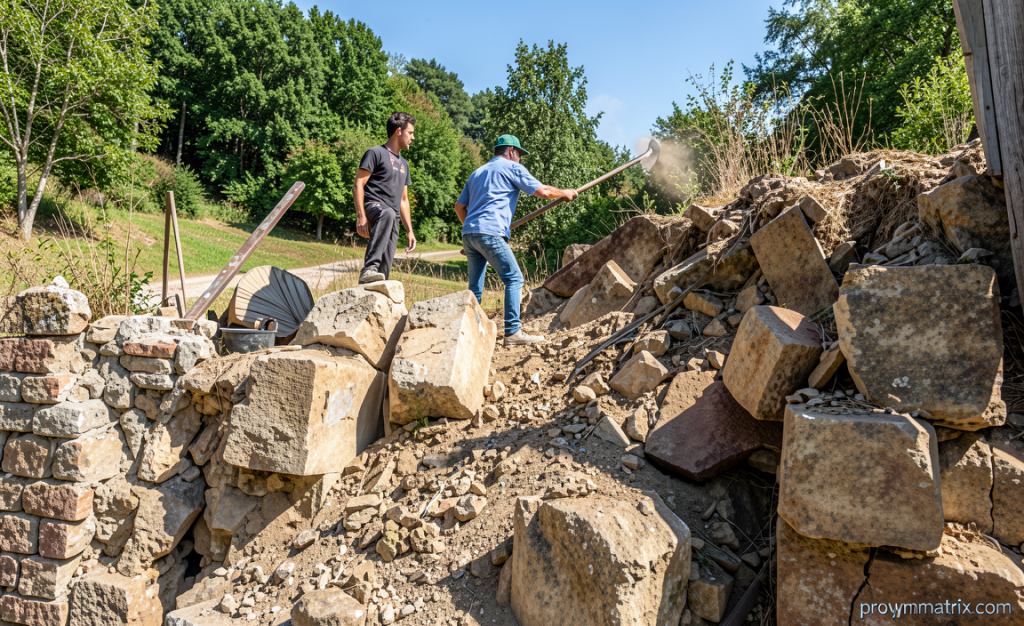
It is against this backdrop that a quiet but determined effort is unfolding across four Syrian governorates. Residents are rolling up their sleeves — sometimes literally, with bare hands — to drag the wreckage out of their streets so that daily life can begin again. They are not doing it alone. International partners, channelled through structured programmes, are supplying the heavy machinery, technical planning, and sustained funding that communities cannot generate on their own.
The REVIVE Project: Scale and Scope
The UN Development Programme (UNDP), working alongside local and international partners, has launched the REVIVE project to accelerate debris clearance and basic-service restoration in Aleppo, Deir-ez-Zor, Homs, and Rural Damascus. The operation targets 570,000 tonnes of accumulated rubble. Alongside physical removal, the programme rehabilitates damaged road surfaces, reconnects water and sewage networks, delivers explosive-ordnance risk education to residents navigating contaminated zones, and supports recycling initiatives that convert broken concrete and aggregate into reusable construction materials.
Joelle-Seme Park, a UNDP official who recently travelled to the country to assess recovery operations on the ground, described what she witnessed in a residential area of Rural Damascus:
“Standing in the middle of a neighbourhood in Rural Damascus, it was hard to imagine what daily life here once looked like. Piles of broken concrete and twisted metal block almost everything. Roads remain closed. Water and sewage networks cannot be repaired. Power and essential services struggle to return. Entire communities stay disconnected. Streets are blocked by rubble. Buildings have collapsed. Shops are shuttered. One thing became clear to me; until rubble is removed, life cannot fully restart.”
Income Where There Was None
Debris clearance is not merely a civil-engineering task; for many households it is the first reliable source of cash since the conflict upended their livelihoods. Under cash-for-work arrangements tied to the REVIVE project, more than 1,300 individuals have been paid to participate in debris-removal activities. Those earnings, in turn, support over 6,000 family members who depend on that household income for food, medicine, and schooling.
In Aleppo, a woman working at a debris-recycling facility described the transformation in her own household. Before the project arrived, she had no income at all. Now she can buy food and medicine for her children, her niece, and her nephew. She added that the children have returned to school — a small fact that, in the context of a decade of displacement and disruption, carries enormous weight.
Reclaiming Public Space and Community Pride
Beyond the economics, residents speak of something harder to quantify: the pride of watching their own street reappear. A community volunteer in Aleppo recounted how, once the debris was cleared from a particular block, neighbours spontaneously organised to rebuild a small park and install streetlights. Children and women, he noted, now use the space after school hours without fear — a freedom that had been absent for years.
What struck Park most, she said, was not the tonnage of material being moved but the determination of the people moving it. Families were hauling broken bricks and rebar from their own doorsteps with their hands, long before any excavator arrived. That agency — the decision to begin, to show up, to keep showing up — is what distinguishes a recovery effort from mere reconstruction.
What Rubble Clearance Unlocks
In the Syrian context, removing debris is a prerequisite, not an endpoint. It is the first domino in a sequence: roads reopen, utilities can be repaired, markets can restock, ambulances can reach patients, and children can walk to classrooms. Without that initial physical clearance, every other intervention — whether humanitarian, economic, or social — stalls at the threshold of a blocked street.
The scale of the task remains immense. Four governorates, hundreds of thousands of tonnes, and a population still adjusting to the rhythms of post-conflict life. Yet the pattern observed across the communities visited was consistent: once the rubble goes, movement resumes. Access returns. Families begin coming home. The question is no longer whether Syrians want to rebuild; it is whether the outside world will sustain the support long enough for them to finish the job.
Related Reading
Frequently Asked Questions
What is First Person?
First Person is the main topic of this guide. The article explains the context, practical details, and next steps readers should understand.
Why does First Person matter?
First Person matters because readers are looking for a useful answer, not just a short summary. Good content should match search intent and help them decide what to do next.