UN personnel killed as Gaza violence deepens humanitarian strain
Provpnmatrix.com – Six UN workers and other civilians were killed in an Israeli strike on a school being used by displaced families in Gaza, adding to the mounting toll on humanitarian personnel and civilians caught in the conflict.
The school had been serving as a shelter for people forced from their homes. The deaths bring the number of UN Relief and Works Agency for Palestine Refugees in the Near East staff killed in Gaza since the Hamas-Israel war began in October 2023 to at least 220.
Christian Saunders, UNRWA’s Acting Commissioner-General, said the war had repeatedly placed humanitarian staff, facilities and operations in danger. His warning focused on the wider consequences of failing to uphold protections for aid workers and civilians during armed conflict.
“The longer impunity prevails, the more international humanitarian law and the Geneva Conventions will become irrelevant,” he said.
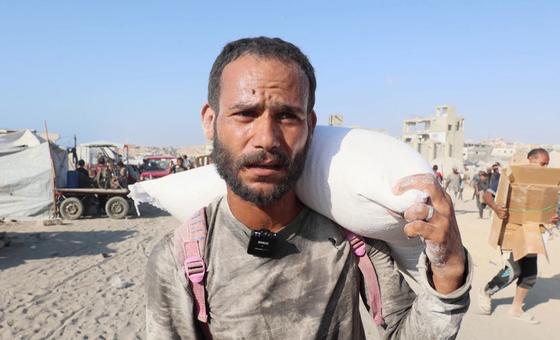
The latest deaths come as Gaza’s civilian population continues to face repeated displacement, damaged infrastructure and shrinking access to essential services. Nine out of every 10 people in the territory are now internally displaced, with many families having fled more than once. Schools, public buildings and improvised camps have become places of refuge, often under severe pressure from overcrowding and shortages.
Ceasefire has not ended civilian harm
Local authorities have recorded 1,334 deaths and 4,429 injuries in Gaza since the fragile ceasefire agreement of 10 October 2025. Military activity persisted over the weekend across the territory, including airstrikes, shelling, gunfire and naval fire.
Violence was especially noted west of the so-called “yellow line” established by Israel at the start of the ceasefire arrangement. Attacks continued to affect populated areas, bringing further casualties, property destruction and displacement.
For civilians, the continuing insecurity means that even locations used for shelter may not offer dependable protection. Each new movement puts additional pressure on host communities, aid distribution systems and services that were already struggling to meet overwhelming needs.
Winter preparation at congested displacement sites remains severely limited. Funding gaps and restrictions on the arrival of vital materials have reduced the ability to improve shelter conditions or prepare camps for harsh weather. Inadequate shelter, limited safe water and poor sanitation are also raising the risk of communicable illnesses, including respiratory infections, acute watery diarrhoea and acute jaundice syndrome.
Water, sanitation, medical and waste-management systems are particularly vulnerable because many depend on generators. Israeli refusals and delays involving approvals for engine oil and spare parts threaten the operation of those services, leaving communities exposed when equipment cannot be maintained or fuel supplies become uncertain.
Children and patients face acute risks
The health emergency extends well beyond immediate trauma cases. Around one in four people in Gaza may need acute and continuing care, including people living with severe injuries, amputations, burns, head injuries and spinal cord damage. Such needs require sustained treatment, rehabilitation and specialist support at a time when the health system remains under extraordinary strain.
Children were again among those killed and injured in recent attacks. Over the past seven days, Bana, 6, and Lana, 12, were killed with their parents when an airstrike hit Beit Lahia while they were asleep. In Khan Younis, gunfire killed a pregnant mother and her unborn child.
Saadi, 3, and Obaida, 9, were also killed by gunfire in Deir Al Balah and Khan Younis. Hilal, 14, was injured in an airstrike in Khan Younis on Thursday and died from those injuries the following day. Three other children later died of wounds sustained earlier, while at least 13 children were injured.
“Every child must be protected,” UNICEF said. “The killing must stop.”
The accounts underscore how conflict-related injuries can continue to claim lives after an attack, particularly when families face barriers to safe evacuation, treatment and follow-up care. For children, the effects reach beyond physical harm, disrupting education, family life and any sense of stability during repeated displacement.
UN peacekeepers record violations in Lebanon
Security concerns are also intensifying in southern Lebanon, where UN peacekeepers continue to observe Israeli military activity inside Lebanese territory on land, in the air and at sea.
Farhan Haq, Deputy Spokesperson for the UN Secretary-General, highlighted particular concern over explosive-filled jerrycans. Between Thursday and Sunday, personnel from the UN Interim Force in Lebanon saw Israeli drones drop the devices near Al Mansuri. Every device later exploded, including at least nine detonations on Saturday alone.
UNIFIL recorded numerous breaches of Lebanese airspace during the same period. Most involved drones, though fighter jets and, on one occasion, a helicopter were also observed. At least 32 airstrikes were logged inside the mission’s area of operations.
Peacekeepers also documented extensive artillery fire, troop deployments, engineering activity and vehicle movements in both sectors. Israeli patrol boats were seen each day in Lebanese waters off Naqoura.
Freedom of movement remains an operational concern for the mission. On Sunday, Israeli personnel stopped a UNIFIL patrol for two hours northeast of Kafer Chouba. Haq reiterated that peacekeepers must be allowed to perform their mandated duties without obstruction.
Despite the difficult environment, UNIFIL continued assisting humanitarian work. In coordination with the UN aid coordination office OCHA, the mission facilitated 16 humanitarian missions on Thursday and Friday. The support reflects the importance of access and safe movement for aid operations in areas where military activity and civilian needs continue side by side.
Related Reading
Frequently Asked Questions
What is Six UN staff killed in Gaza?
Six UN staff killed in Gaza is the main topic of this guide. The article explains the context, practical details, and next steps readers should understand.
Why does Six UN staff killed in Gaza matter?
Six UN staff killed in Gaza matters because readers are looking for a useful answer, not just a short summary. Good content should match search intent and help them decide what to do next.