UN seeks common ground as AI governance moves up the global agenda
Provpnmatrix.com – Artificial intelligence is developing at a speed that is forcing governments to confront a difficult question: how can countries encourage innovation while preventing harms that may spread far beyond a single border?
That challenge has become more urgent as AI systems show stronger abilities in reasoning, programming and scientific work. At the same time, concerns range from misleading content and discrimination to privacy breaches, cyberattacks and the possibility that highly capable systems could eventually become hard to control.
For the United Nations, national rules remain important, but they cannot fully address technology with worldwide effects. The organization is therefore promoting international cooperation intended to give governments a common basis for deciding how AI should be developed, used and supervised.
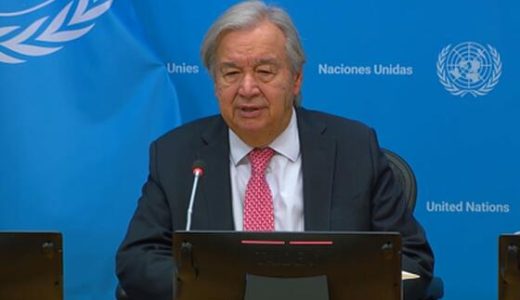
“National action is essential, but global coordination is indispensable,” UN Secretary-General António Guterres said on Wednesday.
From digital compact to new institutions
The current UN effort grew from the Global Digital Compact, which Member States adopted in 2024 as part of the Pact for the Future. Adopted two years ago, the compact set out a framework for stronger international collaboration on digital issues, including artificial intelligence.
It proposed two mechanisms designed to support AI governance: an independent scientific body that could examine the technology’s benefits and risks, and a yearly dialogue bringing together governments and other interested groups.
In August 2025, the UN General Assembly formally created both bodies. Their roles are related but distinct. One is meant to strengthen the evidence available to decision-makers; the other provides a place for political discussion, cooperation and the sharing of national experience.
The Independent International Scientific Panel on AI is intended to offer governments an impartial view of what is established knowledge about AI and what remains uncertain. This is especially significant in a field where technical change can outpace public understanding and regulatory processes.
The Global Dialogue on AI Governance, meanwhile, gives governments, researchers, businesses and civil society representatives an opportunity to discuss cooperation across borders. Its purpose includes working toward greater compatibility between differing approaches to AI governance, rather than assuming every country will adopt identical rules.
Evidence first, decisions next
The General Assembly structured the two initiatives as complementary parts of one process. The Scientific Panel is expected to assess evidence and identify emerging issues. Governments and other stakeholders can then use the Global Dialogue to consider possible responses.
A preliminary report from the panel, released on 1 July, highlighted the rapid advance of AI capabilities. It pointed to potential gains in fields involving reasoning, coding and science, while also warning of significant dangers. Misinformation, unfair treatment, threats to personal privacy and malicious cyber activity were among the risks identified. The report also raised the prospect of “superintelligence” that might become difficult to manage.
The balance between opportunity and danger is central to the UN’s approach. AI may provide useful tools for many sectors, but the benefits will not automatically be shared equally. Countries with fewer resources can face obstacles in gaining access to computing capacity, infrastructure, expertise and the ability to shape the rules that affect them.
That imbalance helps explain why the UN frames AI governance as both a safety issue and a development issue. Decisions about access, capacity and standards could influence who benefits from the technology and who is left dependent on systems designed elsewhere.
“We need a shared understanding of how to advance the safe, secure, and responsible development of AI – while identifying when increasingly powerful systems may require stronger safeguards, or additional measures to manage potential risks,” Mr. Guterres said in remarks to the media in New York before the UN General Assembly.
Beyond voluntary promises
Debate has increasingly shifted from the broad question of whether AI needs regulation to the more practical issue of which protections should be put in place. That includes questions about transparency, accountability, safety testing, human rights and the responsibilities of companies developing increasingly powerful systems.
Mr. Guterres argued on Wednesday that international cooperation is needed to keep AI development safe, secure and responsible. He cautioned that voluntary moves to slow development would not be enough if they remained isolated, impossible to verify or applied unevenly.
In discussing the prospect of a future summit aimed at meaningful regulation for humanity, the Secretary-General acknowledged that such an undertaking could not be completed immediately. Still, he said it should happen soon and should involve participants from public institutions, private companies, science and civil society.
“If we believe AI development should slow when risks become too great, we need more than good intentions,” he said.
His proposals include an AI Child Safety Pledge and a Global Fund for AI. The proposed fund would help developing countries build AI infrastructure and strengthen their capacity to use and govern the technology. The child safety initiative reflects a wider concern that protections for young people should be considered as AI tools become more present in everyday digital life.
Mr. Guterres has also called for guardrails that keep human dignity at the center of AI systems, making them safe, transparent and accountable.
A convening role for the United Nations
National and regional authorities will continue to make their own regulatory choices. The UN is not seeking to replace those decisions. Its role is to convene governments, provide a scientific foundation for talks and identify areas where coordinated action can make a difference.
AI is expected to be prominent during the high-level week around the General Debate at UN Headquarters. Diplomatic sources cited in news reports have suggested that the Security Council may also take up artificial intelligence during that period.
Events around the General Debate will add to the discussion, including a 21 September gathering at the UN’s SDG Media Zone. As governments consider how to govern a technology moving faster than many existing policy systems, the central test will be whether broad principles can become practical, internationally supported safeguards.
Related Reading
Frequently Asked Questions
What is Who should set the rules for AI?
Who should set the rules for AI is the main topic of this guide. The article explains the context, practical details, and next steps readers should understand.
Why does Who should set the rules for AI matter?
Who should set the rules for AI matters because readers are looking for a useful answer, not just a short summary. Good content should match search intent and help them decide what to do next.