Guterres urges cooperation as global risks dominate UN General Assembly week
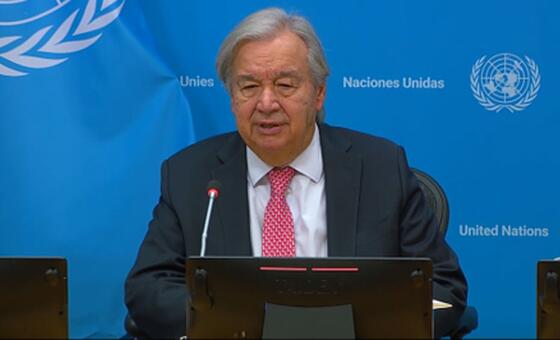
Provpnmatrix.com – With heads of state and government set to arrive in New York in less than a week, UN Secretary-General António Guterres has warned that the international community is confronting a period of profound instability. He called on governments to reinforce cooperation rather than retreat into division as they face mounting pressure from conflicts, climate disruption, inequality and the accelerating development of artificial intelligence.
Speaking six days before the General Assembly’s high-level meetings begin, Mr. Guterres described uncontrolled AI, the climate emergency and widening inequality as three threats with existential consequences. His message was that multilateral action is not optional when challenges cross borders and outpace the ability of individual countries to manage them alone.
“Updating our structures can never mean abandoning our principles – it must mean applying those principles with even greater determination,” Mr. Guterres said.
Conflict remains at the centre of diplomatic attention
The Secretary-General placed the situation in the Middle East and the war in Ukraine among the most urgent tests for international diplomacy. Both conflicts are expected to feature prominently when the General Assembly convenes next week, as leaders consider how to reduce violence and restore a path toward negotiated solutions.
On Gaza, Mr. Guterres stressed the scale of Palestinian suffering and renewed his appeal for a two-State solution. He said Israel’s annexation of the West Bank must end, while also insisting that civilians must not be harmed by any party involved in the wider regional conflict.
He urged all sides to respect navigation rights through the Strait of Hormuz and the Bab al-Mandab Strait. These waterways are especially significant for international shipping, making their security a concern not only for nearby countries but also for global trade and access to essential goods.
“At this crucial moment in the Middle East, de-escalation must be priority one, priority two and priority three,” the Secretary-General said.
His call for de-escalation was paired with a broader appeal for diplomacy and dialogue. The UN chief argued that reducing tensions is essential to protecting civilian lives and preventing already dangerous confrontations from spreading further across the region.
Mr. Guterres also returned to the war that began with Russia’s full-scale invasion of Ukraine more than four years ago. He said there was still no visible end to the fighting and pressed for an immediate ceasefire. In his view, a halt to hostilities would be the necessary opening step toward a peace settlement that is just, lasting and comprehensive.
For the UN, the two conflicts underline a recurring challenge: global institutions can provide forums for negotiation, humanitarian coordination and international legal principles, but durable progress depends on political choices made by the parties and by influential Member States.
AI’s promise and its fast-growing risks
Nearly half of Mr. Guterres’s remarks focused on artificial intelligence, reflecting the speed with which the technology has moved from a specialised field into public life, government policy and international security discussions. He acknowledged that AI could help expand access to health services, improve education and support work on climate-related challenges.
At the same time, he cautioned that technological progress is moving faster than humanity’s understanding of the possible harms. Questions surrounding safety, transparency, accountability and human oversight have become increasingly difficult to separate from debates about economic competition and national security.
The Secretary-General said governments have a responsibility to shield people from AI-related dangers. He argued that voluntary restraints cannot succeed if only a small number of countries adopt them, particularly as concern grows over a possible AI arms race involving the United States and China.
“The world cannot afford a race to the bottom on AI safety,” he said.
That warning reflects the central international dilemma surrounding the technology. Nations and companies want to benefit from rapid innovation, but competition can create incentives to reduce safeguards or delay rules that might slow development. Mr. Guterres said geopolitical divisions make the challenge harder, yet they also make coordinated standards more important.
He highlighted the Independent International Scientific Panel on AI, established through the UN, as a body intended to bring the strongest available evidence into global policy discussions. Its role is to assess both the opportunities created by AI and the risks that governments, businesses and communities may need to address.
Mr. Guterres called for practical guardrails that encourage public trust while keeping human dignity at the heart of AI governance. Such protections, he said, should ensure that systems are safe, transparent and answerable for their effects.
“International cooperation is more necessary than ever,” he said.
A defence of the UN Charter’s core commitments
Although Mr. Guterres recognised that global institutions, including the United Nations, need reform, he made clear that reform should not dilute the organization’s founding commitments. The principles of peace, human rights, international law and sustainable development remain central even when the structures designed to support them require updating.
He urged Member States to stand by the UN Charter, uphold international law, protect fundamental rights and invest in sustainable development. The appeal linked immediate crises with longer-term pressures, including climate change and inequality, which can deepen insecurity and make peaceful development harder to achieve.
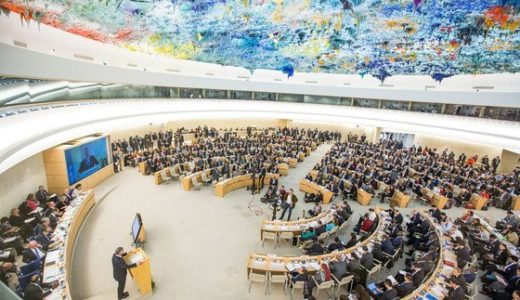
The coming General Assembly week will offer leaders a prominent setting to state their positions, negotiate priorities and test whether common ground remains possible. Mr. Guterres’s message was direct: the world’s most serious problems cannot be resolved through isolation, rivalry or weakened safeguards. They require sustained cooperation, stronger diplomacy and a renewed willingness to act on shared principles.
Related Reading
Frequently Asked Questions
What is AI climate and conflicts top Guterres?
AI climate and conflicts top Guterres is the main topic of this guide. The article explains the context, practical details, and next steps readers should understand.
Why does AI climate and conflicts top Guterres matter?
AI climate and conflicts top Guterres matters because readers are looking for a useful answer, not just a short summary. Good content should match search intent and help them decide what to do next.