With 2030 Approaching, Sustainable Development Gains Show What Targeted Action Can Deliver
Provpnmatrix.com – Less than four years remain before the deadline for the Sustainable Development Goals, and global progress remains uneven. Yet examples from countries such as Benin are being held up as evidence that determined policies, stronger public financing and broad partnerships can still improve daily life for millions of people.
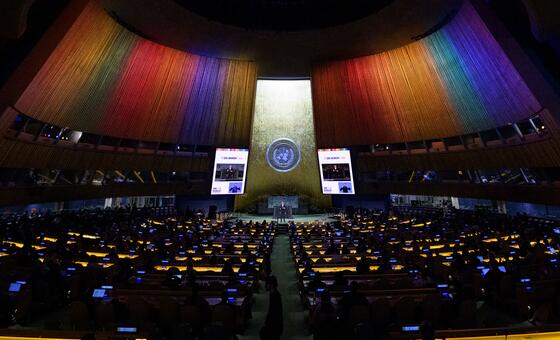
At the annual SDG Moment gathering at United Nations Headquarters in New York, leaders focused on both sides of the picture: real advances since the goals were adopted in 2015, and serious obstacles that continue to slow progress toward 2030.
Benin’s focus on domestic financing
For Benin, a West African nation, advancing the SDGs has depended in large part on finding reliable ways to fund development at home. Aristide Medenou, the country’s minister of economic cooperation, said domestic revenue has risen by 0.5 per cent of gross domestic product annually over the past decade.
The country also issued Africa’s first SDG bond in 2021. The funding raised through that instrument helped broaden access to schooling and drinking water. In the last five years, access to drinking water in Benin has climbed from 40 per cent to 80 per cent, Mr. Medenou said.
Economic development has also been part of the country’s approach. An industrial zone introduced in 2021 has generated 25,000 jobs, linking the broader SDG agenda to employment opportunities and local economic activity.
“If a country is not able to increase the domestic revenue, the country cannot go forward in implementing the SDGs,” Mr. Medenou said.
His message was that national commitments need practical financial foundations. International assistance and private investment can play important roles, but governments also need the capacity to collect and direct resources toward public priorities.
Mr. Medenou added that government action alone will not be sufficient.
“[Governments] cannot do it alone.”
Private-sector involvement, he argued, is necessary if countries are to expand investment and deliver services at the scale required by the goals.
Global improvements, but an increasingly narrow window
All UN Member States adopted the 2030 Agenda for Sustainable Development in 2015. Its 17 goals cover a wide range of interconnected challenges, including poverty, hunger, health, education, gender equality, clean water, clean energy, climate action, peace and strong institutions.
There have been meaningful improvements over the past decade. Nearly one billion people have obtained access to safely managed drinking water since the SDGs began, while 1.2 billion more people have gained safely managed sanitation. Access to electricity now reaches 92 per cent of the global population, compared with 87 per cent in 2015. Internet access has increased from 40 per cent to 74 per cent.
These gains illustrate why the SDGs matter beyond international meetings and policy documents. Access to water can reduce illness and the time spent collecting it. Sanitation protects public health and dignity. Electricity supports homes, schools, clinics and businesses, while internet access can connect people with education, services and economic opportunities.
UN Secretary-General António Guterres said such advances did not happen by chance.
“Progress was never automatic,” Mr. Guterres said. “It was earned through the determination of people, communities and countries.”
He noted that the SDG framework has contributed to lower child and maternal mortality, prevented millions of new HIV infections and widened access to education, social protection, renewable energy and other essential services.
Warning signs across the development agenda
Despite those achievements, the overall trajectory is not sufficient to meet the 2030 deadline. Of 139 targets for which trend data are available, 36 per cent are either on track or moving forward at a moderate pace. Nearly half, or 49 per cent, are advancing too slowly, while 15 per cent are now below their 2015 baseline.
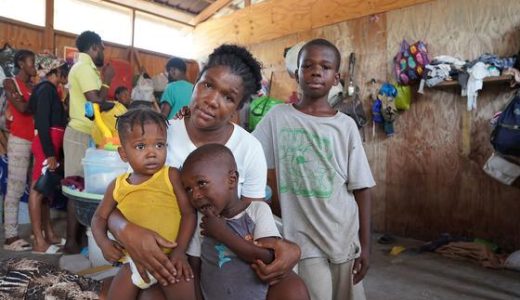
The consequences are visible across the world. Food insecurity affected 2.1 billion people in 2025, and one in 10 people continues to live in extreme poverty, General Assembly President Khalilur Rahman said.
Financing remains one of the largest barriers. The annual gap in funding needed to achieve the SDGs stands at $4 trillion. At the same time, official development assistance dropped by a record 23 per cent in 2025. In numerous countries, debt repayments consume more money than governments can spend on social services.
Climate change adds another layer of risk. Current projections point to warming of roughly 2.8 degrees Celsius this century, far above the 1.5-degree limit identified in the Paris Agreement. For countries and communities already facing climate-related shocks, delayed action can intensify pressure on food systems, water supplies, homes and public infrastructure.
“These are losses that many cannot absorb,” Mr. Rahman said. “For many of us, sustainability is a matter of life and death.”
A call to honour commitments
Suzuka Nakamura of Japan and Adelin Pierre of Haiti, both UN Young Leaders for the SDGs, urged governments to demonstrate the same resolve shown when they agreed to the agenda 11 years ago.
“To the leaders in this room and around the world, you made this promise,” Ms. Nakamura said. “We are asking you to keep it.”
Mr. Guterres identified conflict, weaker international cooperation, the climate emergency, attacks on the rights of women and girls, debt burdens and inadequate investment as major forces working against progress.
“The promises governments made in adopting the Goals are not being kept,” he said. “It is time to keep them.”
The Secretary-General called for a sharper focus on reducing inequality, safeguarding the planet, financing sustainable development and using available technologies to speed up results. His priorities included increased investment in education and health, a fair transition to renewable energy, and stronger financing and debt support for developing countries.
Benin’s experience does not erase the scale of the worldwide challenge. It does, however, offer a practical reminder that progress can be made when commitments are connected to revenue, investment, public services and jobs. With the 2030 deadline drawing closer, the central question is no longer whether the SDGs can improve lives. The gains already achieved show that they can. The challenge is whether governments and partners will act quickly enough to extend those gains to everyone still being left behind.
Related Reading
Frequently Asked Questions
What is Less than 4 years from development?
Less than 4 years from development is the main topic of this guide. The article explains the context, practical details, and next steps readers should understand.
Why does Less than 4 years from development matter?
Less than 4 years from development matters because readers are looking for a useful answer, not just a short summary. Good content should match search intent and help them decide what to do next.