UN General Assembly President Puts Trust at the Centre of His Mandate
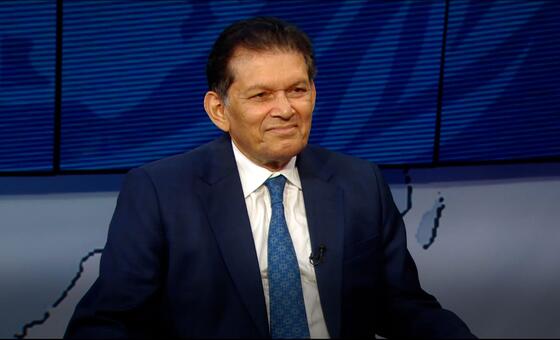
Provpnmatrix.com – As world leaders arrive for the annual High-Level Week at United Nations headquarters, Khalilur Rahman is beginning his year as President of the General Assembly with a central concern: rebuilding confidence in the organization.
The Bangladeshi diplomat, who is also serving as his country’s foreign minister, assumed the presidency of the Assembly’s 81st session after decades of involvement with the UN. He describes the institution as facing a serious crisis of confidence and has made restoring trust the defining goal of his one-year term.
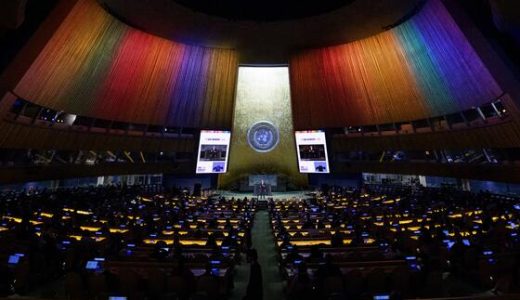
High-Level Week offers a particularly visible test of that ambition. The gathering brings together heads of state and government from across the globe, creating one of the rare occasions when leaders can address international concerns in the same place and at the same time. For Rahman, it is also a chance to listen closely to what governments expect from the UN at a period of conflict, uneven development and growing technological uncertainty.
“High-level Week is the most powerful manifestation of the convening power of the United Nations.”
He sees the event as more than a series of formal speeches. It gives leaders an opportunity to outline how they view conditions in their own countries and regions, while also setting out their expectations of the international system. Rahman says he is especially interested in their ideas for renewing trust in the UN, which he intends to use in shaping his work over the coming year.
A gap between founding hopes and present-day results
Rahman traces today’s frustration to the enormous hopes attached to the UN’s creation in 1945. That year, leaders meeting at Yalta discussed the outline of a new international organization while also considering how to end the Second World War. Its principal purpose was clear: prevent the world from returning to the devastation of global conflict.
When the UN Charter was adopted in San Francisco, delegates responded with a prolonged standing ovation. In Rahman’s view, that reaction reflected a widespread belief that the new institution could help secure peace.
There have been important achievements in the eight decades since. A conflict on the scale of the world wars has not occurred, while many countries that were still under colonial rule in 1945 later gained independence and helped strengthen the UN’s development work.
Yet the record has also left major expectations unmet. Numerous conflicts have continued, and progress in development has frequently moved too slowly. Rahman argues that the Security Council must function with greater coherence and deliver more effectively on the responsibilities Member States anticipated when the UN was formed.
The challenge extends beyond peace and development. Human rights form the organization’s third pillar, but Rahman noted that just four per cent of total UN spending goes to that area. While acknowledging substantial advances, he said much work remains.
“We have to work hard along all three pillars to bring back the confidence the organization had at its creation.”
For readers watching debates about UN reform, those three pillars explain why confidence in the institution matters so broadly. Failures to prevent conflict affect security; stalled development affects livelihoods and opportunity; and weak protection of rights can leave people without meaningful international support. Restoring trust, in this sense, is not simply a question of the UN’s public image but of whether countries believe it can help address shared problems.
Artificial intelligence as a global test
Rahman has also placed artificial intelligence among the issues requiring urgent international attention. He described AI as a technology that could dramatically accelerate human progress, while warning that it may also create profound risks if development and deployment proceed without adequate safeguards.
His approach does not call for halting innovation. Instead, he argues that rules and protections must ensure the technology benefits people rather than causing harm. That responsibility, he said, cannot rest with governments alone. Those building, using and affected by AI should all have a role in the discussions that shape its future.
“We need all of these communities to be part of the discussions and decisions ahead, so we find a safe pathway toward AI genuinely serving humanity.”
The issue illustrates why the UN’s convening role remains important. AI crosses national borders through data, digital services, research and commercial activity. Decisions taken in one country can have implications well beyond it, making dialogue among governments, technical experts and other communities increasingly necessary.
The Assembly’s role beyond formal debate
Rahman rejected the suggestion that the General Assembly lacks relevance because the Security Council is often deadlocked. He argued that the continued attendance of heads of state during High-Level Week is itself evidence of the Assembly’s value.
“If the assembly were useless, there wouldn’t be a high-level week, and Heads of State wouldn’t come.”
Unlike bodies with limited membership, the General Assembly includes the full range of UN Member States. Rahman regards that worldwide representation as one of its strongest assets. It provides a setting where leaders can raise serious concerns, meet privately as well as publicly, and explore possible paths toward agreement.
Diplomacy does not always produce immediate or visible results. A speech may set out a national position, while meetings away from the podium can help establish contacts, clarify differences or open room for future negotiations. In that respect, the Assembly’s influence lies partly in its ability to bring governments together even when formal decision-making is difficult elsewhere.
Rahman’s presidency also carries personal historical resonance. More than four decades ago, during an earlier Bangladeshi presidency of the Assembly, he served his own foreign minister. Now he returns to lead the body himself at a moment when confidence in multilateral cooperation is under strain.
His message is that violence cannot resolve the underlying problems confronting the international community; it can only postpone them. The task for the UN, he believes, is to make its three core pillars work more credibly and to ensure that emerging challenges such as artificial intelligence are addressed through inclusive, responsible cooperation.
Related Reading
Frequently Asked Questions
What is Violence will only defer a problem?
Violence will only defer a problem is the main topic of this guide. The article explains the context, practical details, and next steps readers should understand.
Why does Violence will only defer a problem matter?
Violence will only defer a problem matters because readers are looking for a useful answer, not just a short summary. Good content should match search intent and help them decide what to do next.