General Assembly reviews China and Russia’s Iran-related veto
Provpnmatrix.com – UN Member States gathered on Thursday to consider the Security Council’s most recent use of the veto, after China and Russia blocked a United States-backed proposal concerning a sanctions panel of experts focused on Iran’s nuclear facilities.
The General Assembly meeting placed renewed attention on one of the most consequential powers held by the five permanent members of the Security Council. China, France, Russia, the United Kingdom and the United States can each prevent the Council from adopting a resolution, even when other members support it. In this case, the vetoes by China and Russia stopped the proposed action from moving forward in the Council.
Although the Assembly cannot overturn a Security Council veto, such meetings give the wider UN membership an opportunity to discuss the decision openly. They also allow countries that do not sit on the Council, or do not hold permanent-member status, to express their views on how the veto affects international peace and security.
Focus on a proposed expert panel
The blocked initiative involved a panel of experts linked to sanctions and Iran’s nuclear facilities. Expert panels are commonly used within the UN system to examine implementation questions, gather information, assess possible violations and help member countries understand the practical effects of sanctions decisions.
Debates over these mechanisms can carry significant diplomatic weight. Questions surrounding Iran’s nuclear programme have long been connected to wider concerns about non-proliferation, regional security and the role of international monitoring. The Security Council has previously considered measures involving Iran under its responsibility for maintaining international peace and security.
The Thursday discussion therefore extended beyond a single procedural vote. It highlighted continuing differences among major powers over how the Council should address sensitive nuclear-related matters and what forms of oversight or sanctions-related work should be supported.
A veto triggers wider scrutiny
The General Assembly’s consideration of the veto reflects a process intended to increase transparency when a permanent Security Council member uses its special voting power. The arrangement does not remove the veto or change the outcome of the Council vote. Instead, it creates a forum in which the larger UN membership can examine the circumstances and political consequences of the decision.
For many countries, the process is an opportunity to emphasize the importance of multilateral decision-making. For others, it provides a chance to defend the veto as a safeguard within the UN’s post-war institutional structure. The result is often a broader debate over whether the Security Council is responding effectively to crises and whether its decision-making reflects the views of the organization’s 193 Member States.
In Iran-related discussions, those divisions can be particularly pronounced. The issue combines technical nuclear questions with sanctions policy, national security concerns and differing views on diplomacy. Even when governments agree that nuclear safety and non-proliferation matter, they may disagree sharply over the appropriate international response.
What the meeting means
The Assembly session did not itself restore the proposed sanctions panel or require the Security Council to reconsider its decision. Its value lies in public accountability and diplomatic debate. Member States can explain their positions, raise concerns about the use of the veto and consider the broader impact of inaction or disagreement within the Council.
China and Russia’s decision to block the United States-backed proposal illustrates the continuing challenge of reaching consensus among the Council’s permanent members. When those members are divided, action on highly sensitive issues can be delayed, narrowed or halted altogether.
The discussion also underscores a central reality of the UN system: the Security Council retains primary responsibility for international peace and security, but its authority is exercised within a wider organization whose membership expects to be heard. General Assembly meetings following vetoes do not resolve that institutional tension, yet they make it visible.
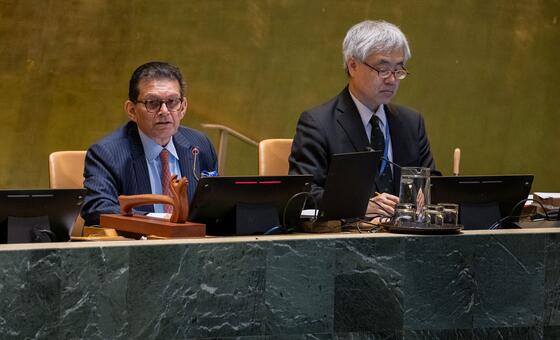
The General Assembly met on Thursday to examine the Security Council’s latest veto, cast by China and Russia over a United States-backed sanctions panel of experts on Iran nuclear facilities.
As Member States continue their deliberations, the immediate question remains the fate of the proposed expert mechanism. The larger issue is whether major powers can find enough common ground to address Iran-related nuclear concerns through collective action, or whether persistent divisions will continue to limit the Security Council’s ability to act.
Related Reading
Frequently Asked Questions
What is UN Member States weigh latest Security?
UN Member States weigh latest Security is the main topic of this guide. The article explains the context, practical details, and next steps readers should understand.
Why does UN Member States weigh latest Security matter?
UN Member States weigh latest Security matters because readers are looking for a useful answer, not just a short summary. Good content should match search intent and help them decide what to do next.