UN General Debate Closes With Pressure to Match Promises With Results
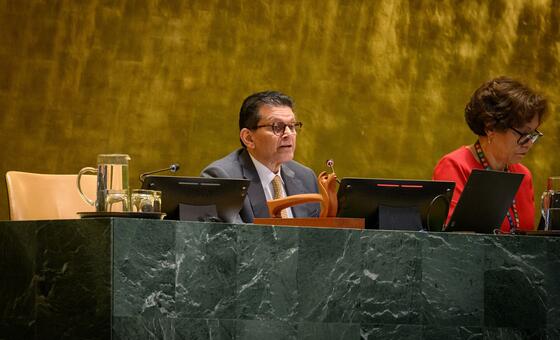
Provpnmatrix.com – The annual high-level debate at the United Nations General Assembly has concluded after six days of speeches, leaving delegates with a familiar but urgent challenge: convert broad declarations into practical change. General Assembly President Khalilur Rahman closed the 2026 debate on Monday by pointing to peace, development, inequality, human rights, artificial intelligence and public trust as the issues that repeatedly dominated the chamber.
Representatives from across the 193-member body arrived with sharply different national priorities and views of the world’s crises. Yet Rahman said the discussions also revealed a shared belief that the United Nations continues to be essential at a time when conflicts, economic pressures and fast-moving technological change are testing international cooperation.
“Trust cannot be commanded. It must be earned through consistency between words and deeds.”
That message framed the closing day. The debate may have ended, but the wider General Assembly session is continuing, with substantive work scheduled from 1 October through December.
Peace Remains the Central Demand
Peace was the most prominent theme heard during the debate. Rahman said leaders treated it as an immediate necessity rather than an abstract goal, linking it to the defence of the UN Charter, respect for international law and the safety of civilians.
The emphasis reflects the central role of the Assembly as a place where countries can publicly state their positions on wars, security threats and humanitarian emergencies. While the General Assembly does not replace the Security Council in matters of international peace and security, its debates can shape political pressure, build coalitions and keep major global concerns in view.
Rahman also stressed that protecting rights becomes especially important when doing so is politically difficult. He drew attention to civilians, minorities, migrants and refugees, as well as women and girls who remain excluded from education, employment and public participation in many settings.
Development Goals Face a Narrowing Window
Development was another major concern. With only a limited share of the Sustainable Development Goals progressing at the necessary pace, the Assembly President offered an unambiguous response to the question of whether the international community should have acted more decisively.
“The answer must be a resounding yes.”
The SDGs are intended to guide global progress on poverty, health, education, inequality, climate action and other priorities by 2030. With that deadline approaching, the debate underscored the difficulty of advancing these objectives while many countries contend with debt pressure, constrained public finances and climate-related risks.
Rahman noted that nations carrying some of the heaviest debt burdens and facing high climate vulnerability frequently have too little influence in the institutions that help determine the direction of the global economy. The concern goes beyond funding alone: it raises questions about representation, decision-making power and whether international systems are responding fairly to countries with the least room to absorb new shocks.
Artificial Intelligence Moves to the Forefront
One of the clearest changes in this year’s debate was the prominence of artificial intelligence. Rahman said AI had been mentioned by just five delegations four years earlier. During the 2026 debate, 128 delegations raised the subject, exceeding the number that discussed climate change or human rights.
The increase shows how quickly AI has become a diplomatic issue rather than a narrowly technical one. Governments are weighing its potential benefits alongside concerns about control, accountability, access and risk. The main questions are increasingly political: who develops these systems, who gains from them, and who bears the consequences when they cause harm or deepen inequality?
“No machine possesses democratic legitimacy. No algorithm inherits constitutional responsibility.”
Rahman used that intervention to reinforce the case for human-centred governance. He argued that rules for AI should be inclusive, responsive to developing countries and designed to prevent a small group of states or companies from controlling technologies that could affect people everywhere.
For many countries, the issue is not simply whether AI will reshape economies and public services, but whether they will have a meaningful role in setting the standards that govern it. Equitable access, skills and public oversight will likely remain part of the Assembly’s wider discussion in the months ahead.
Calls for Reform Beyond Administrative Change
The debate also returned to a longstanding question: can institutions created for a different era meet today’s demands? Rahman said many speakers defended multilateralism while simultaneously calling for the bodies and procedures behind it to be reformed.
He argued that management or administrative adjustments would not be enough on their own. Delegations called for deeper political change, including action on the continued absence of Africa from permanent membership of the Security Council. Rahman described that exclusion as unjust.
The underlying argument was that multilateralism should be measured through its impact, not merely by the number of meetings held or documents adopted. International cooperation, he said, should be judged by whether it improves conditions in people’s lives and produces meaningful outcomes where crises are unfolding.
A Record of High-Level Participation
The scale of the 2026 General Debate illustrated the importance governments still attach to the Assembly’s annual gathering. Rahman said 194 speakers addressed the chamber, including 113 Heads of State and Government. The list also included one crown prince, 11 vice presidents, seven deputy prime ministers and 48 ministers.
Those speeches set political priorities, but the detailed work now moves into the Assembly’s regular structures. Every Member State is represented in the six Main Committees, where delegations negotiate texts and address subjects ranging from disarmament and international security to economic, financial, humanitarian and social matters.
The Assembly will also consider the UN budget and elect key officials during the remaining months of the session. One decision will carry particular significance: after receiving a recommendation from the Security Council, the General Assembly will appoint the next UN Secretary-General.
The next Secretary-General will take office on 1 January 2027, succeeding António Guterres. The selection will be closely watched because the office plays a central role in guiding the UN Secretariat, representing the organization internationally and encouraging diplomatic action in moments of crisis.
The Session Is Still Underway
Monday marked the end of the General Debate, not the conclusion of the General Assembly’s 81st session. The work that follows will determine whether the concerns raised from the podium lead to negotiated commitments, institutional decisions or renewed political divisions.
Rahman’s final message was that the gathering should be seen as a starting point rather than a finish line. The coming months will test whether member states can narrow their differences sufficiently to advance peace, accelerate development, defend rights, address inequality and establish credible safeguards for rapidly evolving technologies.
Related Reading
Frequently Asked Questions
What is The Takeaway Day 6?
The Takeaway Day 6 is the main topic of this guide. The article explains the context, practical details, and next steps readers should understand.
Why does The Takeaway Day 6 matter?
The Takeaway Day 6 matters because readers are looking for a useful answer, not just a short summary. Good content should match search intent and help them decide what to do next.