Education Remains a Lifeline for Young Refugees
Provpnmatrix.com – A Sudanese teenager who escaped the conflict in her country and sought safety in Egypt is holding onto an ambition that reaches beyond displacement: earning a degree in technology. Her determination reflects a wider challenge facing refugee children and young people whose education is increasingly vulnerable when funding is reduced.
“I have not lost my dreams.”
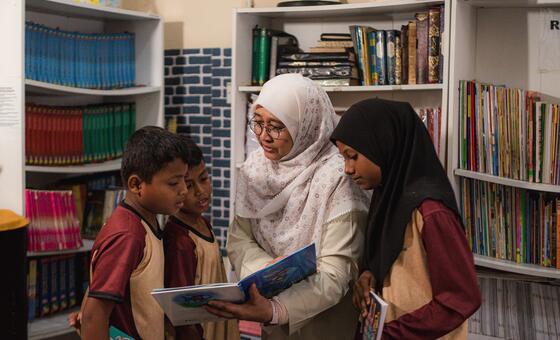
For a young person forced to leave home because of war, continuing school can be far more than a route to qualifications. It offers structure after upheaval, a chance to build friendships in a new community and a practical way to imagine a future shaped by choice rather than conflict. The girl’s goal of studying technology shows how education can connect immediate safety with long-term opportunity.
Her journey from Sudan to neighbouring Egypt also illustrates the pressures that conflict places on families. Crossing a border may provide refuge, but it does not automatically guarantee access to classrooms, learning materials, language support, transport or the financial stability needed to stay in school. Young refugees often have to adapt to unfamiliar education systems while their families are trying to rebuild their lives.
Funding Cuts Put Learning at Risk
Reduced support for refugee education threatens to interrupt that fragile progress. When programmes lose funding, the effects can reach students quickly: fewer places in classes, less support for teachers, reduced access to supplies and fewer pathways for older students who want to continue into further education or skills training.
These risks matter especially for adolescents. A break in education during the teenage years can make it harder to return later, particularly when young people are under pressure to earn money, care for relatives or manage the uncertainty that accompanies displacement. For girls, continued access to safe and inclusive learning can be especially important in protecting their ability to decide what comes next.
The stakes extend beyond individual students. Education helps displaced young people develop knowledge and confidence that can support their families and communities wherever they eventually build their lives. A future technology graduate, teacher, health worker, entrepreneur or skilled professional may begin with something as basic as a reliable place in a classroom.
A Future That Should Not Depend on Displacement
War has already taken much from children and teenagers who flee their homes. Their schooling should not become another loss. Ensuring that refugee learners can continue their education requires sustained resources, coordination between education systems and support that recognizes the different needs of children, adolescents and young adults.
For students arriving in a host country, access is only the first step. They may need help understanding enrolment rules, catching up after missed lessons, navigating a new curriculum or finding a path to examinations and higher education. Technology education, like other fields of study, also depends on consistent teaching and access to the tools needed to learn.
The Sudanese girl in Egypt represents many young refugees whose aspirations have survived circumstances beyond their control. Her hope to pursue a technology degree is not simply a personal ambition; it is a reminder that displaced young people still have plans, abilities and contributions to offer. They should be able to learn without having to treat education as an uncertain privilege.
Keeping Dreams Within Reach
Education funding is often discussed in budgets and programme targets, but its consequences are felt in individual lives. A decision to maintain support can mean that a student stays enrolled, completes a course or gains the preparation needed for further study. A shortfall can close those options just as a young person begins to recover from the disruption of conflict.
Refugee education deserves to be seen as an investment in stability and human potential. Young people who have fled violence should not be defined only by the crisis they escaped. They are students with interests, talents and ambitions, including the ambition to enter fields that shape the modern world.
For the teenager rebuilding her life in Egypt, the dream of a technology degree remains alive. Protecting education opportunities for her and for millions of other displaced learners is essential if that dream is to have a real chance of becoming a future.
Related Reading
Frequently Asked Questions
What is I have not lost my dreams?
I have not lost my dreams is the main topic of this guide. The article explains the context, practical details, and next steps readers should understand.
Why does I have not lost my dreams matter?
I have not lost my dreams matters because readers are looking for a useful answer, not just a short summary. Good content should match search intent and help them decide what to do next.