Monica Juma: Steering Global Cooperation at a Time of Converging Threats
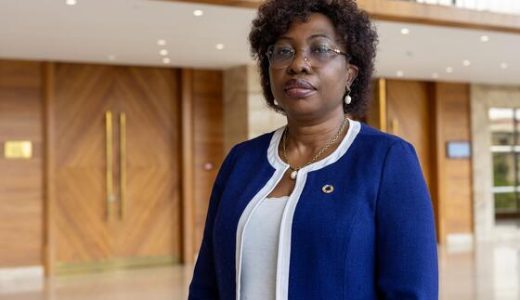
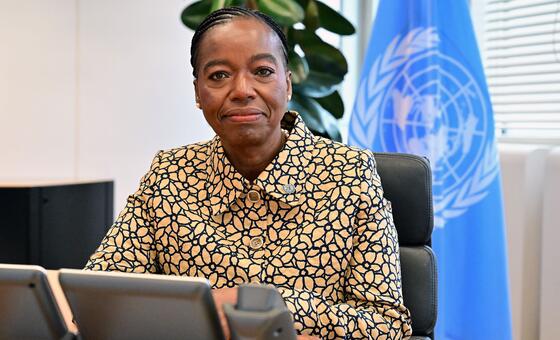
Monica Juma – In an era where criminal organizations are accelerating their operations, expanding their reach, and merging traditional and digital threats, Monica Juma has emerged as a pivotal figure in the United Nations’ efforts to combat these multifaceted challenges. Her recent appointment to two of the Organization’s most critical roles marks a significant shift in the global fight against crime and corruption, as she assumes the mantle of leadership in a rapidly evolving security landscape.
Global Leadership in a Changing World
Monica Juma, now serving as both Executive Director of the United Nations Office on Drugs and Crime (UNODC) and Director-General of the United Nations Office at Vienna (UNOV), is tasked with bridging national and international strategies to address complex threats. Her new responsibilities include representing the Secretary-General in Vienna, a key hub for multilateral diplomacy, while simultaneously leading global initiatives to strengthen crime prevention and justice systems.
“The mandate I now carry is grounded in the necessity of fostering collective action to tackle drug trafficking, corruption, terrorism, and transnational organized crime—issues that increasingly intersect and demand unified solutions,” Juma stated in an exclusive interview with UN News.
Her dual role reflects the United Nations’ recognition of the interconnected nature of modern challenges, where borders, sectors, and technologies are no longer distinct barriers. This aligns with her vision of a “safer, more just world,” a goal she emphasizes as central to her work.
A Career Built on Diverse Experience
Before joining the UN, Juma’s career spanned defense, foreign affairs, and academic research, earning her a reputation as a strategic thinker with broad expertise. As Kenya’s first National Security Adviser and Secretary to the National Security Council, she played a crucial role in shaping the country’s approach to security and development. Her leadership in the government also included high-ranking positions in foreign affairs, interior, and energy, where she honed her ability to navigate complex policy landscapes.
Her transition to the UN is a natural progression, driven by her commitment to multilateral cooperation. “My experience in Kenya taught me that no single entity can address the scale of today’s challenges,” she explained. “This is why international collaboration is not just beneficial—it is essential.” Her academic background further equips her to analyze systemic issues and propose evidence-based solutions.
The Urgency of Multilateralism
As the UN Crime Congress convenes in Abu Dhabi, Juma is calling for renewed commitment to multilateralism, a principle she views as vital to confronting organized crime and corruption. “We are at a critical juncture where the lines between threats are more blurred than ever,” she said. “Criminal networks operate across borders and sectors, leveraging technology to amplify their reach and impact.”
She highlights the need for a “multi-agency cooperation” model, where governments, institutions, and civil society work in tandem. “The challenges we face today are too vast to be tackled by any one organization alone,” she noted. “This is where the global public good becomes a shared responsibility.”
Juma’s emphasis on collective action is echoed in her vision for UNODC, which she describes as a “cornerstone of international efforts to safeguard communities and advance sustainable development.” She believes the organization’s mandate resonates strongly with Member States, as it directly addresses the “risk portfolio” of the modern world, from illicit financial flows to cyber-enabled crimes.
Structural Challenges and Strategic Opportunities
Despite the optimism surrounding her appointment, Juma acknowledges the structural hurdles that lie ahead. “Much of our work depends on voluntary funding, often with specific targets in mind,” she admitted. “This requires not only political will but also sustained engagement from partners to ensure resources align with global priorities.”
Her initial impressions of the UN system have been positive, though she remains vigilant about the speed at which threats are evolving. “The world is moving faster than ever, and our responses must keep pace,” she observed. “Criminal groups are now operating in hybrid networks, blending physical and digital tactics to evade detection and control.”
This agility is crucial, she argues, as drug trafficking, money laundering, and human trafficking increasingly overlap with terrorism and cybercrime. “These threats form interconnected webs that demand equally dynamic strategies,” she said. “A coordinated approach is not just an aspiration—it is a necessity.”
Building Consensus in a Divided World
Juma’s leadership underscores the importance of building consensus among Member States, particularly in an environment where geopolitical tensions often complicate cooperation. “I’ve seen a growing willingness to work together, even in the face of differing priorities,” she noted. “This consensus is a foundation for stronger international partnerships.”
Her role in UNOV, which serves as a critical link between the UN and its global partners, positions her to leverage diplomatic networks and foster dialogue. “In today’s climate of disinformation, sharing accurate information is a key priority,” she said. “We must equip decision-makers with reliable data to counteract misinformation and build trust.”
At the heart of her strategy is the recognition that “no single sector, no single country, no single region can do it alone.” This philosophy is reflected in her approach to both UNODC and UNOV, where she aims to strengthen partnerships and align efforts with the United Nations’ overarching mission. “The strength of the institution lies in its people—highly skilled professionals dedicated to making communities safer and promoting justice,” she remarked.
A New Chapter for the United Nations
Monica Juma’s appointment comes after decades of public service in Kenya, where she cultivated a deep understanding of both national and international dynamics. Her transition to the global stage is seen as a bold step, with the hope that her leadership will inspire a new era of collaboration. “I am honored to take on this dual role at a time when multilateralism is more critical than ever,” she said. “It’s a chance to contribute to a legacy of shared security and justice.”
Her swearing-in by Secretary-General António Guterres last Thursday symbolized the formal recognition of her contributions. “This is not just a personal milestone—it’s a collective commitment to addressing the interconnected threats that define our world today,” she added. “I look forward to working with Member States and partners to build a resilient global framework.”
As she settles into her new responsibilities, Juma remains focused on the broader implications of her work. “The fight against crime and corruption is not just about protecting individuals—it’s about ensuring the integrity of institutions and the stability of societies,” she explained. “This requires a long-term vision, grounded in both pragmatism and idealism.”
With her background in national security and diplomacy, Juma is well-positioned to navigate the complexities of her roles. “The challenges we face are as diverse as they are urgent,” she said. “But I believe the United Nations has the tools and the will to respond effectively. It’s about how we use them.” Her insights offer a roadmap for addressing converging threats, emphasizing the need for adaptability, unity, and a steadfast focus on the global public good.