Ukraine: Latest Russian Assault Claims 14 Lives in Kyiv
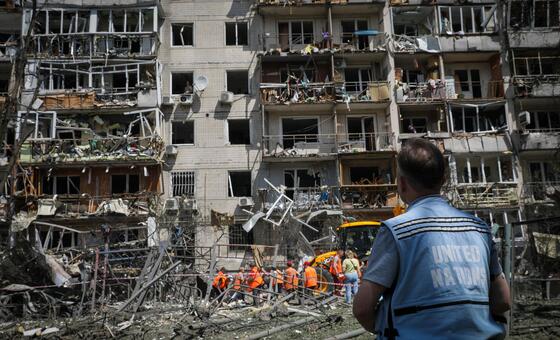
Ukraine – Overnight on Monday, a series of Russian attacks targeted the Ukrainian capital Kyiv, resulting in the deaths of 14 civilians and wounding over 80 others, as confirmed by local authorities. The strikes, which included both missile and drone assaults, severely damaged residential complexes and other essential civilian facilities, underscoring the escalating intensity of the conflict in the region.
Escalating Toll on Civilian Population
According to UN human rights officials, the humanitarian situation in Ukraine has worsened significantly this month, with an average of 170 civilians killed or injured daily in July. This figure exceeds the casualty rate recorded during the same period last year, highlighting the persistent strain on the country’s population. The recent incident in Kyiv, occurring just four days after another devastating Russian assault that left at least 30 people dead, has intensified concerns about the systematic targeting of civilian areas.
“As I visit the sites of the strikes to express solidarity, it is unbearable to witness the scale of human suffering,” stated Matthias Schmale, the UN’s top aid official in Ukraine. His remarks reflect the deepening impact of the war on everyday life, with infrastructure and lives increasingly caught in the crossfire.
Mr. Schmale emphasized that the attacks have disrupted access to fundamental services across multiple regions, including Kyiv, Dnipro, Kherson, and Zaporizhzhia. The destruction of residential buildings and other civilian infrastructure has not only caused immediate harm but also created long-term challenges for communities reliant on these facilities.
International Condemnation and Calls for Ceasefire
Secretary-General António Guterres issued a strong condemnation of the latest Russian strikes, underscoring that any attacks involving civilians or civilian infrastructure are a clear violation of international humanitarian law. “These assaults must cease immediately,” he asserted, while urging for an urgent de-escalation of tensions. His appeal calls for a full, immediate, and unconditional ceasefire to halt the ongoing destruction.
The UN’s refugee agency (UNHCR) has been actively involved in addressing the needs of displaced populations, providing cash assistance for winter preparations, repairing shelters, and supporting energy access. These efforts aim to ensure that affected families can maintain some level of stability amidst the relentless bombardment. Additionally, UN agencies continue to visit impact sites and collaborate with hospitals to verify casualty figures and document damage to civilian infrastructure.
Regional Impact and Strategic Strikes
While Kyiv bore the brunt of the recent attacks, other regions have also experienced significant strikes. On Monday, Russian missiles and drones targeted Odesa, causing multiple homes to be damaged and injuring one resident. The city remains a focal point for strategic operations, with its port facilities and industrial zones frequently under threat.
Meanwhile, Ukrainian drones launched strikes against Russian territory, damaging ports and a major oil refinery in Yaroslavl. These attacks have reportedly caused a power outage in occupied Crimea, further complicating Russia’s ability to manage its energy resources. The strikes are believed to exacerbate existing shortages, prompting stricter rationing measures within Russia.
Strategic control of territories is another critical aspect of the conflict. On Friday, the Russian military claimed to have seized the Ukrainian city of Kostiantynivka, but Ukrainian officials dispute this, asserting that their forces still hold the area. The uncertainty surrounding territorial control highlights the fluid nature of the war and its impact on both sides’ operations.
Ukraine’s Defense and Calls for Aid
Ukrainian President Volodymyr Zelensky has reportedly renewed his appeal for additional American-made Patriot interceptor missiles ahead of NATO’s summit in Ankara, Türkiye. This request comes as the Ukrainian military faces a critical shortage of defensive systems, with none of the 23 ballistic missiles targeting Kyiv being intercepted. The failure to neutralize these threats has raised alarms about the vulnerability of the capital.
In response to the attack, Ukraine has called for an emergency meeting of the Security Council in New York, seeking international support to address the growing humanitarian crisis. The Security Council is expected to discuss the situation and potentially take action to alleviate the suffering of civilians caught in the conflict.
Humanitarian Goals and Future Outlook
The UN’s aid office in Ukraine has set ambitious targets for 2026, aiming to provide assistance to 4.12 million people. This includes frontline response initiatives, emergency aid for those affected by strikes, and programs to support internally displaced persons. The scale of these efforts underscores the determination to mitigate the long-term effects of the war on civilian populations.
“It cannot be repeated often enough that international humanitarian law requires taking every possible measure to protect civilians and civilian infrastructure,” said Mr. Schmale. “Attacks that tear apart homes and take innocent lives must not be accepted.”
With the conflict showing no signs of slowing, the focus remains on preserving human life and ensuring that essential services continue to function. The combination of Russian and Ukrainian strikes has created a volatile environment where civilian casualties are rising, and the need for sustained international support is more urgent than ever. As the war progresses, the global community will play a vital role in shaping the outcome for the people of Ukraine.