Guterres Urges Halt to US-Iran War During Pakistan Visit
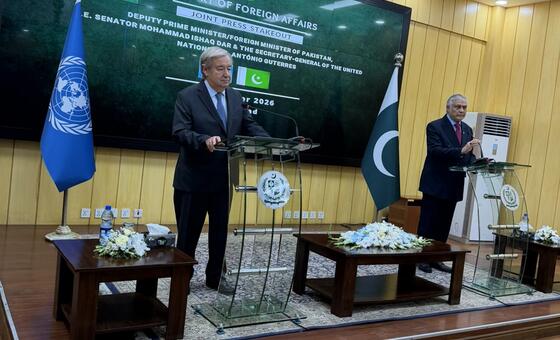
Provpnmatrix.com – United Nations Secretary-General António Guterres has called for the United States and Iran to end their war, warning that the conflict is imposing a serious burden on global trade. He made the appeal on Tuesday as he began an official visit to Pakistan, placing the crisis and its wider economic consequences at the centre of his message.
The Secretary-General’s intervention reflects concern that a confrontation between Washington and Tehran reaches far beyond the countries directly involved. Trade depends on predictable transport routes, stable markets and confidence among businesses, manufacturers and consumers. When conflict disrupts those conditions, the consequences can spread through supply chains and affect economies well outside the immediate region.
A Call for De-escalation
Guterres urged an end to the fighting between the United States and Iran, stressing both the human and economic costs of war. His remarks linked the need for peace with the pressures already facing international commerce, underlining that armed conflict can unsettle trade flows and create uncertainty for countries that rely on imported goods, exports and maritime transport.
The appeal came at the opening of an official trip to Pakistan, a country whose location places it near a region of major strategic and commercial importance. Pakistan also has close economic interests in regional stability, as disruptions to trade can influence prices, access to goods and the wider outlook for growth.
By raising the issue at the start of his visit, the UN chief highlighted the international nature of the crisis. A war involving the United States and Iran is not only a bilateral dispute; it has implications for neighbouring states, commercial partners and countries whose economies are tied to global markets.
Why Global Trade Is Affected
International trade operates through interconnected networks. Goods move across borders by sea, air, road and rail, while companies plan purchases, deliveries and investment around expected costs and reliable schedules. Conflict can make those plans more difficult by increasing uncertainty, disrupting transportation and affecting the confidence needed for cross-border commerce.
The impact can also be felt indirectly. Businesses may face higher operating costs, delayed shipments or changing demand. Governments can confront pressure from rising import expenses or weaker export conditions. For households, trade disruption can eventually contribute to concerns about the availability and affordability of everyday products.
Guterres’s warning drew attention to this broader picture: conflict does not remain confined to military developments. It can influence the movement of goods, commercial decision-making and the economic security of people far from the battlefield.
Pakistan Visit Adds Regional Focus
The Secretary-General’s arrival in Pakistan gave his appeal an added regional dimension. Pakistan sits at the crossroads of South Asia, Central Asia and the wider Middle East, making developments in the surrounding region especially relevant to its security and economic environment.
Official visits by the UN chief often provide an opportunity to address issues that require international cooperation. In this case, Guterres used the beginning of his trip to focus attention on the need to stop the US-Iran war and limit the damage it is causing beyond the immediate conflict.
His message also pointed to a central challenge for the international community: protecting peace and economic stability at the same time. Ending hostilities can reduce the immediate danger to civilians and help create space for diplomacy, while also easing risks to trade and broader economic activity.
A Wider International Concern
The consequences of conflict are rarely limited by national borders. Countries with no direct role in a war can still experience its effects through trade relationships, energy needs, transport links and market uncertainty. That is why calls for de-escalation often carry significance for governments and communities across several regions.
For the United Nations, efforts to encourage an end to conflict are closely connected to its wider mission of promoting international peace and cooperation. Guterres’s appeal in Islamabad reinforced the view that preventing further escalation is important not only for the parties at war, but also for the stability of the global economy.
As his official visit to Pakistan gets under way, the Secretary-General’s remarks have placed a clear emphasis on the urgency of ending the conflict. The war’s impact on global trade serves as a reminder that prolonged instability can create costs felt well beyond the countries directly involved.
Related Reading
Frequently Asked Questions
What is In Islamabad Guterres calls for end?
In Islamabad Guterres calls for end is the main topic of this guide. The article explains the context, practical details, and next steps readers should understand.
Why does In Islamabad Guterres calls for end matter?
In Islamabad Guterres calls for end matters because readers are looking for a useful answer, not just a short summary. Good content should match search intent and help them decide what to do next.