World Space Week Brings the Cosmos Closer to Home
Provpnmatrix.com – From 4 to 10 October, World Space Week invites people across the globe to look beyond Earth and consider how space exploration shapes science, technology and daily life. The annual observance arrives at a moment when interest in the Moon is again growing, with governments, researchers and private companies pursuing new missions and new questions about humanity’s nearest celestial neighbour.
The United Nations Office for Outer Space Affairs, widely known as UNOOSA, plays a central role in connecting those conversations. Created in the years following the Soviet Union’s 1957 launch of Sputnik, the first artificial satellite, the office has followed the remarkable expansion of activities beyond Earth’s atmosphere.
Its work spans far more than lunar exploration. UNOOSA supports international cooperation on the peaceful use of outer space, helping countries consider how satellite services, scientific research and space technology can contribute to development on Earth. It also helps keep attention on the need for shared rules and responsible conduct as more actors enter space.
A Legacy That Began With Sputnik
Sputnik’s launch changed the course of modern history. The small satellite demonstrated that an object could be placed into orbit around Earth, opening an era of scientific competition, technological innovation and international debate about who could operate in space and under what principles.
The United Nations responded by building a framework for international discussion. UNOOSA emerged from that early period and has continued to observe changing space activity for decades. What began as a domain dominated by a small number of national programmes has become a far wider field involving many countries, international partnerships, universities and commercial ventures.
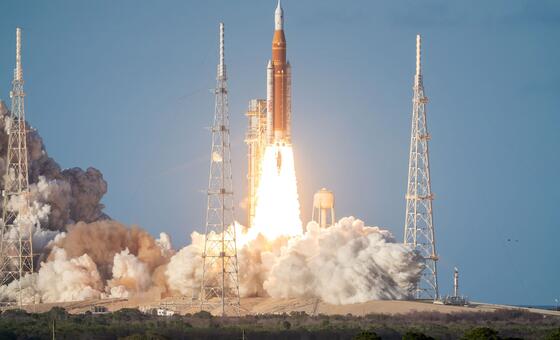
That transformation makes public engagement especially important. Space is often discussed through dramatic images of launches and distant worlds, but its practical influence is already familiar to people on the ground. Satellites support communications, navigation, environmental observation and disaster-related information services. Space science also encourages new generations of students to explore engineering, mathematics and research.
The Moon Remains a Powerful Destination
Lunar exploration continues to capture global attention because the Moon is both nearby and scientifically significant. It preserves evidence from the early history of the solar system, offers a testing ground for technologies needed on longer journeys, and remains an enduring symbol of discovery.
More than 77 successful lunar missions have been recorded among the many journeys monitored over the years. Each successful mission represents a combination of planning, engineering, scientific ambition and international interest. Some missions have focused on reaching the lunar surface, while others have studied the Moon from orbit or gathered information that can guide future exploration.
The renewed focus on lunar activity also raises broader questions. As access to space becomes more frequent, countries and organizations must consider how to pursue scientific and economic opportunities while protecting the principle that outer space should be used peacefully and responsibly. Cooperation is not simply a diplomatic ideal; it can help ensure that knowledge, safety practices and the benefits of space technology are shared more widely.
A Week for Learning and Participation
World Space Week offers an opportunity for schools, museums, research institutions and community groups to turn big ideas into accessible conversations. Events can introduce young people to the basics of astronomy, explain how satellites orbit Earth or explore the challenges of sending people and equipment beyond the planet.
For readers who are not space specialists, the week can also be a reminder that exploration is not limited to astronauts. Scientists analyse data, engineers design instruments, educators make complex ideas understandable and policymakers work on international agreements. The future of space activity depends on all of these contributions.
Looking upward can also encourage a useful sense of perspective. Earth is one planet within a vast universe, yet it is the place where every space mission begins and where the benefits of space-based knowledge are ultimately felt. Observing forests, oceans, weather systems and changing landscapes from orbit can deepen understanding of conditions that affect communities worldwide.
Shared Responsibility Beyond Earth
As World Space Week continues through 10 October, the focus is not only on rockets, satellites or distant destinations. It is also about the choices made here on Earth: how nations cooperate, how discoveries are used and how access to space can serve the broader public interest.
UNOOSA’s long involvement in tracking missions and supporting international dialogue reflects the continuing importance of those questions. The space age began with Sputnik’s launch in 1957, but its implications keep evolving. Today’s lunar ambitions and satellite systems are part of a larger story about curiosity, collaboration and responsibility beyond the boundaries of any one country.
Related Reading
Frequently Asked Questions
What is Beyond the Moon?
Beyond the Moon is the main topic of this guide. The article explains the context, practical details, and next steps readers should understand.
Why does Beyond the Moon matter?
Beyond the Moon matters because readers are looking for a useful answer, not just a short summary. Good content should match search intent and help them decide what to do next.