Food Waste Is Emerging as a Major Climate Challenge
Provpnmatrix.com – Food discarded by households, shops and farms is creating a far larger climate burden than many people realise. When wasted food decays in landfill sites, it can account for as much as 10 per cent of global greenhouse gas emissions—roughly five times the impact of the entire aviation industry.
The problem extends well beyond leftovers thrown away after dinner. Food waste includes meals that are never finished, produce that spoils in homes and businesses, and crops lost after harvest before they reach retail shelves. Once organic material is buried beneath other rubbish, its environmental impact becomes especially serious.
Without oxygen, decomposing food interacts with microorganisms and releases methane. This gas is responsible for nearly one-third of the warming already affecting the planet. Over a 20-year timeframe, methane retains 86 times more heat than carbon dioxide, making it a particularly potent short-term threat.
Landfills Turn Discarded Food Into Methane
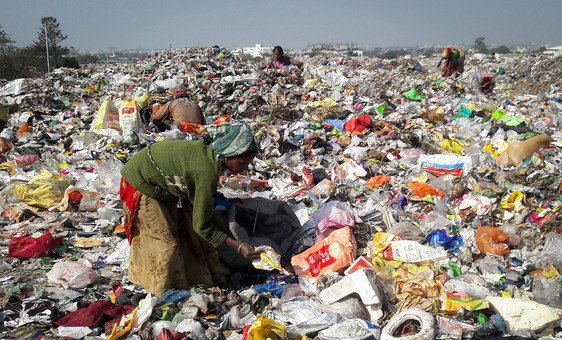
Landfills are a major source of emissions because food scraps are often mixed with general waste instead of being separated for composting or other treatment. In the United States, municipal solid-waste landfills rank as the third-largest source of methane emissions caused by human activity.
The scale of food being discarded makes that impact difficult to ignore. More than one billion meals are wasted each day worldwide, and households generate 60 per cent of that enormous volume. Small choices made in kitchens therefore accumulate into a global environmental issue.
Wasting food also means wasting everything required to produce it. The Food and Agriculture Organization estimates that 1.4 billion hectares of land—about 28 per cent of agricultural land globally—are used to grow food that is ultimately never eaten. Water used for cultivation, processing and preparation is lost as well.
This creates consequences beyond landfill emissions. Agricultural expansion remains one of the major causes of deforestation. When land is cleared to produce food that later goes unused, forests lose their capacity to absorb carbon dioxide while the climate receives no benefit from the resources consumed.
A Fast Opportunity to Cut Warming
Methane does not remain in the atmosphere as long as carbon dioxide. That shorter lifespan gives governments, businesses and households an important opportunity: reducing methane emissions now can generate meaningful climate gains within a few decades.
“At a time when the world is searching for practical ways to slow warming quickly, tackling food waste may be one of the most immediate and cost-effective climate solutions available,” underscored Martin Krause, a UNEP official.
Preventing food from becoming waste is the most effective first step. Better meal planning, sensible storage, use of leftovers and clearer handling of food close to its best-before date can help households reduce what they throw away. Retailers and food-service businesses can also limit surplus through improved forecasting, redistribution and separation of unavoidable organic waste.
Progress, however, has remained slow. Despite international commitments, food losses have not shown tangible reductions since 2015. The world is still far from the Sustainable Development Goal of cutting per-capita global food waste in half by 2030.
Waste Pickers and Insects Offer Practical Solutions
Communities are already testing approaches that prevent organic waste from reaching landfill sites. In 11 African countries, governments have committed to lowering methane emissions by integrating waste pickers into formal waste-management systems. Training programmes help workers sort organic material and compost it rather than sending it to dumps.
Backed by funding from the UNEP-convened Climate and Clean Air Coalition, these initiatives have supported waste pickers’ livelihoods, encouraged households and communities to separate their rubbish, and helped establish local composting facilities. The approach links climate action with safer, more valued work for people who have long played a central role in recovering materials from waste streams.
Another option uses black soldier flies to process organic material. Specialised facilities breed the insects, whose larvae can consume food waste and help recycle it. Villages and cities in countries including Malawi and Uganda have begun incorporating black soldier flies into their waste-management systems.
Neither composting nor insect-based recycling removes the need to prevent unnecessary food waste in the first place. Yet both can reduce the methane released when scraps and spoiled food cannot be avoided. Separating organics from mixed rubbish is a crucial practical step, because it keeps material out of the oxygen-starved conditions that generate methane in landfills.
Food waste is often treated as a matter of household tidiness or personal budgeting. Its wider effects show that it is also an issue of land use, water, forests, public services and climate policy. Reducing what is discarded—and handling unavoidable organic waste more carefully—offers a direct way to address several connected pressures at once.
Related Reading
Frequently Asked Questions
What is Rotting food waste emits 5 times?
Rotting food waste emits 5 times is the main topic of this guide. The article explains the context, practical details, and next steps readers should understand.
Why does Rotting food waste emits 5 times matter?
Rotting food waste emits 5 times matters because readers are looking for a useful answer, not just a short summary. Good content should match search intent and help them decide what to do next.