Canada Calls for Renewed Alliances as International Relations Shift
Provpnmatrix.com – Canada says it intends to deepen partnerships across regions and defend multilateral institutions as the global balance of power enters what Foreign Minister Anita Anand described as a period of serious upheaval.
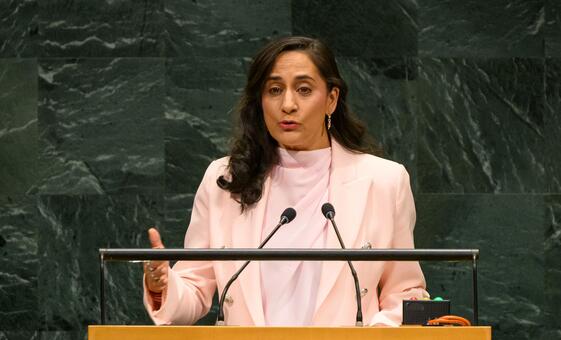
Speaking to the United Nations General Assembly on Saturday, Anand said governments can no longer treat changes in the international system as a gradual evolution. In her view, the world is confronting a far more disruptive break, marked by weakening economic integration among major powers and repeated challenges to national sovereignty.
“The tide does not wait. You must move with it.”
Anand introduced her address with the image of the sea, drawing on her roots in Nova Scotia. She returned to that theme to argue that Canada must adapt to altered geopolitical conditions while holding firm to international law, durable alliances and the principles reflected in the UN Charter.
“The tide has turned in the global order,” she said, calling the moment a “rupture, not a transition”.
Strategic autonomy alongside multilateral cooperation
The Foreign Minister said Canada would seek greater strategic autonomy, an approach intended to reduce dependence on any one country and broaden the country’s economic and diplomatic ties. The policy reflects the growing importance governments place on resilient supply chains, reliable access to essential resources and wider networks of political cooperation.
Canada’s trade and diplomatic diversification efforts will include stronger engagement with countries in the Indo-Pacific, the Gulf, Latin America, Africa and Europe. Anand also pointed to renewed relationships with India and China.
At the same time, she emphasized that greater self-reliance should not mean retreating from collective institutions. Canada plans to work with small countries, middle powers and larger states in flexible coalitions focused on shared concerns. Support for Ukraine and security in the Arctic were among the examples she identified.
Such arrangements, Anand said, are meant to add strength to the multilateral system rather than serve as an alternative to it. Canada and other partners have established an initiative called “Partners for Multilateralism,” focused on reforms that could make the United Nations and other international bodies more representative, effective and trusted.
The argument carries broader implications for countries that depend on rules-based cooperation to manage disputes, trade and security threats. Anand warned that sovereignty, a foundational element of the UN Charter, is increasingly being disregarded. Her remarks placed Canada’s foreign-policy priorities within a wider debate over whether international institutions can remain effective amid strategic rivalry.
Security, technology and economic resilience
Anand described Canada’s approach as “values-based realism,” combining support for democratic principles and international rules with investment in areas considered strategically important. These include emerging technologies, critical minerals, defence manufacturing and energy.
Those sectors have become central to debates about national security and economic stability. Critical minerals are used in technologies ranging from batteries to advanced electronics, while reliable energy supplies, technological capability and industrial capacity can affect a country’s ability to respond to international disruptions. Canada’s focus on these areas signals an effort to strengthen its position while expanding cooperation with trusted partners.
On the Arctic, Anand said the region remains essential to Canada’s security and national identity. She highlighted collaboration with Indigenous peoples and regional partners, underscoring that northern security encompasses local communities as well as international concerns.
Canada also intends to support cooperation on maritime security and the responsible development of artificial intelligence. Both subjects have increasingly crossed national borders: maritime routes are vital to trade and supply chains, while AI policy requires governments to consider innovation, security and accountability together.
Ukraine, Iran and the Middle East
In her address, Anand again expressed Canada’s backing for Ukraine and called for a peace settlement that is comprehensive, just and lasting. She said any such outcome must respect Ukraine’s sovereignty and territorial integrity.
She also delivered a sharp assessment of Iran, describing it as the principal danger to peace and security in its region. Anand condemned attacks she attributed to Tehran and said Iran must not obtain a nuclear weapon.
“Iran must never acquire a nuclear weapon.”
On the conflict between Israelis and Palestinians, Anand said both peoples possess rights to self-determination. Canada continues to support a negotiated two-State solution, while maintaining that Hamas should not govern Palestine. She also said Israeli settlements in the West Bank are illegal under international law.
“Israel’s right to exist is not up for debate, and the right of the Palestinian people to self-determination in a state of their own is also not up for debate,” she said.
Beyond those conflicts, Anand cited Canadian support for security and election efforts in Haiti, humanitarian assistance in crises including Sudan and Gaza, and wider international collaboration on pressing global challenges.
An Invitation to Act Together
Anand concluded by rejecting the idea that Canada should meet a changing world with resignation or a longing for an earlier era. The country, she said, will pursue its interests through stronger capabilities, diversified ties and continued engagement with international institutions.
“This is the path that Canada will take,” she concluded, “and we invite you to join us in partnership.”
Her message was that the response to a fractured international environment should be practical cooperation rather than isolation. For Canada, that means preserving room to act independently while continuing to build relationships capable of addressing security crises, humanitarian emergencies and long-term economic change.
Related Reading
Frequently Asked Questions
What is Canada urges stronger partnerships as global?
Canada urges stronger partnerships as global is the main topic of this guide. The article explains the context, practical details, and next steps readers should understand.
Why does Canada urges stronger partnerships as global matter?
Canada urges stronger partnerships as global matters because readers are looking for a useful answer, not just a short summary. Good content should match search intent and help them decide what to do next.