Maritime Crisis Deepens as Red Sea Attack Claims More Lives
Provpnmatrix.com – A violent assault on a commercial vessel navigating waters near Yemen’s southern shoreline has intensified worldwide apprehension regarding international commerce. The incident, which occurred on Tuesday, resulted in the deaths of multiple maritime workers and arrives during a period of heightened geopolitical tension between Iran and the United States. This conflict has severely restricted maritime passage through the strategically vital Strait of Hormuz, creating cascading effects across global markets.
International Response to the Tragedy
Arsenio Dominguez, who leads the United Nations International Maritime Organization, issued a formal statement expressing profound sorrow over the loss of life. His remarks emphasized the recurring nature of such violence against civilian maritime workers.
It is with sadness and regret to know that, once again, innocent seafarers have lost their lives in an indefensible attack on international shipping. I offer my deepest condolences to the families of those involved.
The IMO chief highlighted the particular concern surrounding attacks in the Red Sea and Gulf of Aden corridor. He noted that persistent hostility toward commercial vessels serves to heighten regional tensions while simultaneously endangering the supply networks upon which international economies rely. These supply chains connect producers and consumers across continents, making their stability essential for global economic health.
The Tihamah and Regional Dynamics
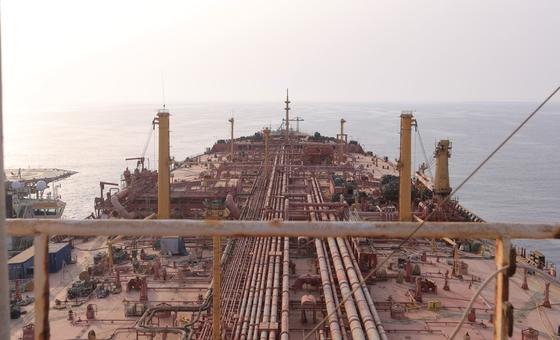
The vessel targeted in this latest incident is the Tihamah, a deck cargo ship that has been identified as the target of Yemen’s Houthi fighters. Marine registry data indicates the ship operates under the Tanzanian flag and measures 62.8 metres in length with a width of 11 metres.
The Houthi movement, officially designated as Ansar Allah, represents a significant non-state armed force in the region. Backed by Iran, the group has engaged in prolonged conflict with Yemeni Government forces, which receive support from a coalition led by Saudi Arabia. This struggle has persisted for more than ten years, shaping the political and military landscape of the Arabian Peninsula.
Beyond the immediate conflict, the Houthi organization has demonstrated its capacity to disrupt international maritime traffic. The group has issued threats regarding the Bab al-Mandab Strait, a critical passage connecting the Red Sea to the Indian Ocean. Their campaign against commercial shipping has continued for several years, intensifying notably following the outbreak of the Hamas-Israel war in October 2023. In this context, Houthi actions have been framed as solidarity with Palestinians in Gaza.
Escalating Maritime Disruptions
Recent developments have further complicated the maritime situation. Media reports indicate that on July 23, Houthi forces claimed responsibility for striking two Saudi oil tankers. These incidents prompted UN Secretary-General António Guterres to voice serious concern regarding the renewed pattern of Houthi aggression against commercial vessels in the Red Sea region.
The Strait of Hormuz presents an equally challenging scenario. This narrow waterway serves as a crucial link between the broader international community and multiple Gulf States, including Iran and Oman. Current data from the International Maritime Organization reveals that merely seven vessels transited the strait on Sunday, representing a dramatic decline of nearly twenty times compared to pre-conflict daily averages.
The broader military confrontation involving the United States and Israel against Iran, combined with Tehran’s retaliatory operations across Gulf States and Jordan, has generated substantial economic consequences. The export of essential commodities including petroleum, natural gas, and fertilizer components has experienced significant reductions, while market prices have correspondingly increased.
Humanitarian and Operational Challenges
The ongoing hostilities have created considerable challenges for maritime personnel worldwide. The evacuation initiative coordinated by the IMO, designed to assist seafarers stranded in or near the Strait of Hormuz, has been temporarily suspended. Estimates suggest that approximately 6,000 crew members aboard 500 vessels remain trapped in the region, nearly six months after the commencement of active hostilities. To date, roughly 2,900 individuals have successfully been evacuated to safer locations.
The UN agency’s monitoring system for the Hormuz crisis documents 65 verified incidents and 17 maritime workers who have lost their lives since early March. These figures underscore the severity of the situation and the ongoing risks faced by commercial shipping operations in the region.
Call for Action and Resolution
In his comprehensive statement, the head of the IMO emphasized the urgent need for the immediate and unconditional liberation of all seafarers currently held captive following piracy incidents in the Red Sea and Gulf of Aden. He stressed that protecting maritime workers represents a fundamental obligation established under international law and constitutes a shared responsibility borne by the entire global community.
The convergence of military conflict, maritime attacks, and supply chain disruptions creates a complex scenario with far-reaching implications. As nations navigate these challenges, the stability of international commerce remains contingent upon de-escalation efforts and the protection of civilian maritime workers who continue to operate in increasingly dangerous waters.
Related Reading
Frequently Asked Questions
What is Deadly attack on Red Sea ship?
Deadly attack on Red Sea ship is the main topic of this guide. The article explains the context, practical details, and next steps readers should understand.
Why does Deadly attack on Red Sea ship matter?
Deadly attack on Red Sea ship matters because readers are looking for a useful answer, not just a short summary. Good content should match search intent and help them decide what to do next.