Flour sacks turned flood barriers in Gaza
Provpnmatrix.com – Flour sacks turned flood barriers are becoming a desperate form of winter protection for displaced families in Gaza. As rain begins to fall, people living in tents and damaged buildings face renewed risks from flooding, cold and wind, while safe shelter materials remain in short supply.
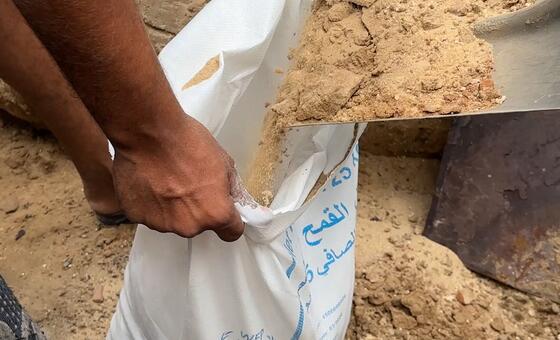
Ahmed Al-Omari and other young men are filling used World Food Programme flour sacks with sand and arranging them around makeshift shelters. The aim is simple: stop rainwater from reaching families already struggling through repeated displacement and inadequate housing.
“These are flour sacks that we used to retrieve from the jaws of death, so that we could eat.”
He was referring to the danger civilians have faced while trying to obtain aid in Gaza. The same sacks that once carried urgently needed food are now being reused to protect tents from floodwater.
“Now, they have become sacks that we fill with sand to act as barriers against rainwater. We flood every year and we have put these sacks in place in the hope that, somehow, rainwater will not get inside.”
Winter shelter needs remain immense
Nearly two million people in Gaza require shelter support. The need is particularly urgent as an intensifying El Niño pattern could bring heavier rainfall in the months ahead. Humanitarian agencies are working to bring shelter supplies into the Strip before conditions worsen.
Karl Baker, the International Organization for Migration’s regional crisis coordinator for Gaza, said the amount of assistance entering Gaza will not meet the population’s needs as rain already begins.
“We know that the rains have already begun and that the volume of goods that we have to get into Gaza is not going to meet the demands of the population.”
Delayed financing has made preparations harder. Funding began to decline in January, reducing aid organizations’ ability to buy and position supplies before winter. Although funding is now arriving, it is still not enough for the estimated 1.8 million to 1.9 million people requiring some form of shelter assistance.
“The funding has come a little later in the year. It is now arriving, but it’s not at the scale needed to support what we estimate is 1.8 to 1.9 million people needing some sort of shelter assistance.”
Supply routes and damaged tents add to the crisis
Even when funding is available, delivering materials to Gaza is difficult. IOM sources supplies from countries including China, India and Pakistan, with goods moving through Jordan, Egypt and Israel before reaching Gaza. The broader regional conflict has made those trade routes increasingly uncertain.
“The other point, of course, is that the regional conflict seems to be only growing. That disrupts trade routes.”
Shipping disruptions can reduce the volume of available supplies and delay their arrival. For families sheltered under tarpaulins or in partially destroyed homes, such delays can quickly become dangerous once heavy rain sets in.
The challenge is not only the number of shelters, but their quality. In many humanitarian emergencies, agencies can provide plywood, relief housing units and other transitional structures designed to last longer. In Gaza, however, many people rely on tents that may remain usable for only around six months.
Repeated displacement weakens those temporary structures further. Tents may be dismantled, carried during sudden moves, abandoned, or damaged beyond repair. The result is limited protection against another winter of rain and strong winds.
“Constantly moving a tent or a temporary structure has caused, I would say, a lack of quality for what is currently inside of Gaza. The quality needs to be enhanced with either more durable items or more goods, which currently help with temporary solutions.”
More durable materials, including roofing sheets, cement for floors and reinforced walls, can help shelters withstand severe weather. Yet many of these items face Israel’s dual-use restrictions, in place since 2008 because of concerns about potential non-civilian uses.
FAQ: Winter shelter conditions in Gaza
Why are flour sacks turned flood barriers? Used flour sacks can be filled with sand and placed around shelters to divert rainwater. For families without proper building materials, they are an improvised way to reduce flooding.
Who needs shelter support in Gaza? An estimated 1.8 million to 1.9 million people need some type of shelter assistance, including people living in tents, temporary structures and damaged homes.
Why is winter aid difficult to deliver? Delayed funding, disrupted regional trade routes and restrictions on some durable construction materials all limit the speed and scale of shelter assistance reaching Gaza.