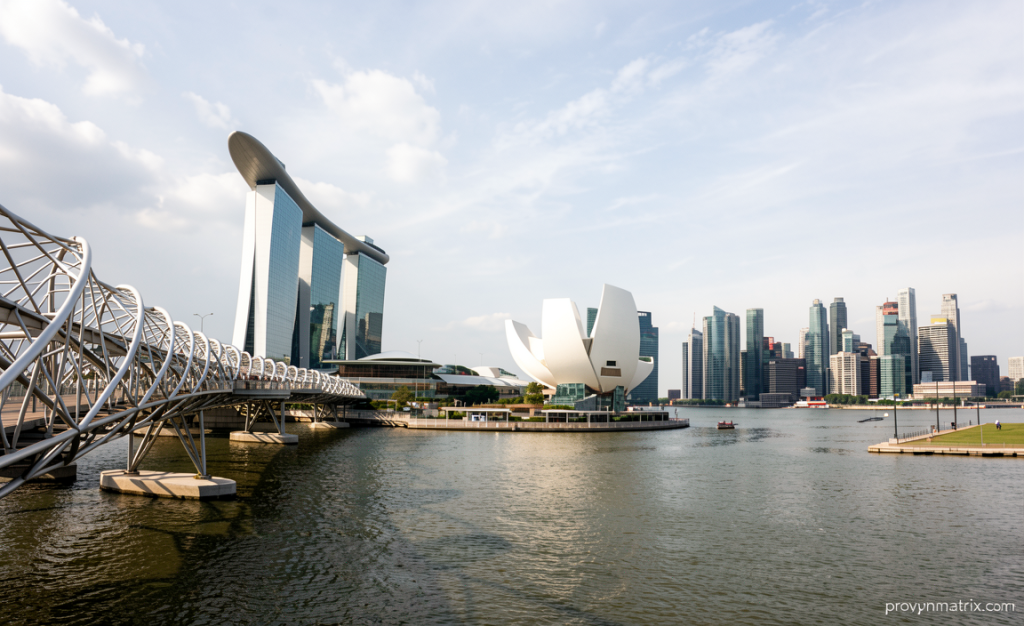
Singapore Faces Fresh International Pressure Over Drug-Related Executions
Provpnmatrix.com – A panel of independent human rights experts appointed by the UN Human Rights Council delivered a sharp rebuke to Singapore on Tuesday, condemning the country’s execution of at least 16 individuals this year for drug-related offences. The experts, who serve without salary from any UN body and hold no employment with any organization, demanded an immediate halt to what they termed the “continued and unlawful use of capital punishment” in the Southeast Asian city-state.
The Legal Framework Under Fire
At the centre of the controversy sits Singapore’s Misuse of Drugs Act, first enacted in 1973. Under this statute, anyone convicted of trafficking, importing, or exporting specified threshold quantities of prohibited substances faces a mandatory death sentence. Judges are, in effect, stripped of sentencing discretion in these cases. A 2013 amendment introduced a narrow exception allowing life imprisonment in very limited circumstances, but the overwhelming default remains execution.
The experts characterized these mandatory death penalties, together with the statutory presumptions embedded in the Act, as “arbitrary deprivations of life” that “must stop.” Their position aligns with years of repeated UN calls urging Singapore to abandon capital punishment altogether, with the international body maintaining that compulsory imposition of the death penalty violates international law’s prohibition on arbitrary taking of life.
Drug Offences and the “Most Serious Crimes” Threshold
The experts drew a firm line around international human rights standards. They noted that states which have not yet abolished capital punishment may apply it only for the “most serious crimes,” a category understood to mean offences of extreme gravity involving intentional killing.
“Drug-related offences do not meet this threshold.”
In practical terms, this means that the vast majority of Singapore’s executions fall outside what international law permits. The statistics underscore the point: in 2025, drug trafficking and related criminal convictions accounted for 15 of the country’s 17 executions. The remaining two cases involved other categories of offence, but the pattern is unmistakable — Singapore’s death penalty operates overwhelmingly as a drug-enforcement tool.
Burden of Proof and Due Process Concerns
Beyond the mandatory nature of the sentence itself, the experts took aim at a procedural feature of the Misuse of Drugs Act: the shifting of the burden of proof onto the accused. In ordinary criminal proceedings, the prosecution must prove guilt beyond reasonable doubt. Under Singapore’s drug statute, however, certain elements are presumed true unless the defendant can rebut them — a reversal the experts argued corrodes the presumption of innocence.
“Capital proceedings require the highest standards of fairness and due process. No execution can be lawful where the death sentence results from proceedings that fail to meet these guarantees.”
They warned of “grave consequences when a person’s life is at stake,” emphasizing that the stakes of a death sentence demand procedural protections far exceeding those in ordinary criminal trials.
Global Context: Abolition as the Norm
The experts’ critique does not exist in a vacuum. According to the UN’s Office of the High Commissioner for Human Rights (OHCHR), approximately 170 states have either abolished the death penalty in law or introduced a moratorium on its use. Singapore sits in a shrinking minority of countries that continue to carry out executions, and its reliance on mandatory sentencing for non-homicidal offences places it further from the international consensus than most remaining retentionist states.
The experts framed abolition of capital punishment everywhere as “the ultimate objective under international human rights law,” positioning their condemnation not as a preference but as an articulation of existing legal obligations.
The Age-Question and Human Dignity
One further point drew specific attention: Singapore has no upper age limit beyond which a person cannot be executed. The experts urged that, if the government is unwilling to abolish capital punishment entirely, it should at minimum introduce such a ceiling to guarantee equality and non-discrimination in its application.
Their closing argument returned to the question of human dignity:
“The extreme physical and psychological suffering inherent throughout the death penalty process, culminating in the deliberate taking of a person’s life by the State, cannot be reconciled with the prohibition of torture and other cruel, inhuman or degrading treatment or punishment, nor with respect for human dignity.”
The UN has long maintained that capital punishment violates fundamental human rights, specifically the right to life and the protection against cruel, inhuman or degrading treatment or punishment. For Singapore, where the death penalty remains a visible pillar of criminal-justice policy and a frequent subject of domestic debate, the latest round of international criticism sharpens an already tense question: whether a small, prosperous city-state can continue to justify mandatory execution for drug offences in a world where abolition has become the prevailing norm.
Related Reading
Frequently Asked Questions
What is Singapore?
Singapore is the main topic of this guide. The article explains the context, practical details, and next steps readers should understand.
Why does Singapore matter?
Singapore matters because readers are looking for a useful answer, not just a short summary. Good content should match search intent and help them decide what to do next.