Gaza displacement crisis deepens as military zones expand
Provpnmatrix.com – Palestinians in Gaza are being pushed into increasingly limited areas as Israeli military deployment expands, while shelters, homes and civilian infrastructure continue to be damaged or destroyed. The UN human rights office has warned that the pattern is intensifying an already devastating displacement emergency and raising concerns over ethnic cleansing.
Israel has indicated an intention to expand the area used for military deployment to 70 per cent of the Gaza Strip, the Office of the UN High Commissioner for Human Rights (OHCHR) said. For civilians who have already moved repeatedly during the conflict, the shrinking amount of accessible territory leaves fewer places to find safety, shelter or the possibility of returning home.
Communities displaced near the “yellow line”
Recent displacement has been concentrated in areas close to the boundary known as the “yellow line”. OHCHR said Israeli military deployment areas have moved westward during the past two weeks in Al Shujaiyeh in Gaza City, as well as in eastern Al Bureij, eastern Deir Al-Balah and eastern Al Maghazi in Middle Gaza.
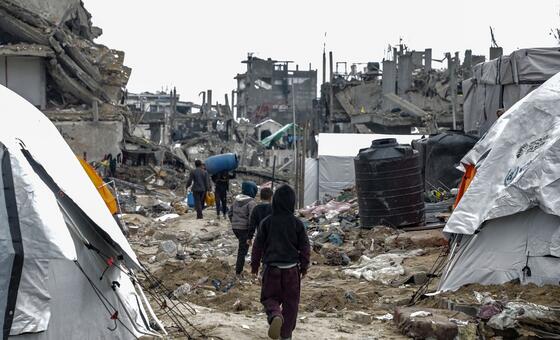
The expansion has consequences beyond the immediate areas of military activity. Families living near the boundary face the risk of further flight, while many who left earlier remain unable to return to neighbourhoods now located beyond the line. Buildings that once offered some form of refuge have also been destroyed, further reducing the limited shelter options available to displaced people.
In Al Shujaiyeh, OHCHR documented at least two Israeli attacks affecting displacement camps. It also received information that explosive robots were used to demolish some of the few remaining standing structures in the area.
On 25 October, an Israeli drone dropped munitions on tents housing displaced families near the Al Shujaiyeh junction, close to the yellow line, OHCHR said. A fire that followed burned for five hours. The Palestinian Ministry of Public Works and Housing said 200 families, totalling 800 people, were forced to leave; most were women, children and older people.
Repeated flight and little chance of return
The displacement of Gaza’s population is not a single event but a recurring reality for people who have already lost homes, belongings, income and community ties. Each new military advance or attack on a shelter site can force families to move again, often with limited warning and few secure alternatives.
“The nightmare of displacement in Gaza is both acute and chronic,” said Ajith Sunghay, Head of UN Human Rights in the Occupied Palestinian Territory (OPT).
“Those displaced before the announcement of a ceasefire have little to no prospect of return to the areas they fled, most of which are inaccessible because they fall beyond the so-called yellow line. And they continue to be displaced again and again.”
OHCHR said Israeli forces appear to be treating the yellow line as a kill zone, preventing Palestinians from reaching what remains of their homes on the other side. The issue is especially grave for families whose homes, neighbourhood services and support networks lie in inaccessible areas. Even where homes are no longer habitable, the ability to return can be essential for assessing damage, recovering possessions and reconnecting with local communities.
Legal obligations and humanitarian pressures
As the occupying power, Israel must stop the forcible transfer of Palestinians within Gaza, OHCHR said. Such conduct constitutes a war crime and may also rise to the level of a crime against humanity. The office said Israel is also required to enable Palestinians to return safely and with dignity to their homes and the places from which they fled.
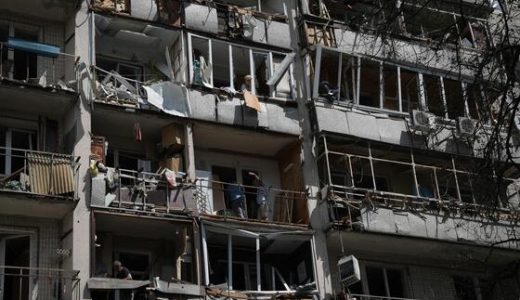
Instead, widespread military operations have caused nearly all of Gaza’s population to be displaced multiple times, while buildings, public structures and other civilian infrastructure have suffered extensive damage or destruction. The loss of infrastructure compounds the hardship of displacement: families require more than space to pitch a tent, including access to basic services, protection from the weather and conditions that allow them to live with dignity.
Restrictions on shelter-related humanitarian assistance entering Gaza have further worsened the crisis, OHCHR said. This places added pressure on people already living in temporary conditions, particularly as families confront another winter in fragile tents that offer little protection from rain.
The warning highlights how movement restrictions, attacks near displacement sites and the loss of civilian structures can combine to make temporary displacement effectively permanent. For many Palestinians, the question is no longer simply where to go next, but whether any safe and viable place remains available within Gaza.
“There must be an end to this suffering. This is the fourth year of displacement for most Palestinians in Gaza, the fourth winter in tents too flimsy to withstand the rain, and they are still under fire through it all,” said Mr. Sunghay. “Let this be the last.”
Related Reading
Frequently Asked Questions
What is UN rights office warns of deepening?
UN rights office warns of deepening is the main topic of this guide. The article explains the context, practical details, and next steps readers should understand.
Why does UN rights office warns of deepening matter?
UN rights office warns of deepening matters because readers are looking for a useful answer, not just a short summary. Good content should match search intent and help them decide what to do next.