Guterres Calls for Renewed Global Commitment to Peace
Provpnmatrix.com – With wars, social divisions and humanitarian pressures affecting communities across the world, UN Secretary-General António Guterres has called on governments to treat peacebuilding as an urgent investment rather than a distant aspiration.
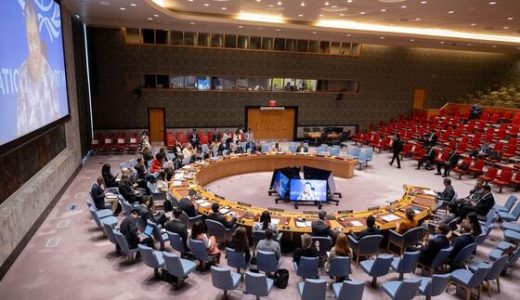
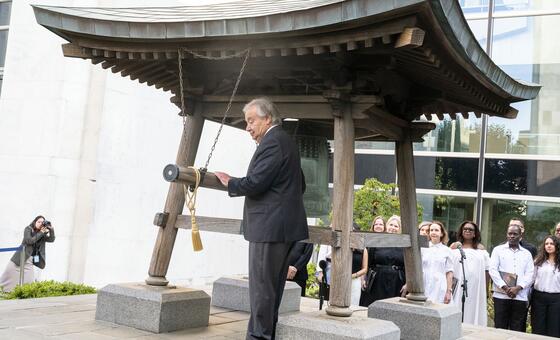
Speaking on Wednesday at the annual Japanese Peace Bell ceremony at United Nations Headquarters in New York, Guterres said the gathering served as a reminder that peace requires constant attention, political will and practical action.
“Each year, the toll of the Peace Bell reminds us of the most important and consequential job we have: building peace,” he said.
His remarks came shortly before the International Day of Peace, observed each year on 21 September. The 2026 observance carries the theme, “Investing in Peace: For Everyone, Everywhere, Every Day,” emphasizing that peaceful societies depend on choices made in everyday policy, public life and international diplomacy.
Peace Requires More Than Hope
Guterres warned that the world cannot view peace as something that simply arrives on its own. He argued that it must be actively built, defended and sustained, particularly at a time when violence and political fragmentation are worsening hardship for many people.
“Peace is never a passive achievement,” he said.
He said communities are being damaged by violence and division, while conflicts are becoming broader and more entrenched. At the same time, he cautioned that the dialogue, cooperation and shared responsibility needed to resolve crises are too often absent.
“Violence and division are tearing apart communities,” he said. “Conflicts are widening and deepening. People are suffering. And the dialogue and solidarity that solutions require are missing in action.”
The Secretary-General’s message placed peace alongside major social priorities. He urged leaders expected to convene at the United Nations in the coming weeks to support health services, education, nutrition and social protection. Such investments, he suggested, help create the conditions in which people can live securely and feel that institutions serve them fairly.
Trustworthy public systems are central to that effort. Governments, he said, must build institutions that people can rely on, protect human rights and uphold human dignity. These measures are not separate from peace; they are part of the foundation that can reduce grievances, strengthen communities and support more resilient societies.
Recognition for Grassroots Peacebuilders
Guterres also drew attention to people working for reconciliation and safety outside the highest levels of government. Volunteers, civil society representatives, advocates, peacekeepers and mediators are helping translate the International Day of Peace theme into action in places facing division or instability.
He said individuals and local groups are demonstrating what is possible when official institutions fail to deliver peace. By speaking out, connecting people across divides and helping communities recover, they offer an example that political leaders should follow.
“Where governments are failing to deliver peace, people are showing another way,” he said.
For readers, the message carries a practical implication: peace is not limited to agreements signed by governments or decisions made in international chambers. It can also be advanced through education, social inclusion, accountable institutions, respect for rights and efforts to repair trust between communities.
Still, Guterres stressed that governments retain a decisive responsibility. He called for a renewed embrace of diplomacy, dialogue, negotiation and peacekeeping, describing them as established tools for preventing and ending conflict. The appeal was directed especially at leaders with the authority to shift policies, allocate resources and pursue political solutions to ongoing wars.
“Today, I call on world leaders to stand with us: take action; invest in solutions; and do the hard work of building lasting, sustainable peace.”
A Bell With an International History
The ceremony’s setting reflects a long-standing symbol of international cooperation. The Japanese Peace Bell was given to the United Nations by the UN Association of Japan on 8 June 1954. It was made from coins contributed by delegates from 60 nations, along with personal donations of different metals.
The bell stands inside a wooden structure designed to resemble a traditional Shinto shrine. When it was presented, Renzo Sawanda, then Japan’s observer to the United Nations, described it as an expression of a shared hope extending beyond Japan.
“The bell embodies the aspiration for peace not only of the Japanese but of the peoples of the entire world. Thus, it symbolized the universality of the United Nations,” Sawanda said at the time.
The Peace Bell is traditionally rung twice each year: on the first day of spring, at the vernal equinox, and again in commemoration of the International Day of Peace. The ritual links a physical symbol of peace with the broader task of preventing violence and encouraging cooperation among nations.
This year’s ceremony also carried personal significance for Guterres. He said it would be the final occasion on which he rings the bell as Secretary-General, as he is scheduled to leave the United Nations at the end of the year.
“This is the last time I will ring the Peace Bell,” said Mr. Guterres, who added that “I will always stand with the champions of peace around the world.”
His farewell message underscored the larger challenge facing international leaders: peace cannot be preserved through symbolism alone. It demands sustained investment in people, institutions, dialogue and the difficult work of ending conflict before further suffering takes hold.
Related Reading
Frequently Asked Questions
What is Guterres urges leaders to invest in peace?
Guterres urges leaders to invest in peace is the main topic of this guide. The article explains the context, practical details, and next steps readers should understand.
Why does Guterres urges leaders to invest in peace matter?
Guterres urges leaders to invest in peace matters because readers are looking for a useful answer, not just a short summary. Good content should match search intent and help them decide what to do next.