Libya Election Framework Gains UN Backing as Political Trust Remains Fragile
Provpnmatrix.com – Libya has moved closer to a possible national vote after rival political forces reached a new agreement on election rules, offering a rare opening in a country that has gone more than a decade without nationwide presidential and parliamentary elections.
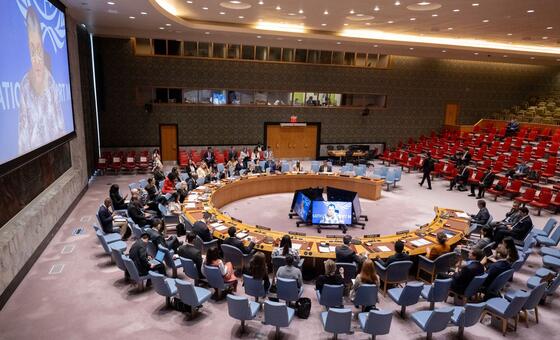
The United Nations Security Council described the 30 August agreement as an important advance and called on Libyan leaders to turn the commitments into practical action without delay. The arrangement was produced through the “Smaller Convening”, a UN-facilitated negotiating process involving major Libyan stakeholders.
At the heart of the agreement is a plan to rebuild the board of the High National Elections Commission and revise the legal basis for presidential and legislative polls. The elections are intended to take place within two years, under one unified government.
A route beyond the institutional deadlock
For years, disputes over election laws and institutional authority have prevented Libya from holding a national vote. The new deal addresses two issues that have repeatedly obstructed progress: ensuring that all three of Libya’s regions are represented on the elections commission’s board, and resolving a provision that tied the outcome of parliamentary elections to presidential elections.
The Security Council encouraged political figures across the country to endorse the arrangement and carry out its terms. It also reiterated full support for the UN Support Mission in Libya, known as UNSMIL, and its leader, Special Representative of the Secretary-General Hanna Tetteh.
Libya’s political division has endured since the 2011 collapse of Muammar Gaddafi’s government, following civil conflict and international military intervention. State institutions fractured, security forces split into competing structures, and rival authorities emerged in the west and east. Control over legitimacy, public institutions and the country’s oil-based economy has remained a central source of tension.
The present agreement was designed through a broader format than previous talks. Instead of engaging separately with Libya’s two competing legislative chambers, UNSMIL brought together representatives from the Tripoli-based Government of National Unity, the eastern Libyan National Army command, and both parliamentary bodies.
“[It] helped overcome issues that had stood in the way for many years.”
Ms. Tetteh said the breakthrough gives the UN mission an opening to work more closely with Libyan actors and strengthen confidence in the political process. Yet she has also stressed that signing an agreement is only the beginning. The harder task will be persuading political leaders, institutions and the public that the path toward elections can be credible and inclusive.
Public confidence will shape the next phase
Trust is still weak, both among political rivals and among ordinary Libyans who have lived through repeated delays, competing authorities and unsuccessful attempts to organize elections. That makes public participation a central test for the new framework.
UNSMIL has sought to build that confidence through a structured dialogue held from December 2025 through June 2026. The process consulted 120 Libyans representing different regions and communities. Those discussions underline that election preparations cannot be limited to legal texts or institutional appointments; public acceptance will also matter when Libyans are asked to take part in a national vote.
Ms. Tetteh identified broad public support as the biggest challenge ahead. Other major obstacles include the need to bring divided military, security and economic institutions closer together. Elections could provide a route toward renewed legitimacy, but they will need to be accompanied by progress on the institutions responsible for security, administration and national cohesion.
“We are not here to replace the Libyan people, but to support them in achieving their political aspirations toward good governance, unity, peace and security.”
That message reflects the limits of outside mediation. International support can help competing parties negotiate, clarify legal frameworks and lower tensions, but Libya’s political future ultimately depends on domestic actors following through on the commitments they have made.
Women’s participation faces a serious challenge
The election process also raises questions about who can safely participate in public life. Ms. Tetteh has warned that online abuse and hate speech are driving Libyan women away from politics and civic engagement. She said these attacks are intended to intimidate women and stop them from exercising their rights.
Women accounted for 35 per cent of participants in the structured dialogue, demonstrating their role in discussions about Libya’s future. Stronger legal protections are needed, Ms. Tetteh has said, so that women can engage in political and civic life without fear of harassment or intimidation.
Protecting that participation is not only a question of representation. A political process that excludes voices through threats or targeted abuse risks weakening the public confidence that the election agreement is meant to rebuild.
Security conditions remain a practical concern
Security will remain another key factor as the political process develops. Rivalries among armed groups are concentrated mainly in western Libya, where tensions can quickly affect daily life and the wider political climate. Ms. Tetteh noted, however, that local leaders in the region have shown a willingness to work with UNSMIL to reduce tensions before they become more serious.
The agreement gives Libya a defined opportunity to move beyond prolonged deadlock, but its value will be measured by implementation. Reconstituting the elections commission, applying the revised legal framework and maintaining a unified approach to preparations will all require cooperation among groups with long-standing differences.
For Libyans, the promise is not simply an election date. It is the prospect of a process capable of restoring confidence in national institutions after years of division. The Security Council’s message is clear: the political opening exists, and the responsibility now lies with Libya’s leaders to make it real.
Related Reading
Frequently Asked Questions
What is UN hails Libya election deal as Security?
UN hails Libya election deal as Security is the main topic of this guide. The article explains the context, practical details, and next steps readers should understand.
Why does UN hails Libya election deal as Security matter?
UN hails Libya election deal as Security matters because readers are looking for a useful answer, not just a short summary. Good content should match search intent and help them decide what to do next.