Haiti’s Security Crisis Keeps Focus on Weapons, Money and Gang Networks
Provpnmatrix.com – Haiti’s deepening insecurity remains inseparable from the flow of weapons and ammunition into a country that produces neither. As armed groups maintain their grip over significant parts of Port-au-Prince and extend their influence beyond the capital, the United Nations Security Council has renewed measures designed to restrict the resources that sustain gang violence.
The renewed sanctions seek to limit access to firearms, ammunition, financial assets and international travel for people and organizations linked to threats against Haiti’s peace, security and stability. The Council extended the mandate of its sanctions committee for another 13 months, keeping in place a framework first established in 2022.
For many Haitians, the outcome will be judged less by diplomatic decisions than by whether daily life becomes safer: whether people can move through their neighborhoods, earn a living, reach schools and health services, and avoid the violence that has uprooted so many families.
Displacement and violence on an immense scale
Armed gangs have brought severe hardship to communities across Haiti. Their activities include killings, kidnappings for ransom, extortion of residents and businesses, rape and other forms of sexual violence. While Port-au-Prince has borne much of the crisis, armed groups have also been advancing into rural areas.
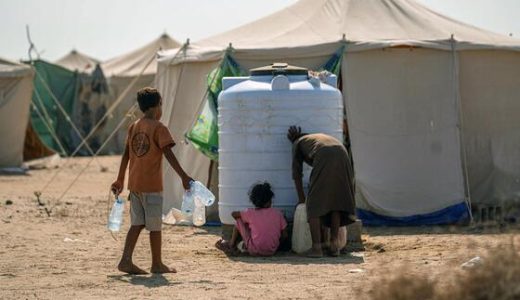
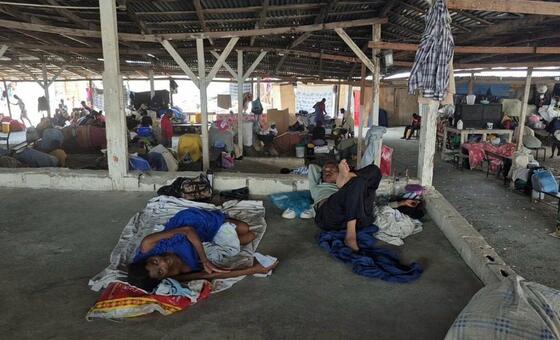
About 1.5 million people have been driven from their homes, representing roughly 12 per cent of Haiti’s population. The displacement has placed enormous pressure on families already facing instability and has made access to basic services more difficult for people forced to flee violence.
Between October of last year and April of this year, more than 3,000 people were killed and over 1,500 were injured. Sexual violence has also remained a grave concern. A UN partner treated more than 2,400 survivors in Port-au-Prince from January through May, most of them women and girls. Sixteen per cent were minors, and cases involving children as young as eight were documented.
Three tools intended to constrain armed groups
The sanctions committee uses three principal measures: an embargo on arms, a travel prohibition and an asset freeze. The arms restrictions are intended to prevent weapons and ammunition from reaching criminal groups. Travel and financial measures apply to specifically listed individuals and entities whose actions contribute to insecurity and gang violence.
Nine individuals and two groups are presently subject to these Council sanctions. Yet the number of people formally designated is only one part of the challenge. The sanctions regime depends on governments, ports, financial institutions and other authorities identifying violations and acting quickly enough to stop them.
Haitian authorities have intercepted illicit shipments at ports in recent months. Authorities in the United States have also seized firearms and ammunition bound for Haiti while pursuing trafficking investigations. The UN Office on Drugs and Crime supports regional efforts to confront this cross-border trade.
The scale of the illicit market is especially troubling because Haiti has no domestic firearms or ammunition industry. UN human rights figures released last year put the estimated number of illegal weapons circulating in the country between 270,000 and 500,000. That supply gives gangs the capacity to intimidate communities, defend territory and continue expanding despite international restrictions.
Gaps in enforcement remain a central obstacle
An independent panel of experts created by the Security Council has found that the arms embargo is breached regularly. Its work has included visits to Port-au-Prince and Cap-Haïtien, as well as meetings in Santo Domingo in the neighboring Dominican Republic and Miami in the United States. During those visits, the experts engaged with officials, police, financial institutions, civil society groups and people living with gang violence.
The panel has identified weaknesses that can undermine the embargo from within Haiti as well as beyond its borders. Some ammunition used by gangs may originate in national stockpiles. Police also lack a centralized system for tracking seized weapons, leaving room for firearms to go missing or be diverted by corrupt officers.
Financial sanctions have encountered their own limitations. Only the accounts of two sanctioned individuals were identified as frozen, and the sums involved were small. Delays by banks can allow designated people to move funds elsewhere or conceal them through accounts held in the names of third parties.
No attempts to evade the travel restrictions were found, but the experts cautioned that fraudulent passports could enable sanctioned individuals to cross borders using assumed identities. That warning highlights the need for sanctions to be paired with effective identity checks, law-enforcement cooperation and scrutiny of financial activity.
“Targeting gang leaders without addressing the networks that sustain them will inevitably fall short.”
The panel’s conclusion points beyond the most visible gang commanders. Political, economic and security figures who enable or support armed groups can be just as important to the machinery of violence. It also noted that numerous gang leaders who are not yet listed may meet the conditions for sanctions.
A test of regional and national action
Gang violence has continued despite the restrictions already imposed, demonstrating that a sanctions regime has limited value if enforcement is uneven. During the Security Council’s latest meeting, representatives of several of its 15 Member States again stressed the importance of cutting off gang financing, closing loopholes and holding support networks accountable.
Haiti welcomed the decision to renew the measures while making clear that sanctions alone cannot restore public security. That distinction is crucial. Financial freezes, travel bans and arms controls can raise the cost of supporting armed groups, but they do not by themselves provide protection to communities confronting violence every day.
The renewed mandate therefore represents both an opportunity and a test. Its success will depend on whether authorities can intercept shipments, trace weapons, prevent diversion from official stocks, identify hidden financial assets and pursue those who facilitate the gangs’ operations. For Haiti’s displaced families and residents living under constant threat, progress must be visible in fewer guns in criminal hands and greater freedom to live, travel and work without fear.
Related Reading
Frequently Asked Questions
What is Haiti sanctions renewed?
Haiti sanctions renewed is the main topic of this guide. The article explains the context, practical details, and next steps readers should understand.
Why does Haiti sanctions renewed matter?
Haiti sanctions renewed matters because readers are looking for a useful answer, not just a short summary. Good content should match search intent and help them decide what to do next.