From Classroom to Mine Shaft: Where UN Agencies Are Deploying AI to Protect People
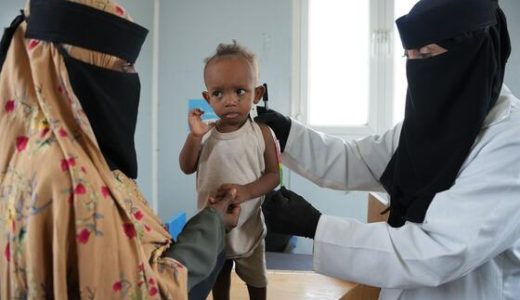
Provpnmatrix.com – In a gold mine in Ethiopia, a worker coughs into a chest X-ray machine, and within seconds an algorithm flags a pattern that a radiologist might miss under heavy caseload. In a Jamaican bedroom, a six-year-old boy named Ari opens a textbook that speaks back to him in interactive, personalised formats tailored to his learning difficulties. In orbit, thirty satellites beam down spectral data that an AI system sifts for plumes of methane escaping from pipelines and wells. These are not speculative futures. They are operational programmes running right now across multiple United Nations agencies, each aimed at a concrete human-rights outcome: access to education, breathable air, and timely medical diagnosis.
Education: Turning Textbooks into Tools Every Child Can Use
For Ari, reading a story in his own language had been locked behind a wall of inaccessible print. Standard textbooks assume a level of visual processing and cognitive pacing that children with learning disabilities simply cannot meet. UNICEF’s answer, built over years of collaboration with disability-advocacy organisations, is the Accessible Digital Textbooks for All (ADT) initiative. The programme predates the current wave of generative AI, but today’s AI-assisted version converts existing curricula into interactive, multimodal formats calibrated to each learner’s needs.
The scale of the problem is staggering: roughly 240 million children worldwide live with some form of disability, and a large share of them face learning materials that were never designed with their abilities in mind. ADT now operates in 17 countries and reaches close to two million children. Six additional countries signed on during the current year, and the agency’s stated target is expansion to 50 countries by 2030.
“The real impact is what this means for children,” Pia Rebello Britto, UNICEF’s Global Director of Education and Adolescent Development, told UN News. “There are countless more examples like Ari’s, showing what becomes possible when digital learning is designed to reach every child.”
UNICEF frames its AI implementation around a simple principle: the communities it serves sit at the centre of the design process, not at the receiving end of a finished product. Advocacy groups co-authored the ADT architecture, ensuring that accessibility features address real barriers rather than theoretical ones.
Climate: An Emergency Brake on the Fastest-Warming Gas
Methane warms the atmosphere roughly 80 times more potently than carbon dioxide over a 20-year horizon, making it the single most urgent lever available to slow near-term temperature rise. The UN Environment Programme (UNEP) launched the Methane Alert and Response System (MARS) in 2024, an AI pipeline that ingests data from 30 satellites, identifies methane plumes, and pushes notifications directly to governments and industrial operators.
The speed advantage is decisive. Machine detection runs 12 to 15 times faster and more accurately than manual visual inspection of satellite imagery. Since MARS went live, UNEP has issued approximately 7,500 alerts, which in turn triggered 42 documented mitigation actions over the past two years. The cumulative effect, as measured by the agency, is the prevention of emissions equivalent to 24 million gas-powered cars.
“Everybody – every person, citizen – anywhere in the world who is concerned about climate change must have an interest in slowing down global warming, and fixing methane leaks is the emergency brake,” said Martin Krause, director of UNEP’s Climate Change Division.
Krause emphasises that the alerts create a direct economic incentive for companies: a flagged leak means product loss, so operators tend to respond quickly. The environmental co-benefit is equally significant. Methane plumes contribute to ground-level ozone and particulate smog, both of which drive respiratory illness in nearby populations. Faster detection therefore shortens the window in which communities breathe contaminated air.
“This is not the UN building a task force and discussing a problem and having a meeting. This is real stuff,” Krause said. “This is happening as we speak.”
Health: Closing the Diagnostic Gap in Tuberculosis
Tuberculosis remains one of the world’s deadliest infectious diseases, and the bottleneck in many low-resource settings is not treatment but diagnosis. Radiologists in those settings face enormous caseloads, and a missed or delayed reading can mean months of untreated infection and continued community transmission.
The World Health Organization (WHO) has turned to computer-aided detection (CAD) software that analyses chest X-rays and generates a TB likelihood score in seconds. In 2021, WHO formally recommended CAD for adult TB screening and has since provided practical implementation guidance, helped national TB programmes calibrate the algorithms to local populations, and tracked health outcomes to confirm that earlier diagnosis translates into better survival.
Ethiopia’s gold-mining regions illustrate the stakes. Miners inhale silica-laden dust daily, elevating their TB risk well above the general population. Faster screening in those camps means fewer infectious individuals circulating in surrounding communities, a critical step toward the global goal of eliminating TB.
“It’s really helping people to move through the sort of diagnostic cascade onto treatment much sooner,” Dr. Vanessa Veronese, a scientist at WHO’s Special Programme for Research and Training in Tropical Diseases, told UN News.
What Ties These Threads Together
The common thread is not the technology itself but the governance question it raises. Each programme embeds AI inside an existing public-health or development mandate, subjects the output to human oversight, and measures success in human terms: a child who can read, a community that breathes cleaner air, a miner who reaches treatment before the disease advances. Across agencies, the UN is simultaneously implementing these tools and shaping the international conversation on how AI should be governed so that its benefits reach the people most excluded from them.
The practical lesson emerging from these deployments is straightforward: the question is no longer whether AI will enter education, climate monitoring, and public health. The question is whether the design choices made in the next few years will widen access or entrench existing inequalities. The programmes described above suggest the former is achievable, provided the communities affected retain a seat at the design table.
Related Reading
Frequently Asked Questions
What is AI for Good?
AI for Good is the main topic of this guide. The article explains the context, practical details, and next steps readers should understand.
Why does AI for Good matter?
AI for Good matters because readers are looking for a useful answer, not just a short summary. Good content should match search intent and help them decide what to do next.