Gender Equality Goals Drift Further From Reach as Funding and Political Power Gaps Persist
Provpnmatrix.com – Global progress toward gender equality is moving far too slowly to meet the 2030 Sustainable Development Goals deadline, with the world now facing an estimated 171-year path to full equality at current rates of change.
The warning comes as institutions designed to protect and advance women’s rights are losing funding, authority and capacity. Gender Snapshot 2026 finds that none of the targets under Sustainable Development Goal 5, the UN goal focused on gender equality, is currently on course to be achieved by 2030.
The agenda includes eliminating discrimination and gender-based violence, ending harmful practices such as child marriage and female genital mutilation, expanding women’s leadership, and protecting economic and property rights. The findings show that barriers remain deeply embedded in public life, law, work and household security.
Political power remains concentrated among men
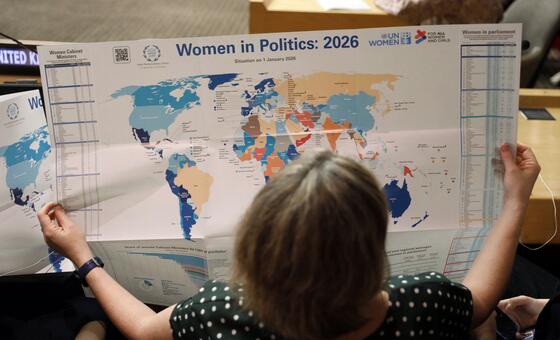
Women are still widely excluded from the places where national and global decisions are made. Six out of every seven countries are led by men, underscoring how unevenly political authority is distributed.
For many prospective candidates, the cost of seeking office creates an obstacle before campaigning has even begun. Election expenses can rise above 100 times a country’s average income per person, placing political participation beyond the reach of many women. Risks do not end with financial exclusion: in some countries, as many as eight in 10 women candidates experience violence while taking part in public life.
Women who reach government are also less likely to control portfolios with major economic or security influence. Men hold nearly nine out of 10 defence minister positions and more than eight out of 10 finance minister roles.
The imbalance is evident outside elected office as well. Women account for only six per cent of chief executive officers worldwide and lead less than one-fifth of top courts. That means decisions affecting employment, markets, legal protections, corporate conduct and public policy continue to be shaped predominantly by men.
Equal representation is not simply a matter of symbolism. When women are absent from leadership, public institutions are less able to reflect the experiences and priorities of the full population. The report stresses that democracy and human rights cannot be fully realized where half of society lacks an equal role in decision-making.
Violence and harmful practices remain widespread
The figures also point to the continuing scale of violence against women and girls. Nearly one in five girls is married before reaching 18, while an estimated 230 million women and girls around the world have survived female genital mutilation.
Partner and sexual violence remains one of the most serious threats to women’s safety and autonomy. Almost one in three women globally has experienced intimate-partner or sexual violence during her lifetime. In the past year alone, 316 million women faced physical or sexual violence by an intimate partner.
These realities affect far more than personal safety. Violence can limit access to education, paid work, health services, political participation and independent housing or finances. It also places lasting pressure on families, communities and public services.
Legal equality remains incomplete
No country has yet achieved complete legal equality for women, the report finds. Of 131 countries examined, 51 per cent still have major shortcomings in their legal frameworks.
Land rights are among the clearest examples. Nearly two-thirds of countries offer women little or no meaningful legal protection over land. Such gaps can make it harder for women to own property, retain secure tenure, build assets or recover after economic shocks. Fewer than 30 per cent of the countries studied guarantee joint land registration or ensure women have a role in land-governance systems.
Legal reform alone cannot remove every social or economic barrier, but weak laws can reinforce inequality by denying women enforceable protections. Clear rights to property, inheritance, employment, safety and political participation are central to whether formal commitments lead to practical change.
Equality institutions face shrinking support
At the same time that gender equality targets are falling behind, programmes intended to address them are being weakened. Funding for development assistance aimed at gender inequality has dropped to its lowest point since 2021 amid wider aid reductions.
Over the past two years, one-quarter of institutional mechanisms dedicated to gender equality have had their operating budgets reduced. One-third have also seen their institutional influence diminished. Within the UN system, 42 per cent of entities report that their own gender equality work has weakened as funding declines.
The funding trend raises a difficult practical question: how can governments and international institutions accelerate progress while reducing the resources available to collect data, enforce rights, support survivors and build women’s participation in public life?
“What the Gender Snapshot 2026 shows is that this is not inevitable,” said Li Junhua, UN Under-Secretary-General for Economic and Social Affairs.
“It is the result of choices, made visible through data. Investing in gender equality, institutions, and the statistical systems that hold them to account is not a cost. It is the fastest route back to the 2030 Agenda ’s promise of equal power for all.”
The report’s central message is that the 2030 deadline is not merely being missed by chance. The pace of progress reflects decisions about funding, laws, representation and institutional priorities. Reversing the trend will require sustained investment in the systems that measure inequality and in the institutions equipped to address it.
With only a few years remaining before the Sustainable Development Goals deadline, the distance between commitments and lived reality remains substantial. The data shows that achieving gender equality will require more than promises: it will depend on whether governments, institutions and international partners treat women’s rights, safety and leadership as urgent foundations of social and democratic progress.
Related Reading
Frequently Asked Questions
What is Gender equality woefully off track new UN?
Gender equality woefully off track new UN is the main topic of this guide. The article explains the context, practical details, and next steps readers should understand.
Why does Gender equality woefully off track new UN matter?
Gender equality woefully off track new UN matters because readers are looking for a useful answer, not just a short summary. Good content should match search intent and help them decide what to do next.