South Sudan Faces Rising Civilian Risks as Election Preparations Continue
Provpnmatrix.com – South Sudan is approaching a critical period in its political transition as violence, displacement and insecurity continue to affect communities across the country. Independent human rights investigators have warned that the mounting pressure on civilians is also threatening the conditions needed for a peaceful move toward democratic elections planned for December.
The UN Commission on Human Rights in South Sudan issued the warning after completing its 14th fact-finding visit to the country in a decade. During the four-day mission, commissioners held discussions with government representatives, political and security actors, civil society groups and other stakeholders.
The investigators said authorities must act quickly to protect people caught in conflict, ensure aid can reach vulnerable communities and support an inclusive political process before voters go to the polls. Their concerns extend beyond individual incidents of violence: they point to a broader pattern in which instability, restricted public participation, corruption and weak accountability reinforce one another.
A country still shaped by conflict
South Sudan became independent from Sudan in July 2011, making it the world’s youngest country. Yet hopes following independence were soon disrupted. Less than three years later, fighting broke out amid a power struggle involving President Salva Kiir and Vice-President Riek Machar.
A peace agreement signed in 2018 was intended to move the country away from conflict and toward a more stable political future. However, implementation of the Revitalized Agreement has slowed, while armed violence and local insecurity continue to have severe consequences for civilians.
The planned December elections would be the first held since South Sudan gained independence. That makes the process especially significant, but it also increases the stakes. A credible election depends on more than the act of voting. Citizens need to be able to participate without intimidation, political competitors must have a fair opportunity to organize, and disputes need trusted processes for resolution.
Commissioner Barney Afako said the country’s right to hold elections must be matched by safeguards that allow people to take part meaningfully and safely.
“Even as the country heads for elections, political and civic space has narrowed, while many of the safeguards and conditions for peaceful and credible polls are still missing,” he said.
“South Sudanese do have a right to vote; that right must be protected by ensuring they can participate freely, compete fairly, and resolve any electoral disputes through credible adjudication. These are the safeguards that will prevent an election from becoming a trigger for violence and disruption.”
Survivors describe the impact of recent fighting
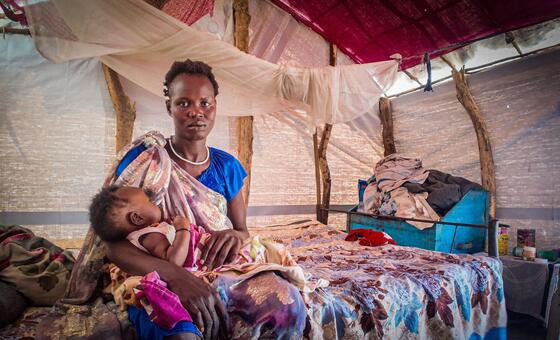
Commission Chair Yasmin Sooka travelled to Jonglei state, where she met people affected by recent violence in the northern part of the region. Survivors described killings, forced displacement, sexual violence and separation from relatives. Some also said they had been unable to obtain medical care, psychosocial assistance or other vital services, including people with urgent health needs.
For communities already living with the uncertainty of conflict, the loss of access to treatment and support can deepen the harm caused by violence. Displacement can separate families from homes, livelihoods and community networks, while insecurity can make it harder for humanitarian organizations to operate where assistance is most needed.
“Visit after visit, we continue to hear from people who bear the consequences of violence, displacement, insecurity and the failures of those with political and security responsibilities to prevent and address those harms,” Sooka said.
“The patterns have changed little, while the human cost continues to grow. South Sudanese people deserve better than to have their lives shaped by recurring cycles of violence and uncertainty.”
The Commission highlighted reports of civilian attacks, killings and displacement, as well as interruptions to humanitarian work. Aid workers are facing growing insecurity at a time when many people require emergency support and humanitarian operations are dealing with funding shortages.
Support for relief efforts and for the UN Mission in South Sudan, known as UNMISS, remains important as communities confront these pressures. The Commission also expressed alarm over a recent attack against an UNMISS patrol in Jonglei. Two peacekeepers were killed and others were injured. Commissioners called for an investigation and for those responsible to face accountability.
Political dialogue and accountability remain central
The Commission has urged a genuine political dialogue that includes the Sudan People’s Liberation Movement-in-Opposition, or SPLM-IO, led by Machar. It said the process should also involve holdout groups, civil society organizations, women and young people.
Broad participation matters because political agreements are more durable when affected groups have room to raise concerns and influence the process. Excluding major political or civic voices can leave disputes unresolved and make an already fragile transition more vulnerable to renewed confrontation.
Commissioners have also emphasized that corruption remains closely linked to the country’s peace and human rights challenges. A 2025 Commission report examined how entrenched corruption, the diversion of public funds and the poor allocation of public resources can affect people’s rights and undermine security.
Commissioner Carlos Castresana Fernández said there had been too little progress in addressing the underlying lack of accountability for grave abuses.
“All these years, the Commission has documented serious violations and identified the same underlying problem: impunity. Too often, those responsible for grave abuses have not been held accountable, while institutions responsible for justice remain weak and under-resourced,” he said.
The warning from the Commission places civilian protection, humanitarian access, political inclusion and justice at the center of South Sudan’s election-year challenges. The months ahead will test whether the country can create conditions in which elections contribute to stability rather than deepen existing tensions.
For South Sudanese communities, the issue is not solely the calendar for a national vote. It is whether the transition can deliver practical security, access to essential services and a political system in which people can participate without fear. The Commission’s message is that these conditions require urgent attention if the human toll of recurring violence is to be reduced.
Related Reading
Frequently Asked Questions
What is Human cost of violence in South?
Human cost of violence in South is the main topic of this guide. The article explains the context, practical details, and next steps readers should understand.
Why does Human cost of violence in South matter?
Human cost of violence in South matters because readers are looking for a useful answer, not just a short summary. Good content should match search intent and help them decide what to do next.