Nepal Flood Disaster Puts Employment at Risk Far Beyond the Worst-Hit Areas
Provpnmatrix.com – Flash floods in northern Nepal are threatening jobs, household incomes and business activity well outside the communities directly struck by the disaster, with broken roads, damaged power systems and disrupted trade links spreading the economic impact across connected sectors.
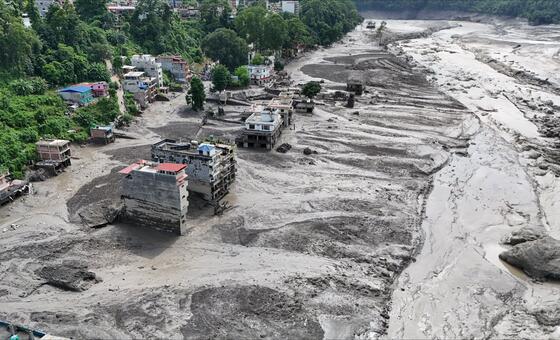
A preliminary assessment from the International Labour Organization warns that the human tragedy caused by the late-August flooding is now being compounded by pressure on workers, small enterprises and supply chains. The disaster followed a glacier collapse near Nepal’s border with China and left homes, workplaces, bridges, roads and energy facilities badly damaged or destroyed.
Authorities have recorded more than 1,450 deaths, while 5,786 people remain missing. For survivors and communities connected to the affected region, the challenge extends beyond immediate rescue and rebuilding needs: many people may struggle to return to work, reach customers or maintain regular incomes.
“The employment consequences of this disaster will not stop at the edge of the flooded area,” said Numan Özcan, ILO Country Director for Nepal.
“Damage to transport links, electricity infrastructure and trade routes can carry the shock through supply chains, markets and connected services, affecting workers and enterprises much farther away.”
Thousands of workers face immediate disruption
The ILO estimates that roughly 21,400 employed people live within four kilometres of the flood footprint. For many of them, damage to local infrastructure may prevent access to workplaces, markets, suppliers, health care and other essential services even where a job itself has not been physically destroyed.
Tourism, farming, transport and small-business activity are among the areas under the greatest strain. Nepal’s mountain economy relies heavily on the movement of people and goods, making road closures and damaged crossings especially serious for workers whose income depends on daily travel and reliable connections.
Guides, porters and transport operators are particularly exposed when routes become inaccessible. Hotel and restaurant staff can lose earnings when visitor activity falls or supply deliveries are interrupted. Agricultural workers may face difficulty obtaining inputs, moving produce or reaching buyers. Small firms can also be affected by power outages, transport costs and lost access to customers.
These risks matter because employment losses after a disaster are not always visible in the same way as collapsed buildings or washed-out roads. A worker may still have a job in principle but be unable to travel there. A family business may remain open but have no stock to sell. A farmer may have products ready for market but no dependable way to transport them.
Informal workers have limited protection
Nepal’s large informal workforce faces a particularly difficult situation. Many workers earn income day by day and have limited savings, insurance or social protection to help absorb a prolonged interruption in work.
Daily-wage and casual labourers, self-employed people, informal workers and operators of micro or home-based businesses are among those at heightened risk. When regular work stops, the effect can be immediate for households that depend on short-term earnings to cover food, housing, transport and other necessities.
Women workers may experience an added burden as paid employment is disrupted while care needs increase within households and communities. The assessment also cautioned that serious income losses can raise the risk of child labour being used as a harmful coping mechanism.
Recovery measures therefore need to consider more than formal workplaces. Support that reaches only registered businesses or salaried employees could leave out many of the people whose livelihoods are most vulnerable after the floods.
Trade corridor damage could widen the economic shock
The disaster has also raised concerns over the Nepal-China trade corridor, an important route for goods moving into and out of Nepal. Damage in Rasuwa has affected vital transport infrastructure, creating potential consequences for businesses and workers far from the flooded districts.
Over the past year, the Rasuwa and Tatopani overland routes handled about 22 per cent of Nepal’s imports from China. Rasuwa alone accounted for nearly half of Nepal’s exports to China, making disruption there significant for commercial activity on both sides of the supply chain.
When border routes are impaired, the effects can reach transport and border-related workers first, but they can also spread to wholesale and retail businesses, construction, manufacturing, agricultural processing and other activities dependent on imported materials or export markets.
For consumers and businesses, delays along key trade routes may mean less predictable supplies, higher transport pressures or difficulty obtaining materials needed for production. For workers, that can translate into reduced hours, postponed projects or weaker demand for services.
Rebuilding can support livelihoods as well as infrastructure
The ILO says recovery and reconstruction efforts can help protect incomes while creating decent employment. Rebuilding roads, bridges, workplaces and public infrastructure will be central to restoring daily economic life, but the way this work is organized will also shape how quickly affected families regain stability.
The assessment recommends immediate income support for households and businesses, employment-intensive reconstruction, job matching and skills development. Such measures could provide short-term help to people whose earnings have been interrupted while creating pathways into recovery-related work.
Employment-intensive reconstruction places workers at the centre of rebuilding, linking infrastructure repair with jobs that can support local economies. Job matching and training may also help workers move into roles needed during recovery, particularly where previous employment has been damaged or delayed.
Nepal’s flood recovery will require attention to both the visible destruction in the north and the less immediate economic effects moving through transport links, trade networks and local markets. Restoring infrastructure is essential, but helping people resume work, sustain businesses and protect household incomes will be just as important to a lasting recovery.
Related Reading
Frequently Asked Questions
What is Nepal floods threaten jobs and livelihoods?
Nepal floods threaten jobs and livelihoods is the main topic of this guide. The article explains the context, practical details, and next steps readers should understand.
Why does Nepal floods threaten jobs and livelihoods matter?
Nepal floods threaten jobs and livelihoods matters because readers are looking for a useful answer, not just a short summary. Good content should match search intent and help them decide what to do next.