Somalia’s Children Face a Hunger Tipping Point as Aid Infrastructure Collapses
Provpnmatrix.com – A funding collapse in the international humanitarian system is now stripping away the last safety nets for millions of Somali children, with aid programmes and medical facilities shuttering across the country at a pace that officials describe as unprecedented. The result is not a gradual decline but a sudden vacuum: families who once had access to nutrition screening, therapeutic feeding, and community health workers are finding those doors locked, and the consequences are arriving within weeks, not years.
A Mother’s Empty Arrival
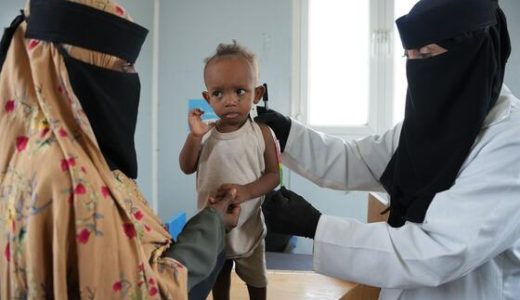
The human face of this collapse is Hajio, a woman whose life was upended by drought. She had a home, her children attended school, and her household appeared, by the standards of rural Somalia, reasonably stable. Then the rains failed, her cattle perished, and she was forced to leave her community in search of assistance. She made her way to Burhakaba, a town in the southwest, on the understanding that humanitarian support was being distributed there.
What she found was silence from the international machinery. The only help she received came from neighbours in one of the country’s poorest communities: a few garments and some tomatoes.
“She received nothing from the international community,” said James Elder, UNICEF spokesperson, briefing journalists in Geneva on Friday.
Facilities Vanishing at Scale
The numbers behind Hajio’s experience are stark. More than 200 health and nutrition facilities have already ceased operations in Somalia as donor funding evaporates. Projections from the most pessimistic scenario put the eventual total at 618 closures — a figure that would effectively dismantle the country’s community-level nutrition architecture.
The downstream effect is not abstract. Compared with the previous year, admissions to stabilisation centres treating severe acute malnutrition and its complications have climbed by 32 per cent. Crucially, this surge does not reflect a new wave of illness. It reflects children who can no longer reach the preventive, community-based nutrition services that once caught malnutrition before it became life-threatening. The disease was always there; the early intervention is what has disappeared.
“Fewer facilities mean longer journeys for mums and their babies; longer journeys mean later treatment; later treatment means more severe illness and a greater risk of preventable death,” Elder warned.
Nearly one million children under five, along with adolescent girls and women of childbearing age, now risk losing access to nutrition services entirely.
Compounding Crises Converge
The aid withdrawal is landing at a moment when Somalia’s humanitarian pressures are intensifying rather than easing. This year, an estimated 1.9 million children are projected to be affected by malnutrition, of whom almost half a million will present with the deadly severe acute form. Decades of intermittent civil conflict have already produced mass displacement and entrenched food insecurity across the country, leaving populations with minimal buffers against shock.
Two additional pressures are amplifying the crisis. The ongoing US-Iran conflict is driving up the cost of fuel and fertiliser, squeezing both transport logistics and agricultural output. Simultaneously, the climate crisis is pushing Somalia toward a dual-threat season: severe droughts are gripping the northern regions while the country braces for extreme flooding driven by an unusually powerful El Niño weather pattern. El Niño, a periodic warming of Pacific Ocean surface temperatures, typically reshapes rainfall distribution across East Africa, and its strongest recent manifestations have triggered both prolonged dry spells and catastrophic inundation within the same season.
“It is a brutal contradiction: the resources to protect vulnerable children are being cut at precisely the moment when the pressures pushing Somalia’s children into crisis are intensifying,” Elder underscored.
What the UN Has Built — and What It Cannot Sustain
The United Nations has maintained a substantial operational footprint in Somalia. Cholera vaccination campaigns have reached over one million people. Education programmes support more than 100,000 young students in classrooms and learning spaces. Rehabilitation initiatives work to reintegrate children who were recruited, often by force, into armed groups and who now require psychosocial care, schooling, and family reconnection.
Between 2021 and 2025, UNICEF provided treatment to more than 2.25 million children suffering from severe acute malnutrition, achieving a cure rate of 97.6 per cent in 2025. That figure represents years of sustained donor investment, trained clinical staff, cold-chain logistics, and community health worker networks operating in tandem.
Under the current funding constraints, maintaining those results is, by the agency’s own assessment, unlikely.
“Years of generous donor investment in children’s futures is being undone far faster than they were built,” Elder warned.
The Cost of Delay
The framing Elder offered to the Geneva press corps was deliberately blunt. He rejected the notion that nutrition and health programming for children constitutes a discretionary line item that can be trimmed when budgets tighten. In his account, dismantling effective aid at the peak of need is not a fiscal saving; it is a deferred payment, collected later in currency, in instability, in foregone development, and — for some children — in lives lost to conditions that were treatable months earlier.
For Somalia’s families, the arithmetic is already visible. A mother walks further to reach a clinic. A child waits longer before receiving therapeutic feeding. A preventable complication becomes fatal. The funding gap, in other words, is not an abstract budget line. It is measured in kilometres walked, in hours of delayed treatment, and in children who will not grow up.
Related Reading
Frequently Asked Questions
What is Somalia?
Somalia is the main topic of this guide. The article explains the context, practical details, and next steps readers should understand.
Why does Somalia matter?
Somalia matters because readers are looking for a useful answer, not just a short summary. Good content should match search intent and help them decide what to do next.