‘The day never stops’ for aid workers braving missiles and drones in Ukraine
The day never stops for aid workers – As the Russian full-scale invasion of Ukraine enters its fifth year, the region’s humanitarian landscape has grown increasingly volatile. Southern Ukraine, in particular, faces relentless challenges, with daily operations requiring constant vigilance to navigate between delivering critical aid and mitigating escalating risks. For those on the front lines, the urgency of their mission is matched only by the unpredictability of their environment.
The Unending Struggle for Safe Access
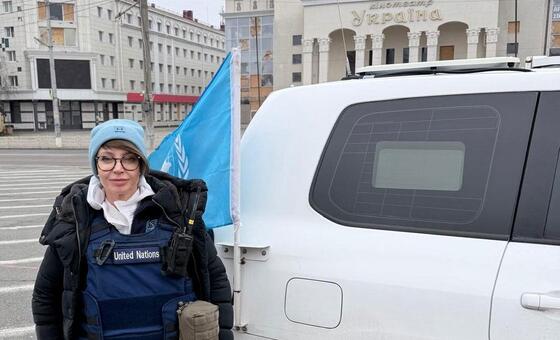
Olga Scripovscaia, a field security coordination officer stationed in Odesa, embodies the tireless effort required to sustain aid efforts in this war-torn area. Her days begin with the same pressing question: “What changed overnight?” This inquiry reflects the ever-shifting dynamics of the region, where safety conditions can flip in an instant, forcing rapid decisions that determine the success or failure of humanitarian missions.
Each morning, Olga reviews incident reports and updates from local authorities, while monitoring the security status of Odesa, Mykolaiv, and Kherson. These areas, once stable, now experience frequent disruptions due to coordinated attacks and air alerts. The nights are filled with tension, as the threat of missiles and drones looms large, making every sunrise a new challenge. “There is always something ongoing here,” she said. “Things are never quiet.”
Olga’s work spans multiple UN agencies operating in southern Ukraine, where she plays a vital role in evaluating mission feasibility and planning safe routes. Her team’s responsibility extends beyond logistics; it includes assessing risks in real time and implementing contingency strategies. Flash reports are issued after every incident, and personnel headcounts are conducted whenever attacks occur. This round-the-clock monitoring ensures that every detail is accounted for, even as the environment remains unstable.
Adapting to Evolving Threats
As the conflict continues, the threats facing aid workers have grown more complex. Mines, drones with pinpoint accuracy, and other sophisticated weapons now shape the battlefield, demanding constant reassessment of operational procedures. Olga noted that a road deemed safe today could be impassable by tomorrow, forcing her team to adjust plans with minimal notice.
This unpredictability has led to a shift in how missions are planned. When areas experience sudden deterioration, teams often reroute or delay deployments, sometimes at the last minute. The pressure to act swiftly is compounded by the need to minimize exposure to danger, yet the human cost of inaction is equally significant. “Protocol gives me maybe 75 per cent of the reason to say no,” she explained. “But I still keep 25 per cent in my heart for those people.”
Olga’s military background provides her with the discipline to handle the high-stakes decisions that define her role. However, it is her experience as a woman in the field that adds a unique dimension to her approach. “Being a woman, maybe you see more than protocol,” she said. “You see tears. You see emotions. You see things beyond procedures.” This perspective is crucial in high-risk environments, where the emotional resilience of aid workers often determines the success of their missions.
The Human Element in Security Operations
While security protocols provide a framework for decision-making, Olga emphasizes the importance of human insight. Her team doesn’t just analyze data; it also considers how colleagues feel before deploying. “We ask whether they feel prepared, whether they understand the risks, and whether they need more information,” she said. This attention to morale and personal readiness underscores the balance between efficiency and empathy in humanitarian work.
Olga described the recurring dilemma faced by security teams: the tension between protocol and the urgent need to help. Humanitarian agencies often push for access to areas with extreme risks, where local support networks may have collapsed. For security officers, these decisions are rarely simple, as they must weigh the potential for harm against the opportunity to save lives.
“The conversation doesn’t end when missions can’t proceed,” Olga said. “Instead, we focus on finding another way.” Whether through alternative routes, reassessing conditions, or identifying a future window for access, her team’s adaptability is key. This persistence reflects the broader mission of security work in humanitarian settings: to ensure that aid continues flowing even when the path is fraught with danger.
Olga’s dedication highlights the personal sacrifices made by those in the field. The constant state of alert, the emotional toll of seeing suffering up close, and the pressure to make split-second decisions have shaped her career. Yet, she remains driven by a singular purpose: to create a path forward for those in need. “If today is not possible,” she said, “we are already thinking about how to make it possible tomorrow.”
Her work serves as a testament to the resilience of aid workers in Ukraine. Despite the overwhelming challenges, they continue to navigate the chaos, driven by a shared commitment to humanity. For Olga, this mission is not just about logistics or risk management—it’s about keeping hope alive in a region where the stakes are nothing short of life and death. The day may never stop, but the resolve of those who serve it remains unyielding.