Two billion people eat from land most of the world ignores
Provpnmatrix.com – On every continent except Antarctica, vast stretches of grassland, shrubland, and dry terrain operate outside the conventional farming model. They are not irrigated fields or fenced pastures in the way most people picture agriculture. Yet these rangelands quietly underpin the survival of roughly two billion human beings, supplying close to 70 per cent of all livestock feed on the planet. They are, in practical terms, the backbone of a food system that most urban consumers never think about until prices spike or supply chains buckle.
The problem is that up to 40 per cent of this critical land base is already degraded or heading toward collapse. Drought cycles are intensifying, grazing pressure exceeds what the vegetation can regenerate, and decades of policy neglect have left these ecosystems without the institutional attention they require. When a rangeland tips past its recovery threshold, the consequences are immediate and personal: a pastoral family’s herd starves, a local market empties, and a community’s food security unravels within a single season.
A conference in Ulaanbaatar puts the issue on the diplomatic table
The scale of the crisis is set to feature prominently at a United Nations desertification conference convening in Ulaanbaatar, Mongolia, from 17 August. Delegates will confront the question of how to reverse degradation across landscapes that span thousands of kilometres and dozens of governance systems. The Biodiversity and Ecosystem Services Network (BES-Net), a flagship initiative under the UN Development Programme’s Nature Pledge, has been assembling the scientific and community-level evidence needed to inform those negotiations.
Three countries, one recurring lesson
Fieldwork in Botswana, Kazakhstan, and Kenya reveals a consistent pattern: restoration efforts succeed when the people who inhabit the land see their own experience woven into the solution. Satellite imagery and climate models alone cannot save a degraded pasture. Trust, local ownership, and generations of ecological memory are what make intervention stick.
Botswana: building an evidence base from the ground up
Rangelands dominate much of southern Africa’s largest landlocked nation and anchor its economy, from beef export revenues to the safari tourism industry that draws visitors to its open plains. Until recently, however, no single national inventory existed to describe the condition of these ecosystems in aggregate.
A comprehensive ecosystem assessment, completed with input from more than 2,000 contributors spanning government agencies, academic researchers, and traditional knowledge holders, filled that gap. The findings were sobering: grassland area is contracting as invasive plant species colonise open ground and drought episodes arrive with greater frequency and shorter recovery windows between them. Where community-led land governance remains robust, however, the land holds up measurably better — a reminder that indigenous stewardship is a functional asset, not a cultural footnote.
Kazakhstan: when a lake dies, the land follows
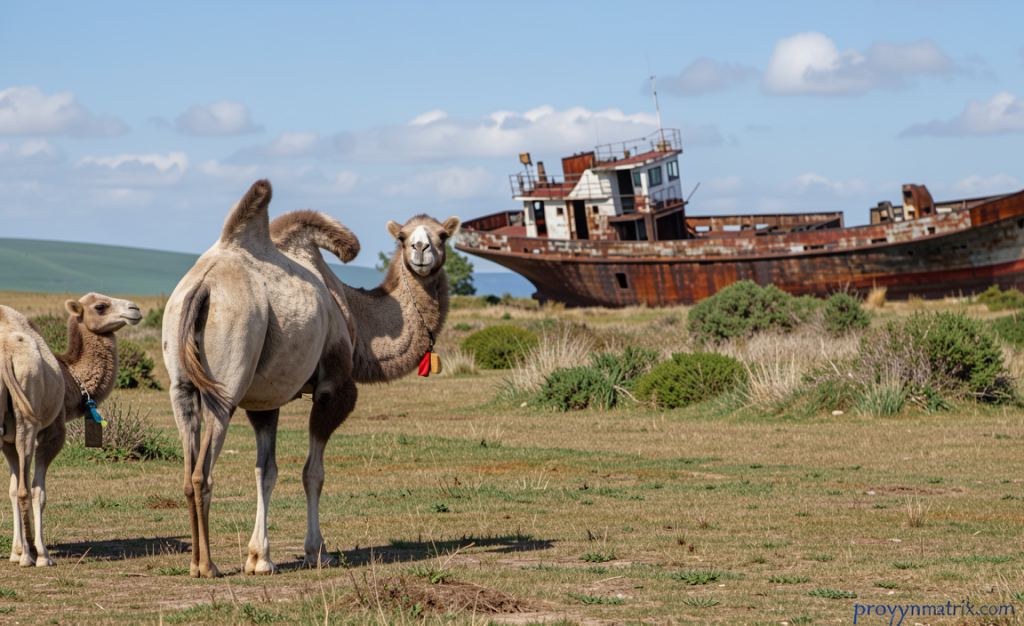
The Aral Sea, once the world’s fourth-largest body of freshwater, has largely evaporated, leaving behind a salt desert spanning 5.4 million hectares. In the neighbouring Kyzylorda region, more than 80 per cent of pastureland is now degraded. Toxic dust storms laden with salt and heavy metals travel thousands of kilometres, contaminating soil and water far beyond the former shoreline.
Kazakhstan has commissioned a detailed study mapping the interconnections among climate variables, land condition, and water availability. That research now feeds directly into pasture restoration programmes and irrigation planning. On the dried seabed itself, a saxaul tree replanting initiative has already covered 337,000 hectares, with a target of 1.1 million hectares by 2030 — an attempt to stabilise the salt crust before it migrates further into productive grazing land.
Kenya: reading the desert’s advance through satellite and memory
In Marsabit County, northern Kenya, the Chalbi desert is encroaching on the grasslands that pastoralist communities have grazed for generations. Satellite records stretching back to 1990 document a steady conversion of green pasture to barren ground. Projections indicate the desert could double its footprint within decades absent intervention, swallowing the grazing corridors on which entire livelihoods depend.
The response there combines three decades of remote-sensing data with the recollections of Indigenous elders who remember how the landscape looked before degradation accelerated. That pairing has produced concrete interventions: a flood-diverting structure at Kalacha designed to reduce seasonal waterlogging, test plots for regrowing native vegetation, and community training programmes that enable local residents to monitor land-change themselves rather than waiting for external reports.
Why the distinction between data and lived knowledge matters
Across all three national contexts, the operational lesson is identical. A model can predict where degradation will spread; it cannot tell a herder which grass species his grandmother identified as the last to disappear before the land went silent. Restoration programmes that exclude the people most affected by the loss tend to stall at the planning stage. Those that centre local expertise alongside scientific measurement generate compliance, adaptation, and long-term stewardship.
For the herder in northern Kenya still scanning a cloudless sky, that combination of satellite precision and ancestral memory may be the difference between a herd that endures the next dry season and one that does not. The question at Ulaanbaatar, and in every rangeland community from Central Asia to southern Africa, is whether the institutional will exists to fund that combination at the scale the crisis demands.
Related Reading
Frequently Asked Questions
What is The grass beneath our feet?
The grass beneath our feet is the main topic of this guide. The article explains the context, practical details, and next steps readers should understand.
Why does The grass beneath our feet matter?
The grass beneath our feet matters because readers are looking for a useful answer, not just a short summary. Good content should match search intent and help them decide what to do next.